

Can You Chew Gum While Intermittent Fasting a Guide
So, can you chew gum while intermittent fasting? The short answer is yes, for most people, as long as it's the right kind.
If your main goal is weight loss or just keeping hunger pangs at bay, a few pieces of sugar-free gum won't throw you off course. In fact, it can be a surprisingly helpful tool to get you through the fasting window.
The Quick Guide to Gum and Fasting
For many of us, intermittent fasting is a game-changer for weight loss and metabolic health. The whole point is to give your body a break from processing calories, forcing it to switch gears and start burning stored fat for fuel.
This is exactly where the debate around chewing gum comes in. Does even a hint of sweetness or flavor flip that metabolic switch back "on"?
Honestly, it all comes down to why you're fasting. Think of it like a volume dial. For some benefits, you need total silence—zero intake. For others, a little background noise is perfectly fine and doesn't disrupt the main event.
Managing hunger is a perfect example. The simple act of chewing can be a lifesaver when cravings hit. As we explore in our guide to the benefits of sugar-free energy gum, the right kind of gum can even support focus and energy without breaking your fast.
This handy decision tree breaks it down: your reason for fasting determines whether gum gets a green light.
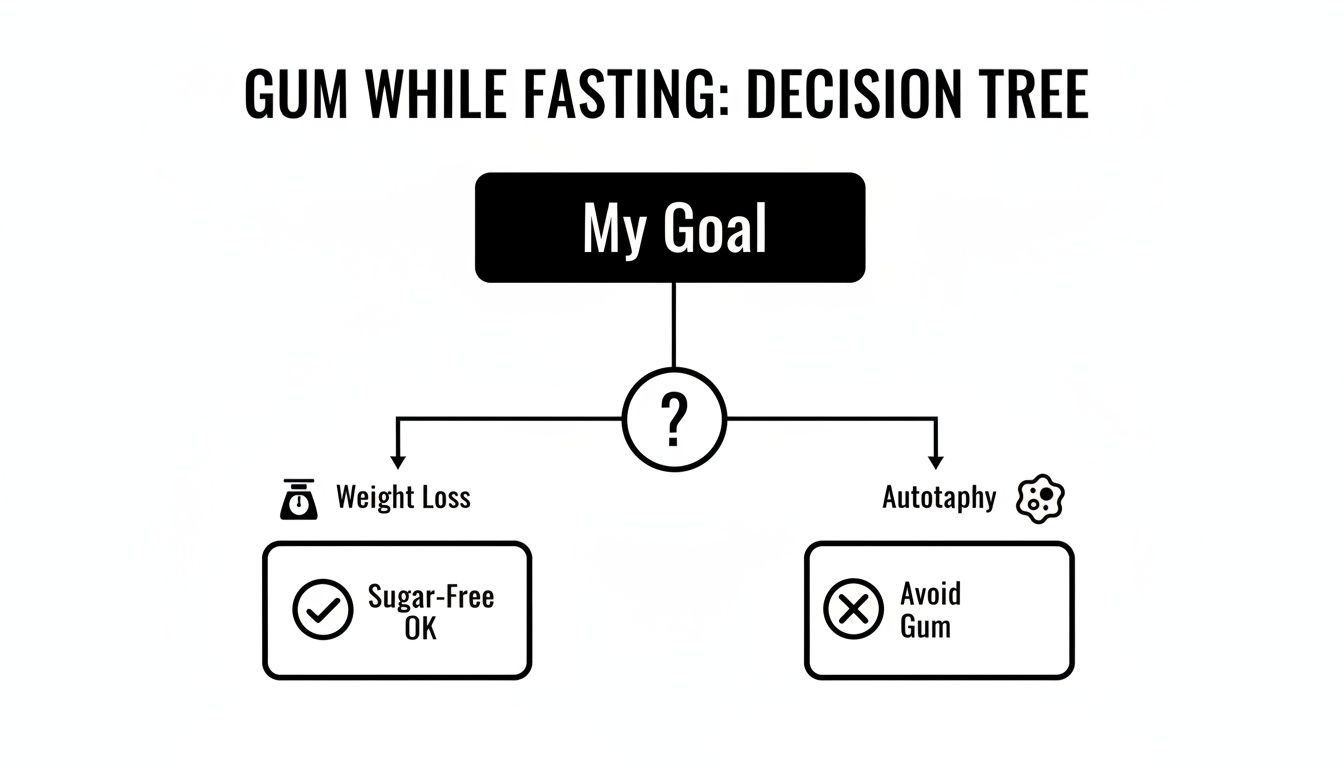
As you can see, it's pretty clear-cut. If you’re fasting for weight management, sugar-free gum is generally fine. But if you're chasing deeper cellular benefits like autophagy, it's best to stick to water.
To give you a quick cheat sheet, here’s a table summarizing how gum impacts the most common intermittent fasting goals.
How Gum Impacts Your Intermittent Fasting Goals
| Fasting Goal | Sugar-Free Gum (1-2 pieces) | Sugared Gum (1-2 pieces) |
|---|---|---|
| Weight Loss | ✅ Safe - Negligible calories won't stop fat burning. | ❌ Breaks Fast - Sugar causes an insulin spike. |
| Metabolic Health | ✅ Generally Safe - Won't significantly raise insulin. | ❌ Breaks Fast - Directly interferes with blood sugar. |
| Hunger Control | ✅ Helpful - Chewing can reduce cravings. | ❌ Counterproductive - Can cause blood sugar dips. |
| Autophagy | ⚠️ Best to Avoid - May trigger a minor metabolic response. | ❌ Breaks Fast - Stops autophagy completely. |
| Gut Rest | ⚠️ Best to Avoid - Chewing can stimulate digestive enzymes. | ❌ Breaks Fast - Requires full digestion. |
In short, sugar-free gum is a useful tool for some goals but can get in the way of others. Sugared gum, on the other hand, is a definite no-go.
Your Goal Determines the Rules
Let's simplify this into two main approaches for fasters.
- For Weight Loss & Metabolic Health: If you’re using fasting to manage your weight, improve insulin sensitivity, or just crush cravings, sugar-free gum is a solid ally. The fewer than 5 calories in a typical piece are not enough to make a real dent in your metabolism or pull you out of a fat-burning state.
- For Autophagy & Gut Rest: If your goal is deeper cellular cleanup (autophagy) or giving your entire digestive system a true vacation, you need to be a purist. Any flavor or sweetener—even zero-calorie ones—could potentially signal your body to wake up its metabolic machinery, which is exactly what you want to avoid.
How Your Body Responds to Chewing Gum
Ever wonder what actually happens inside your body when you pop a piece of gum on an empty stomach? It’s more than just fresh breath; it’s a fascinating biological story that starts in your brain. Getting a handle on these subtle reactions is the key to knowing if chewing gum will undo all your hard work while fasting.
The moment you start chewing, your body kicks off a series of automatic responses. The big one everyone debates is the cephalic phase insulin response (CPIR).
Think of CPIR as your body’s “false start.” The simple taste of sweetness—even from a zero-calorie sweetener—can trick your brain into thinking food is on the way. It's like a kitchen crew firing up the ovens because they hear a delivery truck pulling up, even if it’s just driving by.
In anticipation, your brain might tell the pancreas to release a tiny bit of insulin. But for most sugar-free gums, this insulin response is so small it's practically nonexistent. It's highly unlikely to disrupt your fast in any meaningful way.
The Brain and Insulin Connection
When you chew gum, taste receptors on your tongue send a message straight to your brain: "Sweetness detected! Prepare for energy!" Your pancreas gets the memo and stands ready to do its job.
The key takeaway is this: while a cephalic phase response can happen, its impact is almost zero with non-nutritive sweeteners. Studies show that sweeteners like erythritol, stevia, and xylitol have virtually no effect on insulin or blood sugar levels, making them safe bets for your fasting window.
This is exactly why the type of gum you choose is so critical. A sugary piece of gum sends a loud, clear signal that causes a real insulin spike, which will absolutely break your fast. A high-quality, sugar-free gum, on the other hand, barely makes a blip on the metabolic radar.
While you're checking gum ingredients, it's also worth understanding things like the caffeine content in functional gums like Neuro Gum, since stimulants can have their own effects on your fasting state.
A Surprising Ally for Oral Health
Beyond the insulin debate, chewing gum triggers another important reaction: saliva production. Chewing can crank up your saliva flow by up to ten times the normal rate.
This is a huge win during a fast, especially if you deal with a dry mouth or that dreaded "fasting breath."
Increased saliva helps in a few key ways:
- Neutralizes Acids: It helps balance the pH in your mouth, protecting your tooth enamel from damage.
- Washes Away Bacteria: Think of saliva as a natural mouthwash, clearing out leftover particles and gunk that cause cavities and bad breath.
- Strengthens Teeth: It’s packed with minerals like calcium and phosphate that help remineralize and strengthen your teeth.
This makes sugar-free gum, especially the kinds with xylitol, a powerful tool for keeping your oral hygiene on point during your fast. Once you understand these biological responses, you can confidently use gum as a strategic tool that supports—not sabotages—your intermittent fasting goals.
Does Gum Affect Autophagy and Ketosis?
For anyone fasting for benefits beyond just weight management, the conversation gets a lot deeper than calories. The real questions circle around two powerful metabolic states: autophagy and ketosis. Figuring out how chewing gum plays with these processes is the key to making sure you don't accidentally sabotage your deepest fasting goals.
Think of autophagy as your body’s ultimate cellular spring cleaning. When you’re in a true fast, your body starts clearing out old, damaged cellular junk and proteins. This is a highly sensitive state, and any calorie intake—even a tiny one—can signal that the "famine" is over, potentially slowing down or stopping this deep cellular repair.

Autophagy: The Cellular Cleanup Crew
Because autophagy is so sensitive to energy intake, the 2-5 calories hiding in a single piece of sugar-free gum could, in theory, blunt its effects. While the impact is probably minor and the science isn't totally settled, fasters chasing maximum cellular benefits often take a purist approach.
For serious fasters prioritizing autophagy, the safest bet is to stick to water, black coffee, or unsweetened tea. The goal is to send zero signals of incoming energy to your body, ensuring the cleanup process continues uninterrupted.
If this deep cellular recycling is your main goal, it's smart to avoid gum altogether. Even a minimal caloric load might be just enough to tell your cells to pause their cleaning duties, which pretty much defeats the purpose of a strict fast.
Ketosis: A More Resilient State
Ketosis, on the other hand, is far more resilient. This metabolic state kicks in when your body, deprived of carbs, starts burning stored fat for fuel and producing ketones for energy. So, the real question becomes: can you chew gum while intermittent fasting and still stay in ketosis?
Fortunately, for those of us fasting for weight loss or metabolic health, the answer is a resounding yes. Ketosis is only disrupted by a significant hit of carbs or calories, which would trigger an insulin response and flip your body back to using glucose for fuel.
The tiny amount of calories and near-zero carbs in sugar-free gum just isn't enough to make a dent. Your body will stay firmly in its fat-burning mode. To dive deeper, our guide on chewing gum on a keto diet breaks down exactly why it’s a safe tool for your toolkit.
Of course, most sugar-free gums contain artificial sweeteners, and it’s worth understanding their impact, especially when you consider the potential health risks of artificial sweeteners. That said, sweeteners like erythritol and xylitol generally don't move the needle on blood sugar or insulin.
Ultimately, your fasting goals dictate the rules.
- For Autophagy: It's best to skip the gum to prevent any potential interference with your cellular cleanup.
- For Ketosis: Sugar-free gum is a totally safe and effective way to manage cravings without knocking you out of that fat-burning state.
Using Gum to Manage Hunger and Weight Loss
Beyond just asking "can you chew gum while fasting," the better question is often "should you?" If weight loss is your main goal, the answer is a big, resounding yes. Chewing gum can be a powerful tool in your fasting toolkit—a simple bio-hack to crush cravings and help you own your fasting window.
Let's be real: hunger is usually the biggest hurdle when you start intermittent fasting. This is where sugar-free gum becomes a game-changer. The simple act of chewing can actually trick your brain into feeling more satisfied, taking the edge off those hunger pangs that tempt you to break your fast early.
Taming Cravings and Reducing Calorie Intake
The mechanical motion of chewing does more than just give your jaw a workout. It sends satiety signals straight to your brain, making you feel fuller and more in control of your appetite. This isn't just a placebo effect; it has a real, measurable impact on how much you eat once your eating window opens.
If you’re sticking to intermittent fasting for weight loss, chewing gum could be your secret weapon. Research shows it can help you eat about 68 fewer calories at your next meal. It also boosts adherence, helping you power through cravings that cause 40% of fasters to give up in the first week. Studies have confirmed that chewing sugar-free gum during a fast lowers hunger scores and leads to eating less later, partly by influencing key satiety hormones like GLP-1. You can find more details on how fasting and gum chewing impact hunger in the research.
Frame it this way: gum isn't a cheat. It's a tool to improve your fasting adherence. It helps you comfortably extend your fast, keeping your body in a fat-burning state for longer.
A Practical Strategy for Success
Working gum into your routine is a dead-simple way to make your fasting journey easier. Instead of white-knuckling it through a wave of hunger, you have an easy, zero-calorie solution to keep you on track.
Here’s how to put it into practice:
- Time It Right: When that mid-afternoon craving hits, pop a piece of sugar-free gum instead of staring at the clock.
- Stay Prepared: Keep a pack in your car, on your desk, or in your gym bag. Never get caught off guard.
- Enhance Your Routine: Pair your gum with a big glass of water. It amplifies the feeling of fullness and keeps you hydrated.
This strategic approach helps build the discipline you need for long-term success. It makes the entire process more manageable, especially on those days when your willpower is running low. And if you’re looking for a gum that can also sharpen your focus for a workout, check out our guide on pre-workout chewing gum.
Ultimately, using gum smartly helps you stick with your fasting protocol—and consistency is what delivers real weight loss results.
Elevate Your Fast with Nootropic Gum
What if the gum you’re chewing could do more than just quiet your stomach? While standard sugar-free options are great for getting a grip on cravings, you can seriously level up your fasting experience with a functional alternative. This is where nootropic gum completely changes the game from simply surviving your fast to thriving in it.
Dialed In Nootropic Gum is designed to sharpen your mental clarity and focus, making it the perfect partner for the heightened cognitive state many people feel while fasting. Instead of battling brain fog, you can transform your fasting window into a period of peak productivity.
Beyond Hunger Management to Cognitive Enhancement
The magic is in its scientifically backed ingredients. Unlike your average gum, a nootropic blend delivers active compounds that support brain function—all without breaking your fast.
The goal is no longer just to dodge calories. It's to actively optimize your mental state. Nootropic gum turns a simple craving-crusher into a powerful cognitive tool, helping you get more done during your most focused hours.
We already know chewing gum works for hunger. Imagine you’re deep into your fast, trying to grind through a project, and that familiar hunger pang starts knocking. Research confirms that chewing sugar-free gum can slash hunger ratings, making it easier to stay on track. One 2017 study found that just an hour of chewing noticeably lowered hunger—a massive win for anyone pushing through a long fast.
Ingredients That Fuel Your Focus
Dialed In Focus Gum is loaded with powerful, zero-calorie nootropics that deliver clean energy and laser-sharp focus, with no crash.
- Citicoline: This is a powerhouse for brain health. It supports mental energy, focus, and memory, keeping your mind sharp when you need it most.
- L-Theanine: Commonly found in green tea, L-Theanine promotes a state of calm, alert relaxation. It smooths out the jitters that can come with stimulants, providing stable, unwavering focus.
These ingredients work together to give you a clean cognitive boost, turning your fast into an opportunity for deep work and dialed-in performance. You can read more on the science behind the best nootropic chewing gum and how it fits your goals. For a deeper dive into how these compounds work, check out this comprehensive guide on nootropic supplements.
By choosing a gum built for high-performers, you’re not just asking, "can I chew gum while fasting?" You’re making every single hour count. Ready to turn your fasting window into your most productive time of day? Purchase Dialed In Focus Gum directly from our website and feel the difference.
The Surprising Dental Benefits of Chewing Gum
While we’ve been focused on the metabolic side of things, chewing gum during a fast has a powerful, often-overlooked benefit: it’s fantastic for your oral health.
One of the most common complaints during a fast is dry mouth, which quickly leads to the dreaded "fasting breath." This happens because without food, your body naturally dials down saliva production. And that’s a problem, because saliva is your mouth’s built-in defense system, constantly neutralizing plaque acids and washing away smelly bacteria.
How Chewing Gum Protects Your Teeth
Think of chewing sugar-free gum as turning on a sprinkler system for your mouth. The simple mechanical act of chewing can boost your saliva production by up to ten times the normal rate.
This flood of fresh saliva does a few critical things:
- Neutralizes Harmful Acids: It raises the pH in your mouth, shielding your tooth enamel from erosion.
- Washes Away Bacteria: The increased flow physically clears out food particles and microbes that cause cavities and bad breath.
- Reduces Cavity Risk: If your gum contains xylitol, it’s even better. Cavity-causing bacteria can’t feed on xylitol, which helps stop them in their tracks.
What’s really interesting is that fasting itself might give your oral health a leg up. A recent study discovered that intermittent fasting can significantly cut down on gum inflammation. When you pair that natural anti-inflammatory perk with the protective power of saliva-boosting gum, you create a seriously healthy environment for your mouth. You can read the full research about fasting and gum health here to see the data.
So, instead of just putting up with a dry mouth, you can actively use the right gum to improve your dental health during your fast. For a gum that not only protects your teeth but also sharpens your focus, consider trying Dialed In Nootropic Gum from our website. It’s the perfect way to support both your mind and your smile.
Frequently Asked Questions About Gum and Fasting
We’ve dug into the science, but let’s be real—the practical questions are what matter most. Here are some quick, no-nonsense answers to help you navigate chewing gum during your fast.
How Many Pieces of Gum Can I Chew?
If your main goals are hunger management and weight loss, chewing 1-3 pieces of sugar-free gum throughout your fasting window is perfectly fine. The tiny calorie count is not enough to disrupt fat-burning.
But, if you’re fasting for deep cellular cleanup (autophagy), the rules change. It’s best to stick with just water. Autophagy is a sensitive process, and even a few calories can theoretically hit the pause button. For those benefits, a purist approach is your safest bet.
Which Sweeteners Are Best for Fasting?
The type of sweetener in your gum is the most important factor. You want sweeteners that have a minimal, if any, impact on your insulin and blood sugar.
When you're checking the label, these are your best friends:
- Erythritol
- Stevia
- Xylitol
Aspartame also gets a pass in small amounts. Be a little cautious with sugar alcohols like maltitol or sorbitol, though. They can sometimes trigger a small insulin response or, worse, cause digestive issues when you’re on an empty stomach.
Can I Use Dialed In Nootropic Gum During My Fast?
Absolutely. Dialed In was specifically designed to be sugar-free, making it a powerful tool for common fasts like 16:8 or OMAD. It helps you crush cravings while its nootropic stack keeps your brain sharp and focused.
This turns your fast from a mental grind into a period of high productivity. The only exception? If you're doing a strict, water-only fast where autophagy is the number one priority, it's best to hold off.
Ready to make your fast feel easier and more productive? Dialed In Nootropics is the perfect way to stay focused and beat hunger pangs. Purchase your Dialed In Focus Gum today and turn your fasting window into your peak performance window.