

How to Improve Mental Clarity and Focus
That feeling of being stuck in a mental fog? It’s not just in your head—it’s a signal that your brain needs a reset. Clearing the haze isn't about some massive life overhaul. It's about making small, consistent tweaks to the four things that matter most: nutrition, sleep, movement, and cognitive training.
Think of it as fine-tuning your internal operating system. Smart, targeted changes are what deliver real, lasting results.
Your Action Plan for Getting Your Head Back in the Game
When your thoughts are scattered and you can't seem to lock in on a single task, it's easy to feel frustrated. The good news is that brain fog isn't a permanent condition. It's your brain's way of telling you it needs better support, and you can absolutely give it what it needs.
This isn't just a personal battle, either. It’s a massive global issue. Recent studies have shown that roughly 25% of the world's population deals with symptoms of depression, anxiety, or stress that directly torpedo their cognitive function. It's a real problem with real consequences.
The Four Pillars of a Sharper Mind
Sustained mental performance isn’t about finding one magic bullet. It’s a holistic game. Your mental clarity is like a structure held up by four critical pillars. If one weakens, the others have to work overtime to compensate, and eventually, the whole thing starts to wobble.
The infographic below nails this concept, showing how these elements are all interconnected.
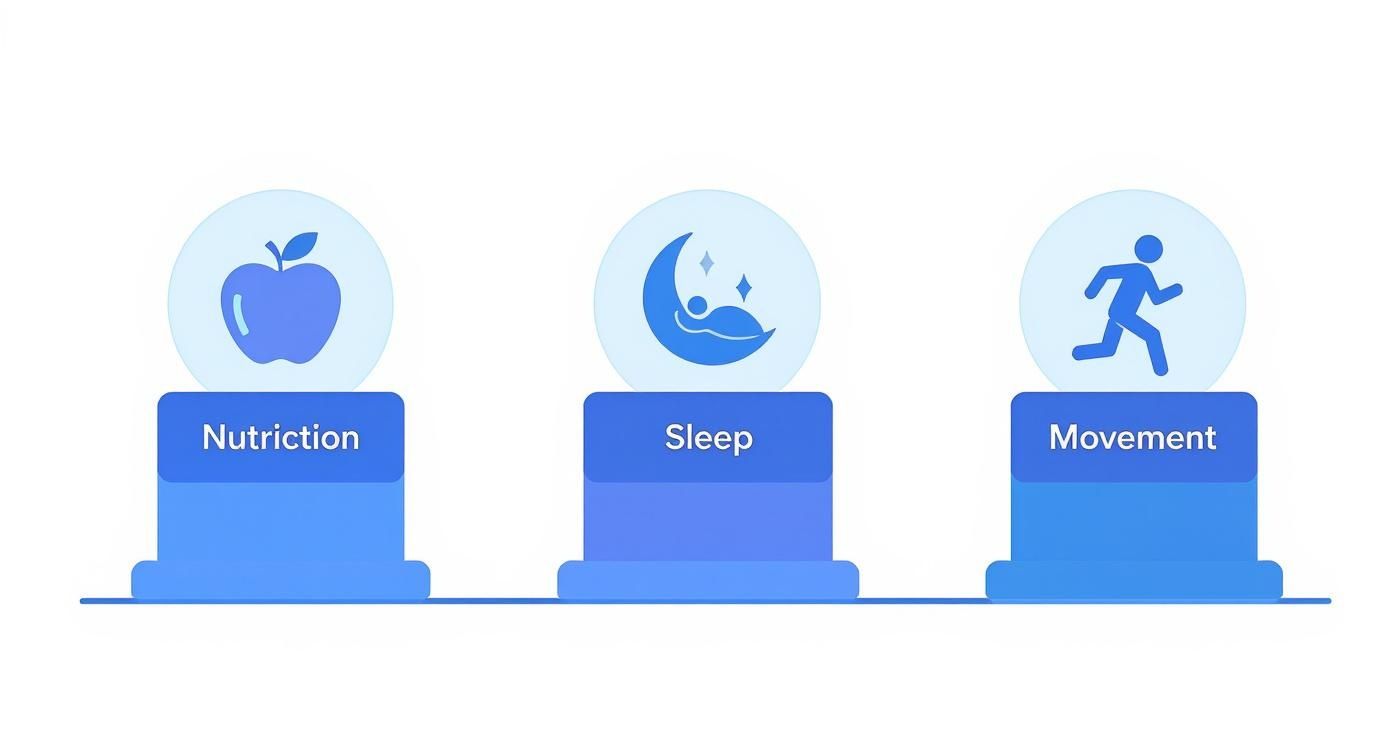
This really drives home that you can't just focus on one area and expect peak performance. A balanced strategy is the only way to get sustainable results.
What you eat, how you rest, how you move—they all work together. Small wins in one area create a ripple effect, amplifying the benefits across the board. This synergy is what builds momentum and creates that upward spiral of sharper focus and more cognitive energy. For a deeper dive into this, check out our guide on the powerful connection between energy and focus.
Your brain is a high-performance engine. It needs premium fuel (nutrition), regular maintenance (movement), and sufficient downtime (sleep) to run at its best. Neglect any one of these, and you're headed for a breakdown.
If you're looking for a solid place to start, there are great resources on how to improve mental clarity and sharpen your focus that cover these foundational habits. We're going to build on that framework here, giving you a practical, step-by-step roadmap.
To simplify this, I've broken down these core concepts into a quick-reference table. This is your cheat sheet for building a stronger, clearer mind.
Four Pillars of Enhanced Mental Clarity
| Pillar | Core Principle | Quick Actionable Tip |
|---|---|---|
| Nutrition | Your brain needs high-quality fuel. What you eat directly impacts focus, memory, and mood. | Swap one processed snack per day for a handful of walnuts or blueberries—both are packed with brain-boosting antioxidants. |
| Sleep | Sleep isn't downtime; it's when your brain cleans house, consolidates memories, and recharges. | Set a "tech-curfew" 30 minutes before bed. No screens. Read a book or listen to calming music instead. |
| Movement | Physical activity boosts blood flow to the brain, reduces stress, and sparks new neural connections. | Go for a brisk 10-minute walk after lunch. It’s enough to clear your head and re-energize your afternoon. |
| Cognitive Training | Your brain is a muscle. You need to challenge it consistently to keep it sharp and resilient. | Spend 15 minutes a day learning a new skill—a few words in another language or a new chord on a guitar. |
This table isn't just a list; it's a starting line. In the sections that follow, we'll unpack each of these pillars with specific, real-world advice to help you move from feeling foggy to feeling dialed in. We’ll show you how to build a resilient and clear mind, one small change at a time.
Fueling Your Brain for Peak Performance

The old saying "you are what you eat" is more than a cliché—it's a biological reality, especially when it comes to your brain. The food you put in your body provides the raw materials needed to build neurotransmitters, protect neurons, and generate the energy for sharp, sustained focus.
This isn't about some restrictive, joyless diet. It's about making smart, intentional choices to power your cognitive engine.
Think about it like this: you wouldn't put low-grade fuel in a high-performance race car and expect it to win. Your brain works the same way. Giving it a steady supply of high-quality nutrients is the first real step in learning how to improve mental clarity and finally cut through that frustrating static of brain fog.
The Macronutrients of a Sharper Mind
Your brain is incredibly demanding. It burns through about 20% of your body's total calories despite making up only 2% of your weight. And where those calories come from matters. A lot.
Forget complicated diet plans and just focus on three core building blocks: high-quality fats, lean proteins, and complex carbohydrates.
These three work together to create the stable internal environment your mind needs to thrive.
- Healthy Fats: Your brain is nearly 60% fat, which makes fatty acids like omega-3s absolutely essential for maintaining the structure and integrity of your brain cells. They're critical for smooth communication between neurons.
- Lean Proteins: Proteins break down into amino acids, the fundamental building blocks for neurotransmitters like dopamine and serotonin. These are the chemicals that regulate your mood, motivation, and ability to lock in and concentrate.
- Complex Carbohydrates: Unlike sugary snacks that cause sharp spikes and brutal crashes in blood sugar, complex carbs give you a slow, steady release of glucose. This ensures your brain has consistent energy for hours, preventing those mental slumps that completely kill productivity.
A meal that nails this combo—like grilled salmon (fat/protein), quinoa (complex carb/protein), and avocado (fat)—is the perfect example of real brain fuel. It delivers everything you need for sustained cognitive performance.
Antioxidants: Your Brain's Defense System
Every single day, your brain is under attack from oxidative stress, a natural process caused by unstable molecules called free radicals that damage cells. Think of it like rust forming on metal over time. Antioxidants are your brain's personal defense force, neutralizing these harmful molecules and protecting your neurons from damage.
Brightly colored fruits and vegetables are your best sources for these protective compounds. Loading your diet with them is a proactive strategy for maintaining long-term cognitive health and clarity.
By loading up on antioxidant-rich foods, you are essentially providing your brain with a shield. This defense is crucial for fighting off the daily wear and tear that contributes to mental fatigue and a lack of sharpness.
A simple way to do this is to "eat the rainbow." Just aim to get a variety of colors in your meals throughout the day.
- Reds & Pinks: Tomatoes, strawberries, raspberries.
- Oranges & Yellows: Carrots, sweet potatoes, bell peppers.
- Greens: Spinach, kale, broccoli, avocado.
- Blues & Purples: Blueberries, blackberries, eggplant.
This approach ensures you’re getting the wide spectrum of vitamins and phytonutrients your brain needs to stay resilient and sharp.
Hydration and Brain-Boosting Compounds
Staying hydrated is one of the simplest—and most overlooked—hacks for better mental performance. Even mild dehydration can wreck your attention, memory, and other cognitive skills. Your brain needs water to function, period. Keeping a water bottle within reach is a non-negotiable habit for a clear head.
Beyond water, certain natural compounds can give you a significant cognitive edge. Green tea, for instance, contains both a mild dose of caffeine for alertness and an amino acid called L-Theanine.
This powerhouse compound is known for promoting a state of calm, focused attention without the jitters that come with too much coffee. We cover it in-depth in our complete guide explaining the benefits of L-Theanine.
To start putting this all into practice, begin with small, easy swaps. Ditch the sugary cereal for oatmeal with berries and nuts. Instead of grabbing a processed energy bar, have an apple with almond butter. These simple upgrades provide your brain with the premium fuel it deserves and set the stage for peak mental performance.
Mastering Your Lifestyle for Lasting Clarity

Real mental clarity isn't something you can just switch on from nine-to-five. It’s built around the clock—forged in the quiet hours of sleep, the intensity of a good workout, and the moments you intentionally unplug from the chaos.
If you want to achieve a state of focus that feels less like a fleeting burst and more like your default setting, you have to master your lifestyle.
It all comes down to optimizing three foundational pillars: sleep, exercise, and stress management. When these are in sync, they create a powerful upward spiral for your brain. But if you neglect even one, you’ll constantly feel like you’re fighting an uphill battle against brain fog.
The Science of Restorative Sleep
Let's be clear: sleep is not a luxury. It's a non-negotiable biological requirement for a sharp mind. While you're out, your brain is working overtime on critical maintenance—clearing out metabolic junk that builds up during the day and locking in memories.
Skimping on sleep is like trying to run a marathon without any training. You’re setting yourself up to fail.
But it’s not just about the hours you log. The quality of your sleep is what really moves the needle. Deep sleep and REM cycles are where the cognitive restoration happens, and getting there requires a smart approach to your evening routine.
If physical discomfort is what's holding you back from truly restorative rest, it's worth exploring solutions like the best mattress toppers for bad backs to improve sleep quality to enhance both comfort and your sleep cycles.
Think of your brain’s waste-clearing process—the glymphatic system—as a nightly cleaning crew. This crew is about 10 times more active while you sleep. Consistently poor sleep means they can't do their job, leaving behind the mental clutter that shows up as brain fog the next day.
To really dial in your sleep, create a consistent wind-down ritual. This signals to your brain that it’s time to power down.
- Dim the Lights: An hour before bed, lower the lights. Bright light tanks your melatonin production, the hormone that runs your sleep-wake cycle.
- Set a Tech Curfew: The blue light from your phone and laptop is especially disruptive. Put all screens away at least 30-60 minutes before you want to be asleep.
- Control Your Temperature: Your body temperature needs to drop to initiate sleep. A cool room, somewhere between 60-67°F (15-19°C), makes this happen.
These small tweaks can make a massive difference in how clear-headed you feel tomorrow.
Moving Your Body to Clear Your Mind
Physical activity is one of the most potent tools you have for boosting mental clarity. Period. Exercise drives blood flow to the brain, delivering a fresh supply of oxygen and nutrients essential for peak cognitive function.
It also triggers the release of brain-derived neurotrophic factor (BDNF), a protein that’s like fertilizer for your brain cells—it helps grow new ones and strengthens the ones you already have.
A well-rounded routine is best, as different types of exercise offer unique benefits.
- Aerobic Exercise (Cardio): Running, cycling, or swimming are fantastic for memory and thinking skills. Even a brisk 20-30 minute walk can deliver an immediate focus boost.
- Strength Training: Lifting weights or doing bodyweight circuits helps improve executive function—the mental skillset that covers working memory, flexible thinking, and self-control.
- Mind-Body Practices: Yoga and tai chi are killer combos of physical movement, breathwork, and meditation. They are proven to crush stress and sharpen your ability to concentrate.
The key here is consistency. You don't need to live in the gym. Just find something you enjoy and make it a non-negotiable part of your week.
Taming Stress Before It Takes Over
Chronic stress is the arch-nemesis of a clear mind. When you're constantly on edge, your body is flooded with cortisol. In high doses, this hormone hammers your brain function, disrupts memory, and leaves you feeling mentally exhausted.
Learning how to improve mental clarity means learning how to manage stress effectively. It’s not about eliminating stress—that's impossible. It's about building resilience so you can handle the pressure when it mounts.
Mindfulness meditation is a game-changer. The practice is simple: focus on your breath and observe your thoughts without getting sucked in. It trains your attention and helps you detach from the frantic mental chatter that clouds your thinking.
Another powerful tactic? The strategic digital detox. Constant notifications and the pressure to be "on" 24/7 are huge sources of modern stress. Set aside time each day—even just 30 minutes—to completely unplug.
By integrating these lifestyle habits—prioritizing sleep, moving your body, and managing stress—you build a resilient foundation for lasting mental clarity. For those moments when you need an extra edge but want to skip the side effects of too much caffeine, check out our guide on how to stop caffeine jitters.
Practical Exercises to Sharpen Your Mind
Your brain isn't a static organ. It’s dynamic, adaptable, and a lot like a muscle—it gets stronger when you train it. You don't need to be a math whiz solving complex equations to keep your mind sharp. The best approach is to weave simple, powerful cognitive exercises into your daily life.
Think of these practices not as chores, but as mental workouts. They're designed to boost focus, sharpen memory, and enhance your overall mental agility, giving you the tools to actively build a clearer mind.
The Pomodoro Technique for Deep Focus
One of the biggest killers of mental clarity is context switching—that constant juggling of tasks, notifications, and random thoughts. The Pomodoro Technique is a killer time management method that fights this by forcing you to zero in on one thing at a time.
It’s simple. Choose one task, set a timer for 25 minutes, and work on it with zero interruptions. When the timer dings, you take a short 5-minute break. After four of these cycles, you earn a longer break of 15-30 minutes.
This technique is incredibly effective because it trains your brain to sustain intense focus in short, manageable bursts. It creates a rhythm that builds momentum and keeps mental burnout at bay.
Mindfulness Meditation to Train Attention
Mindfulness meditation is, quite literally, taking your brain to the gym. The goal isn't to empty your mind of all thoughts—that's impossible. Instead, it’s about learning to observe your thoughts without getting carried away by them.
Start with just five minutes a day. Find a quiet spot, sit comfortably, and bring your focus to the sensation of your breath. Your mind will wander. That's a guarantee. The real exercise is gently guiding your focus back to your breath, over and over, without judgment.
Each time you notice your mind has drifted and you bring your attention back, you're performing a mental "rep." This simple act strengthens the neural pathways tied to focus and self-awareness, making it easier to stay locked in when it really counts.
This practice builds your "attention muscle," giving you far greater control over where you direct your mental energy throughout the day.
Learning New Skills for Neural Resilience
Getting your brain engaged with novel and challenging activities is one of the best ways to keep it sharp and resilient. When you learn something new—a musical instrument, a language, even a complex board game—you force your brain to build new neural pathways.
This process is called neuroplasticity, and it’s your brain’s ability to rewire itself by forming new connections. It's the foundation of all learning and memory.
- Musical Instruments: Learning guitar or piano engages multiple brain regions at once—auditory, visual, and motor. It’s a full-brain workout.
- Language Learning: Picking up a new language challenges your memory and cognitive flexibility, improving your ability to switch between different mental tasks.
- Strategic Games: Activities like chess or even complex video games demand critical thinking, forward planning, and rapid decision-making. These are skills that transfer directly to everyday problem-solving.
These exercises don't just build mental muscle; they improve your ability to process information on the fly and react to changing situations. For a deeper dive into boosting your cognitive speed, check out our guide on how to improve reaction time.
By consistently challenging your brain with these targeted exercises, you’re not just fighting off brain fog. You're actively building a sharper, clearer, and more resilient mind.
Using Nootropics to Enhance Cognitive Function

So, you’ve dialed in your diet, lifestyle, and mental fitness routines. That foundation is everything for a sharper mind. But what about those days when you need to find another gear? This is where targeted supplements, known as nootropics, can give you a serious edge. These compounds are chosen specifically for their ability to support brain function—from memory and focus to sheer mental endurance.
Think of nootropics as strategic amplifiers, not replacements for your healthy habits. They work with your biology to fine-tune cognitive processes, helping you smash through mental plateaus and hit a higher level of performance. When used responsibly, they can be a total game-changer for anyone serious about how to improve mental clarity.
How Nootropics Support a Sharper Mind
Nootropics work through a few key pathways to boost your brainpower. Some help your brain produce more essential neurotransmitters—the chemical messengers that run the show for focus, mood, and motivation. Others get to work improving blood flow, making sure your brain has all the oxygen and nutrients it needs to operate at peak capacity.
A third group offers neuroprotective benefits, basically defending your brain cells against stress and age-related wear and tear. The result is a multi-pronged approach that leads to sharper thinking, quicker recall, and mental energy that actually lasts all day.
The goal of a well-formulated nootropic isn't to create a synthetic, jittery buzz. It’s to support your brain's natural pathways for alertness and focus, leading to a state of calm, controlled concentration that feels both clean and sustainable.
Our Dialed In Nootropic Pouches and Energy Gum were built from the ground up on this principle. By combining science-backed ingredients, they are designed to deliver a smooth, crash-free cognitive lift that helps you stay in the zone.
Key Ingredients for Peak Mental Performance
The magic of any nootropic stack is in its ingredients. We hand-picked specific compounds known for their proven ability to support cognitive function. It’s the synergy between them that creates that clean, dialed-in feeling our users rely on.
- Citicoline: This powerhouse is a precursor to acetylcholine, a neurotransmitter critical for memory and learning. It also helps keep your brain cell membranes healthy.
- L-Theanine: Found in green tea, this amino acid is the secret to relaxed alertness. It smooths out the energy from stimulants like caffeine, wiping out jitters and promoting pure, clean focus.
- N-Acetyl L-Tyrosine (NALT): When you're stressed, your brain burns through neurotransmitters like dopamine. NALT helps you restock, supporting mental performance when you're under pressure.
- Theobromine: Caffeine’s gentler cousin from the cacao plant. Theobromine gives you a mild, long-lasting energy boost without the harsh spike and inevitable crash.
- Guarana: This natural caffeine source has a slow-release effect, delivering sustained energy that helps you power through long tasks without feeling burnt out.
This is the exact blend that makes Dialed In Energy Gum a superior choice for anyone looking to sharpen their mental edge.
Integrating Nootropics Safely and Effectively
The conversation around cognitive support is more important than ever. The World Health Organization (WHO) reports that over 1 billion people worldwide live with mental health disorders like anxiety and depression. These conditions can devastate cognitive function and are leading causes of long-term disability, highlighting the massive need for effective strategies to improve mental wellbeing.
When you're thinking about adding nootropics to your routine, start with a clear "why." Are you trying to lock in for deep work sessions, or do you need more mental gas in the tank for a long day? Knowing your goal helps you pick the right product and use it smartly.
Always stick to the recommended dosage and listen to your body. For a deeper dive into how different compounds work, check out our guide on the best supplements for mental clarity. When you combine targeted supplementation with a rock-solid lifestyle foundation, you can truly unlock your full cognitive potential.
Common Questions About Improving Mental Clarity
Getting started on the path to better mental clarity always brings up a few questions. You’ve learned the strategies—from dialing in your nutrition to leveraging nootropics—but it’s natural to wonder how it all plays out in the real world. Let's tackle the big ones so you can move forward with confidence.
How Long Does It Take to Notice a Difference?
This is the big one, and the honest answer is: it depends. Your starting point and your consistency are everything.
Some changes deliver quick wins. Seriously. Getting just one night of high-quality sleep or knocking out a brisk walk can cut through the immediate fog and sharpen your focus for the rest of the day. Those are the easy hits.
But for the deep, lasting improvements, you need to think in weeks and months, not days. Building new neural pathways through exercise, nutrition, or cognitive training takes time. As a solid rule of thumb, give any new habit at least 3 to 4 weeks of consistent effort before you expect to see real, lasting shifts in your baseline mental performance.
Can Diet Alone Cure Brain Fog?
Nutrition is a powerful lever, but it’s rarely a magic bullet on its own. A brain-boosting diet can absolutely crush inflammation, stabilize your energy, and feed your brain the nutrients it needs to produce key neurotransmitters. But it works best as part of a complete system.
Think of it like this: you can put the best fuel in a performance car, but if the engine is overheating and the battery isn’t recharging (hello, chronic stress and bad sleep), you’re not going anywhere fast. Diet is foundational, but you have to pair it with quality sleep, regular movement, and a handle on your stress to get the full effect.
Improving mental clarity isn't about finding a single cure. It’s about creating an internal environment where your brain can fire on all cylinders. Diet is a massive piece of that puzzle, but it’s still just one piece.
Are Nootropics Safe for Long-Term Use?
When you choose smart and use them right, high-quality nootropics can be a perfectly safe and effective tool in your long-term cognitive toolkit. The key is picking products with well-researched ingredients, like those in our Dialed In Focus Pouches. They’re designed to support your brain's natural pathways, not hijack them.
Always stick to the recommended dosage and—this is crucial—pay attention to how your body responds. It’s also a good practice to cycle certain supplements, giving your body a break now and then to prevent building up a tolerance.
Treat nootropics like a performance tool. Use them to sharpen your edge when you need it most, not as a crutch to make up for bad habits. By managing your expectations and applying these strategies consistently, you're building a sustainable path to a sharper, more focused mind.
Ready to feel the difference a targeted nootropic can make? Dialed In offers scientifically formulated Focus Pouches and Energy Gum to give you that clean, crash-free mental edge. Cut through the fog and unlock your peak performance today by exploring our full collection.