

You can absolutely increase your dopamine levels naturally, and it doesn't require drastic measures. It really comes down to a handful of consistent habits: eating enough protein, moving your body regularly, getting quality sleep, and finding ways to manage stress.
These lifestyle pillars give your brain the raw materials and the right environment to produce and regulate this key neurotransmitter, directly boosting your motivation, focus, and overall sense of well-being.
What Dopamine Really Does for Your Brain
Dopamine gets a bad rap, often oversimplified as just the "pleasure chemical." But that’s selling it way short. Think of it as your brain’s engine for motivation and reward.
It’s the invisible force that pushes you to try new things, stick with a tough project, and feel that deep, genuine satisfaction when you finally hit a goal.
When your dopamine system is dialed in, you feel sharp, driven, and clear-headed. It’s that feeling of being completely locked into a task, where the hours fly by and you’re just… on. This state is often called 'flow,' and dopamine plays a huge role in getting you there. If you're looking to tap into that state more often, learning how to achieve flow can be a total game-changer for your productivity.
But when that system is out of whack, you’ll feel it. Procrastination creeps in, brain fog makes simple tasks feel impossible, and you just don't have the same drive for things you normally enjoy. This isn't a character flaw—it’s a clear signal that your brain's reward circuits need better support.
Managing your dopamine isn't about chasing cheap thrills or fleeting highs. It's about building a sustainable foundation for consistent mental performance day in and day out.
The Pillars of Natural Dopamine Support
To really move the needle on your dopamine levels, it helps to focus on a few core areas of your life. We'll get into the details of each, but this infographic gives you a quick snapshot of the key pillars we’re about to cover.
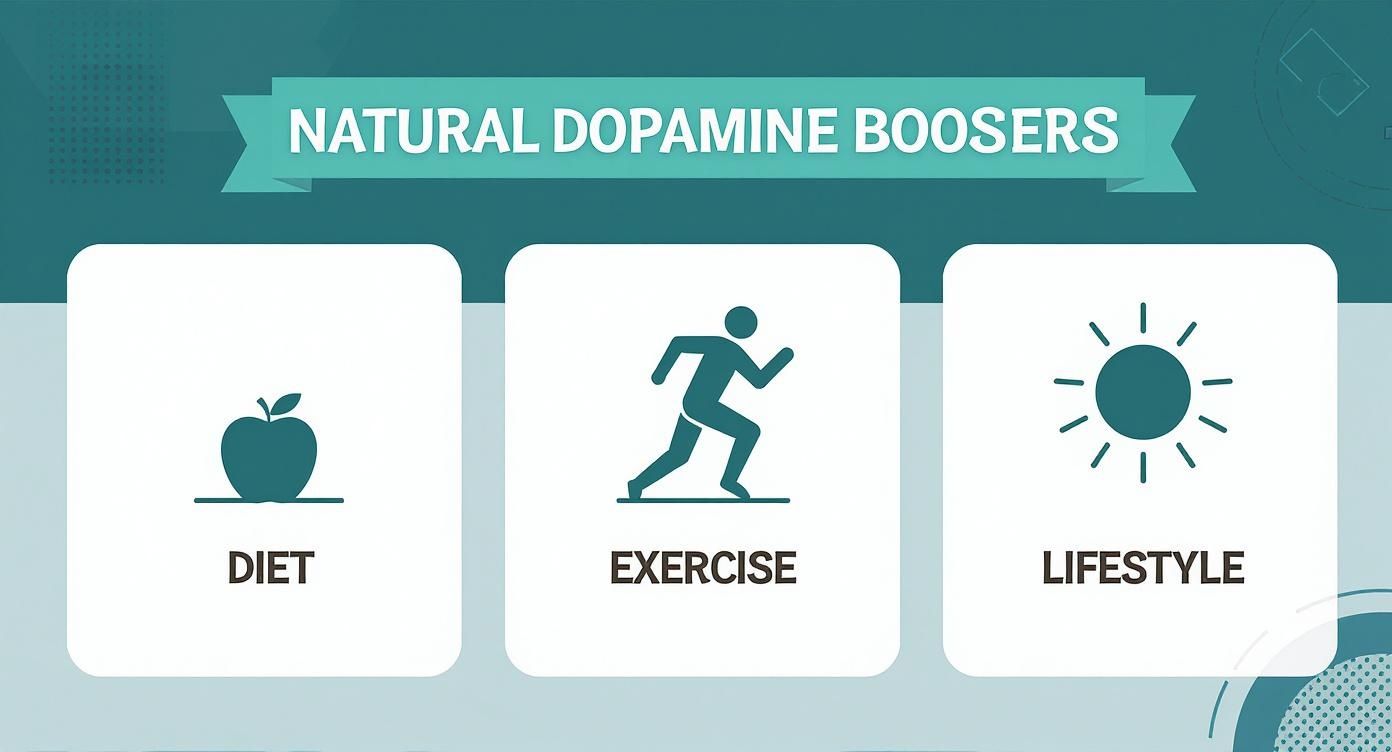
As you can see, things like diet, exercise, and simple lifestyle habits all work together to support optimal dopamine function and overall brain health.
Before diving into the "how," let's take a quick look at the mechanisms at play. This table summarizes the core strategies we'll be discussing.
Natural Dopamine Boosters at a Glance
This table provides a high-level overview of the most effective, science-backed methods for naturally supporting your dopamine system. Think of it as your cheat sheet for building a dopamine-friendly lifestyle.
| Method | How It Works | Quick Examples |
|---|---|---|
| Protein-Rich Diet | Provides Tyrosine, the amino acid precursor to dopamine. | Lean meats, fish, eggs, tofu, beans, lentils. |
| Regular Exercise | Stimulates dopamine release and increases receptor sensitivity. | Strength training, running, yoga, even a brisk walk. |
| Quality Sleep | Allows the brain to replenish dopamine and regulate its receptors. | Aim for 7-9 hours a night with a consistent sleep schedule. |
| Mindfulness & Sun | Meditation reduces stress (cortisol), while sunlight aids production. | 10 minutes of morning meditation, a walk during your lunch break. |
| Strategic Supplementation | Fills nutritional gaps and provides targeted dopamine precursors. | L-Tyrosine, L-Theanine, Citicoline (like in Dialed In). |
Each of these pillars contributes to a more resilient and responsive dopamine system, leading to better focus, motivation, and mood without the crashes.
Understanding the Brain's Reward System
At its core, your brain’s reward system is a survival tool. It’s designed to reinforce behaviors that keep you alive and thriving—like eating, connecting with others, and achieving goals. Dopamine is the main chemical messenger in this whole operation.
When you do something your brain sees as beneficial, it releases a shot of dopamine. This feels good, so you're naturally encouraged to do that thing again.
For example, that buzz you feel after a solid workout? That's dopamine reinforcing the positive habit of exercise. Even the small hit of satisfaction from ticking an item off your to-do list is a mini dopamine release at work.
The real secret to sustainable motivation isn't chasing huge dopamine spikes from sugar, notifications, or other cheap sources. It's about creating a steady, reliable supply through healthy, repeatable habits that build long-term resilience.
Once you get how this works, you can start being intentional about it. Instead of relying on quick fixes that leave you drained, you can build a lifestyle that provides a consistent, healthy dopamine drip.
This creates an incredibly powerful positive feedback loop:
- You crush a small goal and get a dopamine release.
- That feeling of accomplishment motivates you to tackle the next thing.
- The more you do it, the stronger those neural pathways for productivity become.
This is how you turn motivation from a fleeting feeling you have to wait for into a reliable resource you can tap into whenever you need it.
The Ultimate Dopamine Diet to Fuel Your Brain

Think of your brain as a high-performance engine. Just like a car, it can't run on fumes—it needs the right fuel to perform. When it comes to producing dopamine, the raw materials come directly from your plate. Shifting your mindset to see food as fuel for your mind is the first real step in learning how to increase dopamine naturally.
This isn’t about some crazy restrictive diet or complicated meal plan. It's about strategically adding specific foods that give your brain the building blocks it needs to keep your motivation, focus, and drive humming along smoothly.
The Power of Protein and Tyrosine
The entire dopamine production line starts with one key amino acid: tyrosine. Your brain takes tyrosine, converts it into L-DOPA, and then transforms that into dopamine. Without a steady supply of tyrosine, your brain simply can't manufacture enough of this critical neurotransmitter. It's a non-negotiable ingredient.
So, where do you find it? The best sources are protein-rich foods. Every high-protein meal is like making a direct deposit into your brain's dopamine account.
Because dopamine can't cross the blood-brain barrier on its own, your brain has to make it internally from these dietary building blocks. By upping your intake of tyrosine-rich foods, you're giving your brain exactly what it needs to support healthy dopamine levels, which can lead to better mood and sharper thinking.
Here are some tyrosine powerhouses you can easily add to your meals:
- Lean Meats: Chicken and turkey breast are fantastic, lean sources of high-quality protein.
- Eggs: A simple breakfast of scrambled eggs gives your brain a powerful start to the day.
- Almonds and Seeds: A handful of almonds or pumpkin seeds makes for a perfect focus-boosting snack.
- Legumes: Lentils, beans, and chickpeas are excellent plant-based options packed with protein.
Your Gut-Brain Connection
The link between your gut and your brain isn't just hype; it's a rapidly growing area of neuroscience. A healthy gut microbiome—that community of trillions of bacteria in your digestive tract—doesn't just manage digestion. It also plays a massive role in producing neurotransmitters, including dopamine.
Nourishing your gut is another powerful, indirect way to support your brain. One of the best ways to do this is with fermented foods.
A happy gut often leads to a happy mind. The bacteria in your digestive system communicate directly with your brain, influencing everything from mood to motivation.
Consider adding these gut-friendly foods to your rotation:
- Yogurt with live cultures
- Kefir
- Sauerkraut
- Kimchi
These foods introduce beneficial bacteria that help maintain a healthy balance in your gut, which in turn supports the complex systems involved in dopamine regulation.
Foods to Limit for Better Focus
Just as important as what you add to your diet is what you limit. Certain foods can throw your dopamine signaling out of whack, leading to those frustrating crashes in energy and motivation.
The biggest culprit? Excess sugar.
A sugary snack or drink might give you a quick, temporary dopamine spike, which feels great for a minute. But it's always followed by a sharp crash that leaves you feeling sluggish, unfocused, and even more tired than before. It’s a vicious cycle.
Similarly, diets high in saturated fats—often found in fried and highly processed junk foods—have been shown to interfere with dopamine signaling over time. By cutting back on these, you create a more stable internal environment for your brain to thrive.
Balancing your diet is a huge piece of the puzzle. For more on this, check out our guide to the best energy and focus vitamins.
By making these simple, targeted dietary changes, you're doing more than just eating healthier—you're handing your brain the precise tools it needs to build the focus and drive you rely on every single day.
Move Your Body to Boost Your Mind

While your diet provides the raw materials for dopamine, physical activity is the spark that really gets the engine running. The link between moving your body and boosting your mind is one of the most powerful and reliable ways to naturally increase dopamine. It’s not just a fuzzy feeling of wellness—exercise triggers real, measurable changes in your brain chemistry.
That feeling of clarity and satisfaction after a great workout? That’s your dopamine system firing on all cylinders. This immediate mood lift, often called the "runner's high," is just the start. When you make physical activity a regular part of your life, you create long-term improvements in how your brain produces and uses dopamine, building a much stronger foundation for focus and motivation.
The Science Behind the Sweat
When you get moving, especially with aerobic exercise, your brain responds in some incredible ways. It ramps up both the creation and release of dopamine in the parts of your brain tied to reward and motivation. But it doesn't stop there.
Regular exercise actually makes your dopamine receptors more sensitive.
Think of it like upgrading the antenna on your phone. Even if the signal strength (your dopamine level) stays the same, a better antenna (more sensitive receptors) picks up that signal more clearly. This means you get a bigger payoff from the dopamine your brain is already making.
This isn’t just theory; it's well-documented. Research consistently shows that physical exercise is one of the most effective natural dopamine boosters, directly impacting how motivated and happy we feel. Even a short, brisk walk can get things flowing. For instance, a notable 2016 study found that people who did just 30 minutes of moderate aerobic exercise showed increased dopamine receptor availability and sharper cognitive function.
Finding Your Dopamine-Boosting Rhythm
Here's the best part: you don't need to train like a professional athlete to see these benefits. The real secret is consistency, not crazy intensity. The goal is to find activities you actually enjoy, because that's what turns a chore into a sustainable habit.
Different types of movement offer their own unique perks:
- Aerobic Exercise: Things like running, cycling, swimming, or even just a brisk walk are fantastic for getting dopamine flowing. A morning jog can cut right through brain fog and set a productive tone for your entire day.
- Strength Training: Lifting weights doesn't just build muscle; the feeling of accomplishment you get from hitting a new personal record provides a powerful, rewarding dopamine hit. Progressively getting stronger taps directly into your brain’s goal-reward system.
- Yoga and Mindful Movement: Practices like yoga blend physical activity with mindfulness, which helps lower stress (a known dopamine killer) while gently elevating your neurotransmitter levels.
The most effective workout for your dopamine system is the one you'll actually do. Forget forcing yourself into exercises you dread. The magic happens when you find a way to move that feels less like work and more like its own reward.
Consistency Is Your Greatest Ally
A single workout can give you a nice temporary boost, but building a real routine is what creates lasting change. When you exercise regularly, your brain adapts by improving its baseline dopamine function. This means you’ll start to feel more motivated and focused even on your rest days.
The goal is to create a positive feedback loop: you exercise, you feel good, and that good feeling motivates you to do it again. Start small. Even 15-20 minutes a day can make a massive difference if you stick with it.
If you're dealing with joint pain or are just getting started, you have plenty of options. Exploring the best low impact workouts is a great way to boost dopamine without putting unnecessary strain on your body.
And for an extra edge before you start, giving your focus a little jumpstart can make all the difference. Some people find that simple habits, like chewing gum, can help sharpen their focus and get them in the zone. You can learn more about how using pre-workout gum might fit into your routine. By weaving consistent movement into your life, you're actively rewiring your brain for a better mood, stronger motivation, and lasting mental clarity.
Lifestyle Habits for Sustainable Dopamine Support
Beyond what you eat or how much you exercise, your daily routines are what truly determine whether your dopamine system thrives or just gets by. Learning to naturally increase your dopamine means looking at the whole picture.
These habits aren't quick fixes. Think of them as the foundation for long-term mental performance and a stable mood, day in and day out. Get these right, and you’re building a resilient system that supports the focus and motivation you need. Let’s dig into the practical, science-backed habits that actually move the needle.
Prioritize High-Quality Sleep
Sleep is non-negotiable for a healthy brain. It's not just about resting; it's a critical reset period.
During deep sleep, your brain clears out metabolic junk and, crucially, replenishes its supply of neurotransmitters like dopamine. This is also when your dopamine receptors recalibrate, essentially making them more sensitive and effective for the next day.
When you're sleep-deprived, that entire process gets derailed. Research shows that even a single night of poor sleep can blunt your dopamine receptor activity. The result? You feel sluggish, unmotivated, and foggy, no matter how much coffee you drink.
Improving your sleep hygiene is one of the most powerful things you can do for your mental clarity. Here are a few things that work:
- Lock in Your Schedule: Go to bed and wake up around the same time every day—yes, even on weekends. This trains your body's internal clock.
- Create a Cave: Keep your bedroom dark, cool, and quiet. Blackout curtains and a white noise machine can be game-changers.
- Have a Wind-Down Ritual: For the last hour before bed, ditch the screens. Read a real book, do some light stretching, or take a warm bath. Signal to your brain that it's time to power down.
Get Your Daily Dose of Sunlight
Sunlight, especially in the morning, is a powerful signal for your brain. It helps set your circadian rhythm, which directly influences everything from your sleep-wake cycle to your neurotransmitter production.
Getting outside for just 10-15 minutes can make a real difference. Some evidence suggests sunlight exposure can actually increase the density of dopamine receptors in key brain areas. This means your brain gets better at using the dopamine it already has, making you feel more alert and motivated.
Think of morning sun as the "on" switch for your brain. It kickstarts a cascade of hormones and neural processes that set you up for a day of alertness and better focus.
It's a surprisingly easy habit to build. Have your morning coffee on the porch, take a quick walk before work, or even just sit by a sunny window. The consistency is what matters—this small action compounds over time to support a more robust dopamine system.
Manage Stress with Mindfulness
Chronic stress is a dopamine killer. When you’re constantly wound up, your body is flooded with cortisol, a stress hormone that messes with dopamine production and signaling. This is exactly why periods of high stress often bring on brain fog, procrastination, and that feeling of just not caring.
Mindfulness and meditation are proven tools to fight back. By practicing mindfulness, you train your brain to observe thoughts without getting sucked into a stress spiral. It dials down the noise.
Meditation has been shown to increase dopamine release by calming the nervous system. You don’t need to become a monk, either. A consistent practice of just 5-10 minutes a day can make a massive difference in how you handle stress and maintain your focus. If you're looking for more ways to sharpen your mental game, check out our guide on other tools for boosting energy and focus.
Seek Novelty and Achieve Small Goals
Your brain is wired to release dopamine in response to two things: novelty and accomplishment.
Trying new things—learning a skill, exploring a new neighborhood, even listening to different music—activates your brain's reward pathways. It keeps your mind engaged and pulls you out of the mental ruts that crush motivation.
At the same time, setting and hitting goals is a massive dopamine trigger. The trick is to break big projects down into small, manageable steps. Each time you check an item off your to-do list, you get a small but satisfying dopamine hit. This creates a powerful feedback loop where accomplishment fuels more motivation.
By weaving these habits into your life—quality sleep, sunlight, mindfulness, and goal-setting—you're creating a holistic support system that keeps your dopamine environment healthy and responsive for the long haul.
Using Strategic Supplements for Enhanced Focus

Once you've dialed in your diet, exercise, and sleep, you’ve built a solid foundation. But what if you want to sharpen the edge? This is where strategic supplements come in—not as a crutch, but as a powerful amplifier for your cognitive performance.
Think of it this way: your lifestyle habits build the factory, but supplements provide the specialized raw materials to get the production line humming. It’s how you give your brain targeted support exactly where it’s needed most.
Key Ingredients for Dopamine Synthesis
Certain compounds are famous for their direct role in the dopamine pathway. They typically fall into one of two camps: precursors, which are the literal building blocks of dopamine, and cofactors, the helper nutrients that make the chemical magic happen.
Understanding these ingredients shows you why a well-designed formula can make a noticeable difference.
Here are a few of the heaviest hitters:
- L-Tyrosine: This is the primary amino acid your brain grabs to start the dopamine-building process. Giving your brain plenty of L-Tyrosine is like making sure the factory has a steady supply of high-quality steel.
- Mucuna Pruriens: This plant is a natural source of L-DOPA, the compound that comes right before dopamine. It essentially lets you skip a step in the synthesis process, offering more direct and immediate support.
- B-Vitamins: Vitamins like B6 and B9 (Folate) are critical cofactors. They’re the skilled workers on the assembly line, converting L-Tyrosine into the finished dopamine molecule. Without them, the whole process grinds to a halt.
If you’re digging into this, it’s worth it to explore dopamine precursors like Mucuna and L-Tyrosine to see how their unique mechanisms complement each other.
The best supplements don't just throw one ingredient at the problem. They combine precursors and cofactors synergistically. Each component supports the others, creating a formula that delivers a much greater effect on mental clarity and drive.
This intelligent formulation ensures you’re not just getting the building blocks, but also the tools required to actually use them. For a deeper dive into these crucial nutrients, check out our guide on the best supplements for mental clarity.
A Formula Designed for Focus
This is the exact science that powers our Dialed In Nootropics. We didn't just want to create another energy product; we engineered a synergistic formula designed to support the brain’s natural performance pathways from the ground up.
By combining key nootropics—including the critical dopamine precursor N-Acetyl L-Tyrosine—we give your brain the precise resources it needs for sustained focus and motivation.
Dialed In Focus Pouches are made for those moments when you need to be at your absolute best. Whether it’s a complex project, an intense workout, or a long drive, each pouch delivers a carefully measured blend of ingredients that work together. The goal is to promote mental clarity without the jitters or crash you get from high-stimulant junk.
Our formula provides:
- Clean Mental Clarity: By supporting neurotransmitter production, Dialed In helps you slice right through brain fog.
- Smooth Energy: We chose ingredients that provide a steady, consistent lift, not a jarring spike followed by a nosedive.
- Convenience: All the power of a smart supplement stack, delivered in a simple, fast-acting focus pouch or nootropic gum.
For anyone who has already put in the work to optimize their lifestyle and is looking for that next level of cognitive enhancement, Dialed In Nootropics offers a reliable, effective solution. It’s the final piece of the puzzle, designed to complement your hard work and help you operate at your peak potential.
Frequently Asked Questions
When you start tweaking your habits to support your brain chemistry, questions are bound to pop up. It’s totally normal to wonder about timelines, safety, and which changes really move the needle. Let's clear up some of the most common questions people have when they start this journey.
How Long Does It Take to Notice a Difference?
This is the big one, and the honest answer is: it depends. Your unique brain chemistry and which habits you’re focusing on play a huge role.
Some effects are almost instant. You might feel a mood lift right after a solid workout or get that spine-tingling chill from a great song. Those are quick, in-the-moment dopamine releases, and they feel fantastic.
But for the deep, lasting improvements in focus, drive, and motivation, consistency is king.
Think of it like charging a battery. Some habits give you a quick power-up, while others slowly and steadily increase the battery's overall capacity. Both are crucial for learning how to increase dopamine naturally.
Here’s a realistic timeline of what you can expect:
- Dietary Changes: After a few weeks of consistently eating more tyrosine-rich foods, you might notice subtle shifts in your energy levels and mental clarity. It's not an overnight fix, but it builds a solid foundation.
- Lifestyle Habits: For things like regular exercise and better sleep, give it several weeks to a few months. This is how long it takes to forge new neural pathways and actually improve your dopamine receptor sensitivity for real, long-term change.
Are There Any Risks to Boosting Dopamine Naturally?
For the most part, no. The lifestyle methods we've covered—a balanced diet, consistent exercise, good sleep hygiene—are overwhelmingly safe and incredible for your overall health. They support your entire body, not just your brain.
The only real trap to watch out for is chasing constant, over-the-top stimulation. Pushing for huge dopamine spikes from things like social media binges, sugary snacks, or other quick fixes can lead to a "dopamine crash" or a nasty dependency cycle. The goal here is balance and sustainability, not an endless high.
When it comes to supplements, it’s always smart to stick to the recommended dosages. We always suggest chatting with a healthcare professional before adding any new supplement to your routine, especially if you have pre-existing health conditions or are taking other medications.
What Is the Single Best Habit for a Dopamine Increase?
If I had to pick just one, it would be regular physical exercise. Ask any neuroscientist, and they'll likely agree. It's one of the most powerful and reliable strategies because it works on so many levels at once.
Exercise doesn't just trigger an immediate dopamine release; it also makes your dopamine receptors more available and can even help your brain grow new ones over time. So you get both the immediate post-workout clarity and long-term upgrades to your baseline mood and motivation.
Want to supercharge the effect? Combine consistent exercise with a protein-rich diet. This one-two punch ensures your brain gets both the stimulus to release dopamine and the raw materials it needs to produce it. That synergy is the cornerstone of any effective plan to naturally boost your dopamine.
Ready to take your focus to the next level? The habits in this guide build the foundation, but when you need to be at your sharpest, Dialed In Nootropics provides the targeted support your brain needs. Our science-backed formulas are designed to enhance mental clarity and drive, without the crash.
Shop our Focus Pouches and Nootropic Gum today at focuspouches.com


