

How to Stay Awake During Night Shift: how to stay awake during night shift tips
Staying sharp and energized during a night shift isn't just about slamming coffee. It's a strategic game of managing your sleep, fueling your body correctly, and creating an environment that signals "awake" to your brain. The goal is to work with your body's internal clock, not just fight it every step of the way.
This means turning your daytime bedroom into a dark, silent cave and then using bright light, movement, and smart nutrition to stay dialed in when you're on the clock.
Your Blueprint for Thriving on the Night Shift

When the rest of the world is winding down, your day is just getting started. This reality forces you into a head-on collision with your body’s natural sleep-wake cycle, the circadian rhythm.
Pushing through the night isn't about raw willpower. It’s about understanding the deep biological challenge of this circadian mismatch. It affects more than just your energy—it hits your mood, cognitive function, and job performance. And that's a big deal, whether you're a nurse making critical decisions, a developer hunting for a bug in code, or a truck driver who needs absolute focus on the road.
This guide goes beyond the usual tips. It's a complete blueprint for not just surviving, but actually thriving on the night shift.
Understanding the Core Challenge
Your body is hardwired to be awake when it's light out and asleep when it's dark. Simple as that. Working overnight throws a massive wrench in that ancient programming, and the fallout is predictable:
- Persistent Fatigue: That bone-deep exhaustion you feel even after you think you got a full day's sleep.
- Difficulty Concentrating: The frustrating brain fog that makes even simple tasks feel like climbing a mountain.
- Mood Instability: Finding yourself more irritable or emotionally reactive from the constant sleep disruption.
The secret to mastering the night shift is accepting that you’re asking your body to do something profoundly unnatural. Success demands a deliberate, multi-pronged strategy that gives sleep, nutrition, and your environment equal attention.
A New Approach to Night Shift Alertness
Forget relying on a constant drip of sugary energy drinks and sheer grit. We’re going to walk through actionable strategies to own the night. You'll learn how to optimize your daytime sleep, fuel your body for sustained energy, and use simple environmental cues like light to your advantage.
We'll also look at how scientifically formulated tools can give you a clean, effective edge. Products like Dialed In's Nootropic Gum offer a smarter way to boost alertness without the inevitable crash, delivering ingredients that support focus and mental clarity right when you need it most.
For a more holistic look at staying healthy and vital on a tough schedule, check out these comprehensive wellness resources designed for demanding lifestyles. Think of this as your complete operational manual for peak nighttime performance.
Optimize Your Daytime Sleep for Nighttime Performance
Staying sharp at 3 AM doesn’t start with a triple-shot espresso. It starts hours earlier with a solid block of restorative daytime sleep. For anyone working the night shift, the real battle against fatigue is often lost before you even clock in, usually due to lousy rest.
The trick is to stop thinking of it as "fighting" exhaustion. Instead, you need to master the art of recovery. It’s about creating a sleep environment so dialed-in that it literally tricks your body into thinking day is night. This isn't just about logging more hours in bed; it's about getting deep, uninterrupted sleep that clears your mental slate and preps you for the shift ahead.
Engineer Your Sleep Sanctuary
First things first: your bedroom needs to become a cave. It has to be completely sealed off from the cues of the daytime world. Sunlight is the most powerful signal telling your brain to wake up, so declaring war on it is your primary mission.
Invest in real blackout curtains—the kind that block 100% of incoming light. Even tiny slivers of sun can mess with your melatonin production and keep you out of the deepest sleep stages. For good measure, throw on an eye mask for total darkness.
Next up is sound. The daytime is full of it—traffic, leaf blowers, package deliveries—all of which can yank you right out of sleep. A white noise machine is non-negotiable here. It creates a consistent blanket of sound that masks those sudden, jarring noises. A simple fan or a good pair of earplugs can also do the trick.
Your bedroom is your most powerful tool for resetting your internal clock. The goal is simple: make it dark, quiet, and cool. This signals to your body that it's time for deep rest, no matter what time it is outside.
Finally, get the temperature right. Study after study shows that a cooler room helps you sleep better. Aim for somewhere around 65°F (18°C). That slight drop in temperature is a key signal that tells your body to power down, helping you fall asleep faster and stay asleep longer.
Build a Pre-Sleep Wind-Down Routine
You can't go from 100 to 0 in an instant. You need a transition period, a buffer zone that tells your body and mind it’s time to shut down—even when the sun is blazing. This is where a consistent pre-sleep routine comes in.
Give yourself a 30-60 minute window before bed that’s completely free from stimulation.
- Dim All Your Lights: About an hour before you plan to sleep, turn down the lights in your house. Kill the bright overheads and switch to lamps.
- Get Off Your Screens: The blue light from your phone, tablet, and TV is a well-known melatonin killer. Put all devices away at least an hour before you hit the pillow.
- Find Your "Off" Switch: Read a real book (not a screen), listen to a calm podcast or some chill music, or do some light stretching. Whatever helps you unwind.
- Consider a Calming Supplement: Certain compounds can help ease you into a state of rest. For instance, L-Theanine is an amino acid found in green tea that’s known for promoting relaxation without making you drowsy. Understanding what L-Theanine can offer is a smart move when building out your wind-down toolkit.
Master Communication with Family and Friends
Let’s be real—one of the toughest parts of working nights is dealing with the rest of the world, which runs on a 9-to-5 clock. Your need for quiet daytime sleep can be hard for others to get. The only way through this is with clear, direct communication.
Sit down with your family or roommates and have a frank conversation. Explain that your daytime sleep is just as important as their nighttime sleep. You can use a simple script like this:
"Hey, I need your help to make this night shift schedule work for me. My 'night' is from 9 AM to 5 PM, and getting solid sleep then is critical for my job and my health. Can we try to keep the noise down during those hours?"
As for your friends, be proactive. Let them know your schedule in advance and don't be afraid to turn down daytime plans. Most people will get it once they understand what you’re juggling. A simple sign on your door asking for no knocks or doorbell rings can also be a lifesaver against unexpected interruptions.
Strategic Fueling for All-Night Endurance
What you put in your body during a night shift is just as critical as your sleep strategy. The vending machine and late-night drive-thru might seem like saviors at 3 AM, but they're just setting you up for a nasty energy crash that will kill your focus and performance.
To truly master the night, you have to fuel your body like a high-performance machine. This isn't just about surviving until sunrise; it's about thinking strategically about what you eat, when you eat, and how you supplement for alertness to stay sharp from clock-in to clock-out.
Timing Your Meals for Peak Performance
Your digestive system isn't designed to process a heavy meal in the middle of the night—it’s also tied to your circadian rhythm. A greasy burger at 3 AM is a recipe for bloating, indigestion, and that sluggish feeling you're desperately trying to fight.
Instead, let's flip your eating schedule to support sustained energy.
- Your "Main" Meal: Eat a balanced, substantial meal before you head to work. Think of this as your dinner. It should be rich in lean protein, complex carbs, and healthy fats—things like grilled chicken with quinoa and steamed vegetables—to give you a slow-burning fuel source that lasts for hours.
- The Mid-Shift "Snack": Halfway through your shift, go for something much lighter. A small meal or a high-quality snack is perfect here. Think Greek yogurt with berries, a handful of almonds, or a quick protein shake.
- Avoid the Sugar Trap: Sugary snacks and drinks are your worst enemy. They give you a quick energy spike followed by an even faster crash, leaving you more tired and unfocused than before.
Treat your pre-shift meal like your main dinner and your mid-shift food like a light lunch. This simple shift in perspective works with your body's digestive rhythm, not against it, helping you avoid that groggy, weighed-down feeling.
The Unsung Heroes: Hydration and Nutrition
Never underestimate the power of water. Dehydration is a massive trigger for fatigue and cognitive fog. Even being slightly dehydrated can mess with your concentration and reaction time—a serious risk on any job. Keep a big water bottle handy and sip on it consistently throughout your shift.
Fueling your body correctly is a non-negotiable part of the night shift game plan.
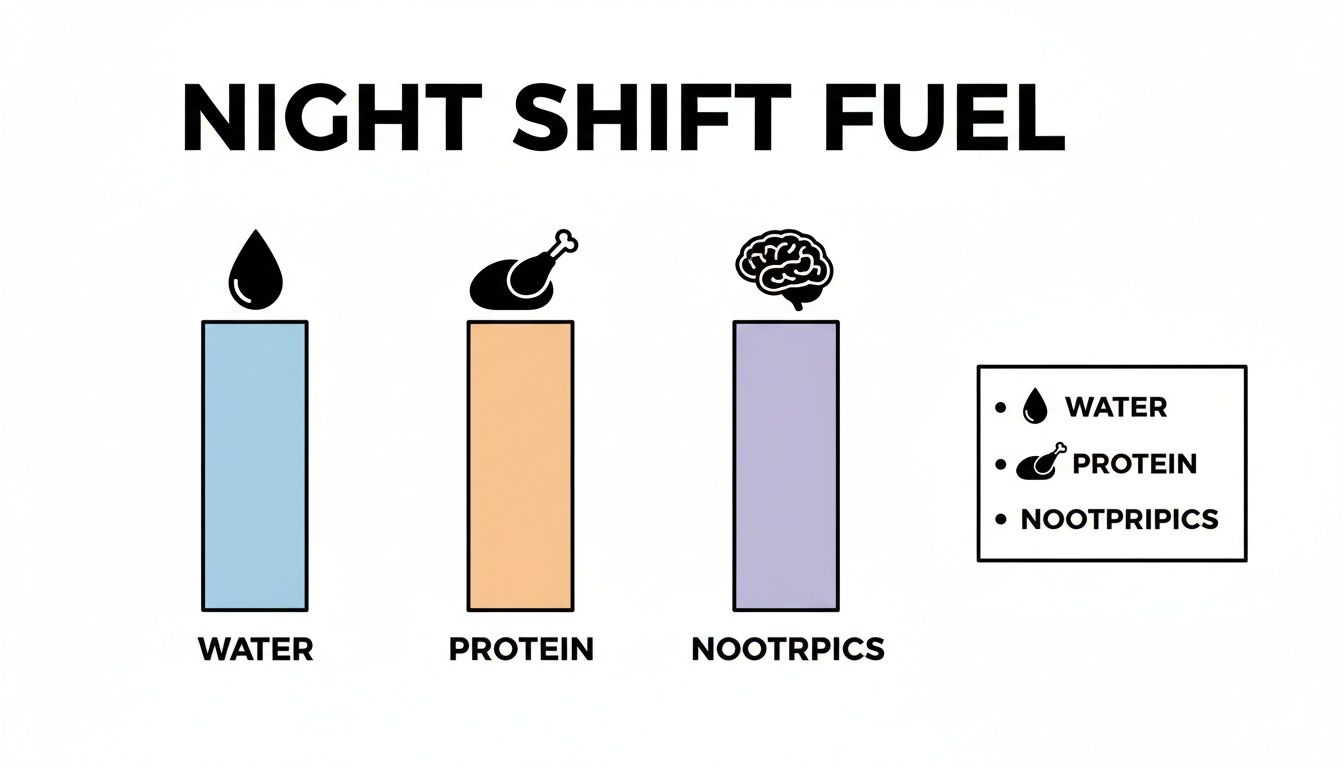
This isn't just about getting through one night, either. It’s about long-term health. Consistently poor fueling choices add up. Research has shown that heavy night shift work increases the risk of hypertension by 9% and obesity by 11.4%. This stuff matters.
To dig deeper into the science behind common energy boosters, the table below breaks down the pros and cons of each, helping you make smarter choices when you're feeling the fatigue set in.
Night Shift Energy Sources Compared
| Energy Source | Onset Time | Duration | Key Benefit | Common Drawback |
|---|---|---|---|---|
| Water | Immediate | N/A | Prevents fatigue from dehydration | No stimulant effect |
| Coffee/Caffeine | 15-45 mins | 3-5 hours | Quick, potent alertness boost | Jitters, anxiety, and a hard crash |
| Sugar/Energy Drinks | 5-15 mins | 1-2 hours | Very fast (but temporary) energy spike | Severe energy crash, empty calories |
| Protein Snacks | 30-60 mins | 2-4 hours | Sustained energy, stabilizes blood sugar | Slower to kick in than stimulants |
| Nootropics | 10-30 mins | 4-6 hours | Clean energy, enhanced focus, no crash | Requires choosing a quality product |
As you can see, while coffee and sugary drinks offer a quick fix, they often come with significant downsides. Nootropics and protein, on the other hand, provide a much more stable and effective form of energy to power you through the entire night.
Mastering Caffeine and Nootropics
Caffeine is the default for most night-shifters, but how you use it makes all the difference. Chugging a massive coffee when you arrive is a classic mistake. It leads to jitters and a brutal crash right when you need to be at your sharpest.
A much better approach is to use smaller doses timed strategically. If you're brewing your own, starting with high-quality coffee beans makes a difference. But an even smarter strategy involves bypassing the brew entirely. The science behind caffeine sustained release proves that smaller, controlled doses deliver a smoother energy curve without the negative side effects.
This is where modern nootropics have a massive advantage. Instead of just jolting your system, they provide clean energy while supporting cognitive function and focus. It’s a smarter way to stay alert.
- Dialed In Nootropic Gum: For a fast-acting mental boost, our nootropic gum is perfect. It delivers key ingredients through oral absorption, which is 3-5 times faster than pills, giving you calm, clear focus the moment you need it.
- Dialed In Energy Pouches: When you need clean, sustained energy without the crash, our energy pouches are the ideal tool. They provide a smooth, steady release that helps you power through the toughest hours of your shift, ensuring you stay alert and in control.
Harnessing Light, Movement, and Breaks for Alertness

Beyond caffeine and sleep schedules, your immediate environment has a huge say in whether you feel sharp or sluggish. Your brain is hardwired to respond to basic cues like light and movement, and you can absolutely use that to your advantage.
By strategically manipulating these elements, you’re basically creating an on-demand alertness system. This isn't just about fighting off sleep; it's about actively signaling to your body that it's time to be awake and productive.
Use Light as an On-Demand Energy Source
Light is the single most powerful signal for your body’s internal clock. Just as you avoid it before your daytime sleep, you need to soak it up during your shift to stay awake.
When you start your shift, get some bright, full-spectrum light in your eyes. This slams the brakes on melatonin—the hormone that makes you sleepy—and tells your brain it’s go-time.
- Bright Workstation Lighting: If you can, set yourself up under the brightest lights in the room. It makes a difference.
- Light Therapy Boxes: For a targeted hit, a small light therapy box at your desk is a game-changer. A 20-30 minute session at the start of your shift can set a productive tone for the entire night.
Then, you need to do the exact opposite as your shift ends. In the last hour or two, dim your screens and avoid those harsh overhead lights. A good pair of blue-light-blocking glasses for the drive home can help your brain start winding down, making it much easier to fall asleep when you finally hit the pillow.
The Power of Strategic Movement
Sitting still for hours is an open invitation for drowsiness. When you feel that wave of fatigue coming on, the best thing you can do is get up and move. Seriously, even a few minutes of activity can wake you right back up.
Movement gets blood flowing to your brain, delivering a fresh shot of oxygen that boosts alertness and clears out the mental fog. It also breaks the monotony that’s so good at lulling you to sleep.
Staying still is a recipe for fatigue. A quick walk, a few simple stretches, or even just standing up can be enough to disrupt the drowsiness signal and reset your focus.
You don't need to run a marathon. The goal is to sprinkle in small, accessible bursts of activity:
- Desk Stretches: Simple neck rolls, shoulder shrugs, and torso twists can release built-up tension.
- Quick Walks: Take a brisk five-minute walk around the floor or up and down a flight of stairs.
- On-the-Spot Exercises: A few squats, lunges, or calf raises right at your station will get your heart rate up just enough.
Think of it as a physical hack to remind your body it’s supposed to be working.
Master the Micro-Break and Power Nap
Sleeping on the job sounds wrong, but a short, planned nap can be your most powerful tool. A quick power nap of 10-20 minutes is the sweet spot—it restores alertness and performance without causing that groggy, just-woke-up feeling.
Working nights is a reality for about 20% of the workforce in developed countries. A 2023 study of over 37,000 shift workers found that a shocking 51% showed signs of at least one sleep disorder. While micro-naps can boost alertness by 34% without grogginess, you need something more for sustained mental endurance.
If napping isn't an option, a five-minute micro-break is the next best thing. Step away from your desk. Do something totally different—listen to a song, chat with a coworker, or just stare out a window for a few minutes. This mental reset helps prevent burnout and keeps your mind sharp.
A fast-acting booster like Dialed In’s Nootropic Gum is perfect for these short breaks. You can find more details about energy gum here to see how it fits into a quick-recharge strategy when a nap just isn’t in the cards.
The Long Game: Preventing Burnout and Ensuring Safety
Staying awake during a single shift is one thing. Winning the long-term war against burnout is what actually matters for your health and career.
Working against your body's natural clock isn't just tiring; it’s a chronic stressor that will lead to total physical and mental exhaustion if you don't manage it proactively. This is about building a sustainable lifestyle, not just chugging another energy drink. Over time, the sleep debt and circadian chaos take a serious toll. Prevention is your best and only real strategy.
Recognizing the Early Signs of Burnout
Burnout doesn't just show up one day. It’s a slow burn—a gradual chipping away at your energy, motivation, and well-being. Knowing the early warning signs is the key to stepping in before it takes over completely.
Keep an eye out for these red flags:
- Chronic Fatigue: A bone-deep exhaustion that sleep just doesn't seem to fix anymore.
- Increased Irritability: Finding yourself snapping at coworkers or family over small things.
- Cynicism or Detachment: Feeling disconnected from your job and losing that sense of purpose you once had.
- Declining Performance: Making more mistakes, struggling to focus, or finding it hard to stay on task.
These aren't just "bad days." They're signals from your body and mind that your current routine isn't sustainable. Ignoring them is a fast track to serious burnout that will damage your job, health, and relationships.
The goal isn't just to stay awake, it's to stay healthy. Prioritizing your mental and physical well-being is the only way to build a long and successful career on the night shift.
Strategies for Mental Health and Social Connection
Working while the rest of the world sleeps can be incredibly isolating. It’s far too easy to feel cut off from friends, family, and the normal rhythm of life. You have to be intentional about managing your mental health and social connections—it's non-negotiable.
Schedule social time, even when it feels weird. A "dinner" date that's actually your breakfast or a morning video call with family can make a massive difference. And don't forget to connect with your fellow night-shifters; they’re the only ones who truly get it. For a deeper dive into cognitive wellness, our guide on the best supplements for brain health offers some great insights to complement a healthy lifestyle.
Your Post-Shift Commute: The Final, Critical Hurdle
One of the most overlooked dangers of night shift work is the drive home. Your shift is done, the adrenaline is gone, and exhaustion hits you like a wall. This is precisely when your risk of an accident skyrockets.
In the US alone, over 20 million people—that's about 15% of the workforce—work regular night shifts. A staggering 61.8% of them report getting insufficient sleep. That’s a huge problem because a sleep-deprived brain is an impaired brain. Cognitive function plummets and response times can slow by 20-30%, an impairment level similar to being under the influence of alcohol. For professionals in high-stakes roles like healthcare or logistics, this is a recipe for disaster. You can discover more insights from NIOSH on shift work and sleep to understand the full scope of these risks.
The fix requires a smart tool for that specific window of danger. A quick power nap before leaving is great, but let's be real, it's not always an option. This is the perfect moment for a fast-acting nootropic.
Our Focus Pouches are designed for exactly this scenario. They deliver Citicoline for sharp focus and L-Theanine to kill the jitters, all with a smooth lift from Guarana. Pop one in just before your commute to get that clean, crash-free alertness you need to make it home safely—without loading up on caffeine right before you need to sleep.
Your Night Shift Questions Answered
Even when you've got a solid game plan, working against your body clock always throws a few curveballs. Let's tackle some of the most common questions that pop up so you can fine-tune your approach and feel more in control of your shifts.
Should I Sleep Immediately After My Shift?
For most people, the answer is a hard yes. The sooner you can get to sleep after your shift ends, the less sleep debt you'll rack up. It's tough, but resisting the urge to run errands or decompress on the couch will pay off massively when you need to be alert later.
The real pro move? Try to keep your sleep schedule as consistent as possible, even on your days off. Constantly flipping back and forth is a recipe for chronic fatigue, and it makes every single shift feel like you’re starting from square one.
How Can I Avoid the Caffeine Crash?
This is a big one. The key is to ditch the massive cup of coffee at the start of your shift and think smaller and more strategic. That huge, front-loaded dose of caffeine is exactly what causes the jitters and that brutal crash a few hours later.
A much smarter approach is to use a balanced nootropic blend. When you combine caffeine with ingredients like L-Theanine, you get a much smoother, more sustained energy curve. You get the alertness you need without the nasty side effects that can absolutely tank the second half of your shift. For more on this, you can check out our frequently asked questions about optimizing clean energy and focus.
What Is the Safest Way to Drive Home?
Your drive home is, without a doubt, one of the most dangerous parts of your day. Drowsy driving is impaired driving—period. If you feel even slightly out of it, do not get behind the wheel.
Your safest bet is a quick 15-20 minute power nap before you even leave the workplace. It might feel like a hassle, but that short rest can dramatically improve your alertness and reaction time for the drive.
For an extra layer of safety, a fast-acting nootropic can give you just enough clean focus to get home safely, without leaving you wired for hours when you’re trying to wind down for sleep.
At Dialed In Nootropics, we're committed to giving high-performers the tools they need for clean, sustained energy and focus. Discover the difference with our scientifically formulated Focus Pouches and Nootropic Gum.