

Improving executive function in adults: Practical steps for sharper focus
If you’re looking to improve your executive function, the first step is to stop thinking of it as a personal failure. Instead, see it for what it is: a set of skills that can be trained and sharpened. Your brain's management system—built on working memory, cognitive flexibility, and self-control—dictates everything from your daily productivity to your biggest career wins.
What Executive Function Means for High Achievers
Let's cut through the clinical jargon. Executive function isn't some abstract psychological concept; it's the engine running behind the scenes. Think of it as your brain's CEO—the part of you that plans, prioritizes, and executes complex tasks. When it’s firing on all cylinders, you hit that state of peak performance, where everything just clicks.

This mental command center is built on three core pillars. Understanding how they work in the real world is key.
Here’s a practical breakdown of how these three pillars show up in a high-performer's daily life, both in and out of the office.
The Three Pillars of Executive Function in Action
| Executive Function Pillar | What It Is | Real-World Example (Work) | Real-World Example (Life) |
|---|---|---|---|
| Working Memory | Your brain's temporary sticky note. | Remembering a client’s key points while formulating a response on a call. | Keeping the grocery list in your head while navigating a busy store. |
| Cognitive Flexibility | The ability to switch gears and adapt. | Pivoting from debugging a line of code to joining a high-level strategy meeting. | Changing your weekend plans on the fly when something unexpected comes up. |
| Inhibitory Control | Your mental filter for distractions and impulses. | Ignoring social media notifications to finish a critical report on a tight deadline. | Sticking to your budget instead of making an impulse purchase online. |
As you can see, these aren't just abstract ideas—they're the mental muscles you use every single day to get things done.
For high-achievers, these functions are under constant strain. An entrepreneur is always juggling big-picture strategy with putting out daily operational fires. A creative professional analyzes dense data one minute and brainstorms a new campaign the next. When this system gets overloaded, you feel it.
The Real Impact of a Taxed System
Ever sit down to tackle a critical project, only to find yourself an hour later with twenty browser tabs open and zero words written? That’s not a character flaw. It’s a classic symptom of an overloaded executive system.
Procrastination, brain fog, and a constant feeling of being overwhelmed are tell-tale signs that your brain's CEO is overworked and needs support. Digging into the nuances of executive dysregulation in high-achievers can be a real eye-opener and the first step toward getting back on track.
Executive function decline is one of the most significant cognitive challenges adults face. Research shows that inhibition—the ability to tune out distractions and control impulses—experiences the sharpest drop-off compared to other functions.
While this decline is a natural part of aging, it can be sped up by chronic stress, poor sleep, and a demanding lifestyle. One study comparing younger and older adults found that while multiple executive skills were affected by age, inhibitory control showed the most dramatic deterioration.
Reframing Challenges as Opportunities
The good news? These mental skills aren't set in stone. Just like a muscle, they can be trained, supported, and strengthened.
When you start seeing procrastination or distraction not as personal failings but as signals from a taxed cognitive system, everything changes. You can move from self-criticism to proactive problem-solving. This guide is built to give you the actionable strategies to do exactly that.
This shift in perspective is crucial for unlocking peak mental states. For anyone looking to deepen their focus, our guide on how to achieve flow offers practical techniques that pair perfectly with the strategies here. The journey to improving executive function starts with this simple but powerful reframe, setting the stage for building real-world habits that actually stick.
Build Your Foundation for Lasting Brain Health
Before you start chasing fancy productivity tools or complex biohacks, we need to get the basics right. Think of it this way: no app or supplement can fix a brain that's running on fumes from poor sleep, junk food, and chronic stress.
These fundamentals—sleep, nutrition, exercise, and stress management—are the non-negotiable pillars holding up your mental performance. If one of them is shaky, the whole structure feels unstable.

Neglecting these is like trying to build a skyscraper on sand. It’s just a matter of time before things start to crumble. So, let's get past the generic advice and into real, actionable tactics you can start using today.
Master Your Sleep for Mental Restoration
Sleep isn’t just downtime; it’s your brain’s nightly maintenance crew at work. While you’re sleeping, your brain is busy clearing out metabolic junk, locking in memories, and repairing itself. Skimp on sleep, and you’re directly sabotaging your working memory and emotional control for the next day.
The goal here isn't just more sleep, it's better sleep. Study after study shows a clear link between poor sleep quality and weakened executive function. The key is creating a routine and environment that signals to your body that it's time to shut down and repair.
Here are a few practical tips that actually work:
- Create a "Wind-Down" Buffer: You can't go from 100 to 0. Give yourself a 30-60 minute pre-sleep routine with zero screens. Dim the lights, read a real book, or listen to some quiet music.
- Manage Your Light Exposure: Get some sunlight in your eyes within the first hour of waking up. This helps set your internal clock. At night, kill the bright overhead lights and avoid blue light from screens for 2-3 hours before bed.
- Keep Your Room Cool and Dark: Your body temperature needs to drop to fall asleep and stay asleep. Aim for a bedroom temperature between 60-67°F (15-19°C). Use blackout curtains or a good eye mask to make it pitch black.
Fuel Your Brain with Precision Nutrition
The food you put in your body is the fuel for your brain. This isn't an exaggeration. Your brain is a power-hungry organ, hogging about 20% of your body's total calories. The quality of that fuel matters.
A diet heavy in processed foods and sugar creates inflammation and leads to energy crashes that absolutely wreck your focus. Instead, think about strategically fueling your brain for peak performance, not just filling your stomach.
Here are a few brain-food essentials:
- Omega-3 Fatty Acids: Critical for building healthy brain cell membranes. You’ll find them in fatty fish (like salmon), walnuts, and flaxseeds.
- Flavonoids: These are powerful antioxidants that protect your brain cells from damage. Think blueberries, dark chocolate, and green tea.
- Complex Carbohydrates: Oats and sweet potatoes provide a slow, steady release of glucose—your brain's main energy source. This prevents the sugar spikes and crashes that destroy concentration.
If you want to take it a step further, targeted supplements can help fill in any nutritional gaps. Understanding the best supplements for brain health can give you an extra edge, but remember, they’re meant to complement a solid diet, not replace it.
Move Your Body to Sharpen Your Mind
Exercise is one of the most potent tools you have for boosting your executive functions. It's not just about physical fitness; physical activity directly triggers brain growth and sharpens your cognitive gears.
Different types of movement offer unique benefits. Aerobic exercise like running or cycling pumps more blood to the brain and releases BDNF (brain-derived neurotrophic factor), a protein that literally helps you grow new brain cells. Resistance training, meanwhile, has been shown to improve skills like problem-solving and multitasking.
The secret is consistency, not crushing intensity. A brisk 30-minute walk five days a week can deliver huge cognitive benefits and is far more sustainable than burning yourself out with sporadic, hardcore workouts.
Actively Manage Your Stress Response
Chronic stress is poison for your executive function. When your body is stuck in "fight or flight" mode, your brain reroutes energy away from your prefrontal cortex (the CEO of your brain) and toward more primitive survival regions.
The result? Your ability to plan, control impulses, and focus goes right out the window. The goal isn't to eliminate all stress—that's impossible—but to build resilience and have tools to calm your nervous system when you need to.
Try these simple but incredibly effective techniques:
- Box Breathing: Inhale for a count of four, hold for four, exhale for four, and hold for four. Just a few rounds can interrupt the stress cycle.
- Mindful Moments: Pause for just one minute and focus entirely on a single sense. What do your feet feel like on the floor? What's one sound you can hear? This pulls you out of racing thoughts.
- Get Outside: Even a quick 10-minute walk in a park or green space has been shown to lower cortisol and restore your ability to focus.
By locking in these four pillars—sleep, nutrition, exercise, and stress management—you build the biological foundation your brain needs to perform at a high level. Only then can you start layering on other strategies for a truly sharper mind.
Active Cognitive Training: Your Brain's Workout Plan
Once you’ve shored up the biological foundations—sleep, nutrition, exercise—it's time for more targeted, active training. This is where you move from creating the right conditions for focus to actually building mental muscle. Forget those flashy, generic brain games that promise the world. We're talking about specific, evidence-backed exercises that target the core of your executive functions.

Real cognitive training isn't about mindlessly tapping on an app. It's about intentionally and systematically challenging specific mental skills, like your working memory and self-control.
Targeting Specific Brain Skills
To really improve executive function, you need a precise approach. Two of the most studied and effective tools are the N-back task and the Stroop test. These aren't just obscure academic exercises; they are powerful, proven drills for your brain.
- The N-Back Task (For Working Memory): Think of this as mental juggling. The task shows you a sequence of items (like letters or shapes) and asks you to recall the one that appeared "N" steps back. A 1-back is simple enough, but a 2-back or 3-back forces your working memory to work hard. Consistent practice here can genuinely strengthen your ability to hold and manipulate information on the fly.
- The Stroop Test (For Inhibitory Control): This classic test is a direct workout for your brain's braking system. You'll see a word like "BLUE" printed in red ink and your job is to name the ink color, not the word you just read. It forces you to slam the brakes on your automatic impulse to read, directly training that self-control muscle.
That moment of hesitation you feel, fighting the urge to say "Blue" when you see the red ink? That's your inhibitory control being put to the test. Regular practice makes that mental muscle stronger and more responsive.
So, Does This Stuff Actually Work?
While it’s not a magic bullet, the evidence for targeted cognitive training is solid. A meta-analysis covering 31 randomized controlled trials found that these exercises can produce real, measurable results—especially for inhibitory control.
The analysis showed that training with tools like the Stroop task led to a substantial enhancement in this skill, with a large effect size of 1.64. This isn't a minor tweak; it's a significant improvement.
The key takeaway is that targeted practice matters. You can't just play any game and expect your executive functions to improve. The training must be specific, challenging, and consistent.
Getting the most out of these sessions requires sharp concentration. If you're struggling to maintain the mental energy needed to push through these difficult exercises, our Focus Pouches can help provide the clarity to achieve real gains. For a deeper dive on this topic, check out our guide on practical ways to improve working memory.
Building Habit Systems as Daily Workouts
Cognitive training isn’t just something you do on an app for 15 minutes. The real magic happens when you integrate it into your daily life by building "habit systems." Think of these systems as a constant, low-grade executive function workout that provides the external structure your brain craves.
Here are a few powerful systems you can implement today:
- Time Blocking: Ditch the vague to-do list. Instead, schedule specific tasks directly into your calendar. "Write report from 9-10 AM" is concrete and actionable, whereas "finish report" is an invitation to procrastinate. This forces you to practice planning and task initiation.
- The Pomodoro Technique: Work in focused 25-minute sprints followed by 5-minute breaks. This simple method trains your sustained attention and helps you manage your mental energy, preventing the burnout that decimates your executive resources.
- Distraction-Free Zones: Designate specific times and physical spaces for deep work. This means phone on silent (and in another room), notifications off, and unnecessary tabs closed. You're supporting your inhibitory control by removing the temptations you’d otherwise have to fight.
By combining direct cognitive drills with these real-world habit systems, you create a powerful framework for improving your executive functions. This approach builds mental muscle both in the "gym" (the drills) and on the "field" of your daily life. And if you're navigating neurodivergence, you might find these proven strategies for coping with ADHD and Autism especially helpful.
Using Nootropics for Clean Cognitive Enhancement
Once your lifestyle foundations are solid—consistent sleep, supportive nutrition, and regular movement—you can start exploring the next level of cognitive optimization. This is where targeted supplementation with nootropics comes in, offering a significant, clean edge for improving your executive function.
This isn't about chasing a quick, jittery buzz from a sugary energy drink. It's a science-backed approach to supporting your brain's natural chemistry for sustained, high-level performance without the inevitable crash. The goal is to move from chaotic stimulation to clean cognitive enhancement.
Unpacking the Science of a Smarter Stack
The magic of any good nootropic blend is in its ingredients and, more importantly, how they work together. Our formula is built on compounds specifically chosen for their proven ability to support the core pillars of executive function. Understanding what each one brings to the table is key.
Here’s a look under the hood:
- Citicoline: Think of this as a fundamental brain-builder. It supplies choline, a crucial nutrient for producing acetylcholine—the neurotransmitter you need for memory and learning. It also supports the health of your brain cell membranes, making sure they can communicate effectively.
- L-Theanine: Famous for promoting a state of "calm alertness," this amino acid from green tea smooths out the rough edges of any stimulants in the mix. It reduces jitters and anxiety while sharpening your focus, creating the perfect headspace for deep work.
- N-Acetyl L-Tyrosine (NALT): This is your brain's stress-resilience tool. NALT is a precursor to dopamine, the neurotransmitter tied to motivation and focus. When you're under pressure, your brain burns through dopamine fast. NALT helps replenish those stores so you can stay sharp and driven.
- Theobromine: Found in dark chocolate, Theobromine is a gentler, longer-lasting stimulant than caffeine. It helps improve blood flow to the brain, delivering more oxygen and nutrients right where you need them for a feeling of heightened alertness without the harsh kick.
- Guarana: This natural source of caffeine provides a slow-release effect, which is exactly what you want to avoid the sudden spike and crash you get from coffee. It delivers sustained energy to help you power through long tasks for hours.
Here's a glimpse of our homepage, which cuts right to the chase, highlighting the clean, effective ingredients we stand by.
This visual immediately separates our scientifically formulated products from the generic, high-sugar alternatives crowding the market. The emphasis on high-quality ingredients like L-Theanine and N-Acetyl L-Tyrosine shows our commitment to clean, effective cognitive support.
Nootropics vs. Traditional Stimulants
It’s critical to understand the difference between a thoughtfully designed nootropic blend and a typical energy drink. It’s like upgrading your brain’s operating system versus just overclocking the processor until it overheats.
The goal of clean cognitive enhancement is not just to feel more awake, but to think more clearly. True performance comes from sustained focus and mental endurance, not a temporary, frantic burst of energy.
Let’s put the two experiences side-by-side to make the distinction crystal clear.
Dialed In Ingredients vs. Common Stimulants
The table below breaks down exactly what you're getting with a science-backed nootropic blend versus what you find in most mainstream energy products. One is designed for sustainable performance; the other is a quick fix with a steep price.
| Feature | Dialed In Nootropics | Typical Energy Drinks/Coffee |
|---|---|---|
| Energy Profile | Smooth, sustained lift with no crash. | Sharp spike followed by a hard crash. |
| Focus Quality | Calm, clear, and controlled attention. | Jittery, anxious, and often scattered. |
| Key Ingredients | L-Theanine, NALT, Citicoline. | High doses of synthetic caffeine, sugar, taurine. |
| Primary Goal | Support long-term brain health and function. | Provide a short-term, powerful jolt of energy. |
| Side Effects | Minimal; designed for clean performance. | Can include anxiety, digestive issues, and sleep disruption. |
As you can see, the entire philosophy is different. One approach helps you build and sustain your cognitive resources, while the other simply borrows them at a very high interest rate.
If you want to go even deeper, our in-depth guide on the best nootropics for focus breaks down the science even further.
Integrating Nootropics into Your Routine
For anyone who has already put in the work to build a strong lifestyle foundation, nootropics are the logical next step. They can be the tool that helps you push through a tough coding problem, stay sharp during a marathon meeting, or maintain peak concentration when it matters most.
Products like our Focus Pouches or Energy Gum are designed for convenience and rapid absorption. They let you get the cognitive benefits of the stack quickly and efficiently, right when you need them.
Whether it’s 15 minutes before a big presentation or halfway through a long drive, you get immediate access to clean energy and focus, empowering you to perform at your best, consistently.
Knowing When to Seek Professional Support
Lifestyle changes, smarter habits, and even targeted supplements can make a huge difference. But there's a clear line between optimizing your performance and managing a clinical condition that requires professional help. Self-improvement is powerful, but it's not a substitute for a real diagnosis when the struggles are persistent and severe.
Realizing you need help isn't a sign of weakness—it's a sign of strength. If your executive function challenges are constantly getting in the way of your life, it might be time to talk to a doctor, therapist, or another qualified pro.
Recognizing the Signs You Need More Support
So, how do you know when you've crossed from needing better habits to needing clinical support? There are a few patterns that usually signal self-guided strategies just aren't cutting it.
See if any of these feel a little too familiar:
- Persistent Work or School Difficulties: You’re constantly missing deadlines, can’t seem to organize your projects, or keep getting negative feedback despite trying your best.
- Significant Relationship Strain: Your trouble with planning, remembering important dates, or controlling emotional reactions is causing constant friction with your partner, family, or friends.
- Severe Emotional Dysregulation: You're dealing with intense mood swings, overwhelming frustration, or you just can’t manage your emotional responses to everyday stress.
- Financial Instability: You have chronic issues with impulse buys, forgetting to pay bills, or managing a budget, and it's leading to debt and constant money stress.
- Overwhelming Daily Life: The basics—like keeping your home tidy, running errands, or even maintaining personal hygiene—feel completely insurmountable on most days.
If these scenarios hit home, that’s a strong indicator that professional guidance could give you the structure and support you really need.
Understanding Conditions Like Adult ADHD
For many adults struggling with executive function, there’s an undiagnosed, underlying condition like Attention-Deficit/Hyperactivity Disorder (ADHD) at play. It's way more common than people think, and it directly impacts the brain's core management system.
Research has shown that adults with ADHD have significant executive function deficits that get in the way of daily life. In fact, about 4.4% of the U.S. adult population—which is around 10.5 million people—are affected by it. Studies also show adults with ADHD score 10-15 points lower on executive function tests, a gap that creates very real challenges with organization and time management.
Normalizing the conversation around conditions like adult ADHD is so important. Getting an assessment isn't about slapping on a label; it’s about getting clarity on how your brain is wired so you can find the tools and support systems that actually work for you.
This flowchart visualizes the choice we all face: relying on clean, supportive energy sources versus those that just lead to a cycle of jitters and crashes.
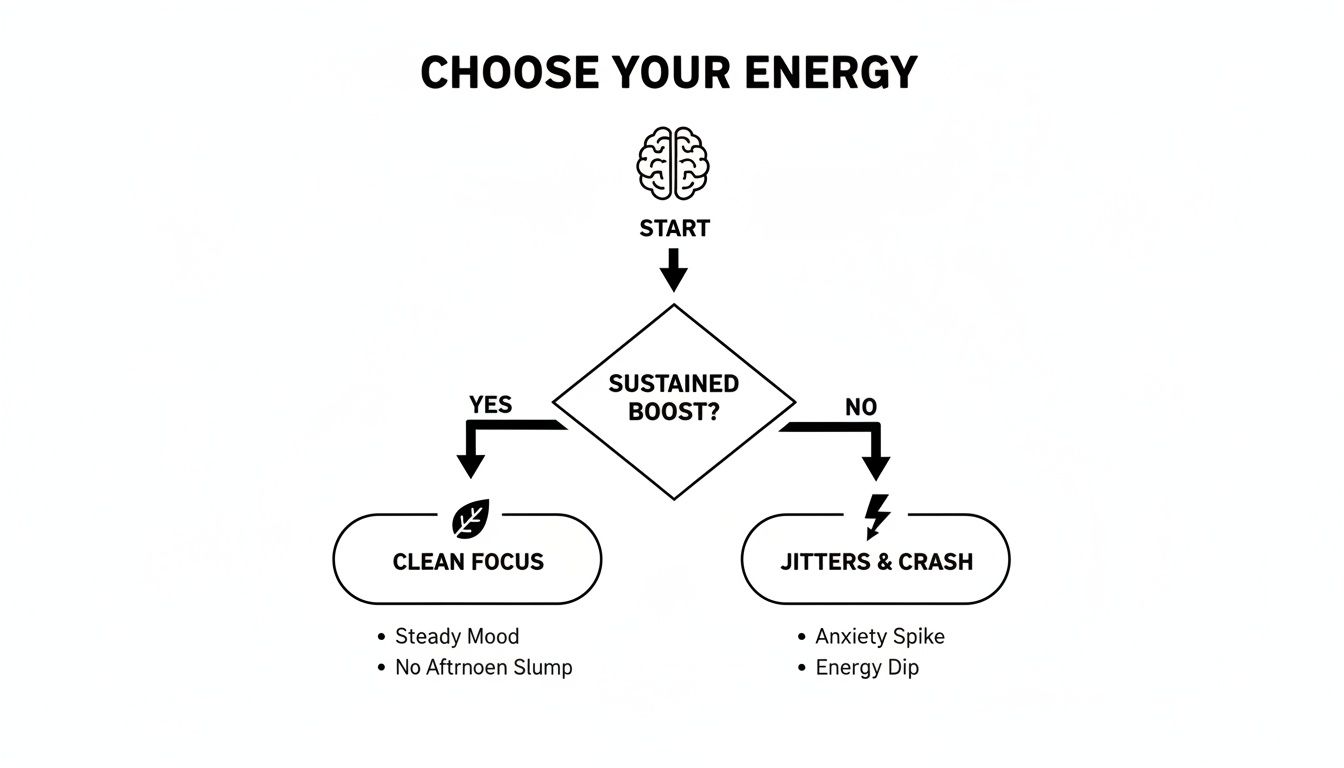
It’s a simple but powerful idea. When you consciously choose clean, sustainable focus—like the kind our Focus Pouches are designed for—you sidestep the disruptive energy spikes and slumps that make executive function challenges even worse.
Your Next Steps Toward Getting Help
If you’ve decided it’s time to seek professional support, you’ve got options. A great first step is often your primary care physician, who can rule out other medical issues and point you toward a specialist.
Depending on what you need, you might connect with:
- A psychiatrist for diagnosis and medication management.
- A psychologist or therapist for Cognitive Behavioral Therapy (CBT) and other talk-based strategies.
- An executive function coach for practical, hands-on skills and systems.
For anyone navigating a diagnosis, learning how to focus with ADHD can arm you with valuable strategies that work alongside professional treatment. Taking this step is all about empowering yourself with the right team and the right information to help you thrive.
Common Questions on Sharpening Your Executive Function
When you start digging into improving executive function, a few practical questions always come up. Let's clear the air so you can move forward with confidence and a solid plan for a sharper, more focused mind.
How Long Until I Actually Feel a Difference?
There's no magic switch, but you can feel small, positive shifts surprisingly fast. You might notice your daily routine has less friction within just a few weeks of dialing in your sleep or starting a simple system like time blocking. It just feels easier to get things done.
But for the bigger, more lasting changes—like a stronger working memory or better emotional regulation—you’re typically looking at a few months of consistent effort. Progress isn't a straight line; you'll have great days and days where you feel like you’re back at square one. The goal is consistency, not perfection.
One of the biggest mistakes I see is people trying to overhaul their entire personality overnight. Real, lasting improvement comes from stacking small, sustainable wins day after day.
Can I Mix and Match These Strategies?
Absolutely. In fact, that's how you get the best results. All the strategies in this guide are designed to work together, creating a layered support system for your brain. Think of it like a team where every player has a specific job.
For example, getting high-quality sleep (a non-negotiable foundation) makes it infinitely easier to actually engage in cognitive training or stick to a workout plan. Similarly, a clean nootropic can give you the mental energy to tackle that new habit system or power through a tough project at work. The goal is to build a holistic system where each part makes the others stronger.
I'm Overwhelmed. What's the Single Best First Step?
When everything feels like a priority, the best place to start is always with the smallest, most manageable action. Don't try to reinvent your entire life this weekend. Just pick one thing and focus on it for the next two weeks.
A fantastic starting point for almost everyone is to optimize your sleep environment.
- The Action: Make your bedroom as dark and cool as possible. No exceptions.
- The Payoff: This one change can have a massive impact on your sleep quality, creating a powerful ripple effect on your energy, focus, and mood the very next day.
Once that one habit feels automatic, then you can layer on the next small change. This incremental approach prevents burnout and makes it far more likely that your new habits will actually stick for the long haul.
Ready to add a powerful tool to your cognitive toolkit? The scientifically formulated blends from Dialed In Nootropics are designed to support clean mental clarity and sustained focus, without the jitters or crash of typical stimulants. Explore our Focus Pouches and Energy Gum to find the perfect fit for your high-performance routine.