

Boost: supplements for endurance athletes
Whether you're pounding the pavement for a marathon, grinding out miles on the bike, or tackling a triathlon, the best supplements for endurance athletes do three things: fuel your performance, speed up your recovery, and plug any nutritional gaps. We're talking about carbohydrates for immediate energy, electrolytes for hydration, and protein for muscle repair—each one is a critical piece of the puzzle for sustaining long efforts and building resilience.
Building Your Performance Foundation
Pushing your body for hours on end takes more than just grit. It demands a smart, strategic approach to what you put in it. While a balanced diet packed with whole foods is the absolute, non-negotiable foundation of any serious training plan, supplements are the specialized tools that help you build on it.
Think of it like this: your diet is the raw material used to build your athletic engine. Supplements are the high-octane fuel and precision lubricants that let it run at peak capacity. They're designed to deliver specific nutrients right when your body is screaming for them—something that's incredibly hard to do with food alone in the middle of a hard workout.
Why Supplements Matter for Endurance
Endurance sports put a unique kind of strain on the body. They drain your energy stores, break down muscle tissue, and constantly test your hydration. The right supplements help you fight back against these effects, leading to real, measurable improvements.
For today's endurance athlete, supplements aren't a luxury anymore; they're a calculated part of performance science. They give you a reliable way to manage energy, avoid deficits, and kickstart the recovery cycle that ultimately makes you stronger.
With a smart supplement strategy, you can:
- Delay Fatigue: By feeding your muscles a steady stream of accessible energy, you can push harder for much longer.
- Protect Muscle Tissue: Certain amino acids can actually reduce the microscopic damage that happens to your muscles during prolonged exercise.
- Enhance Recovery: Getting protein and key nutrients into your system right after a workout kicks the repair process into high gear.
- Maintain Focus: A well-fueled body leads to a sharp mind, which is absolutely critical for smart race-day decisions and staying safe. For more on this, you can check out our guide on energy and focus vitamins.
The Growing Role of Performance Nutrition
The world of specialized sports nutrition is blowing up. In fact, the global sports supplements market is on track to hit a massive US$43.6 billion by 2032, with products like amino acid blends and creatine becoming staples for endurance athletes, not just bodybuilders.
To really nail your performance, you need a holistic plan. We highly recommend this expert guide on building running endurance, including training, recovery, and nutrition, which provides a fantastic framework for your entire journey.
Mastering Your Energy and Hydration
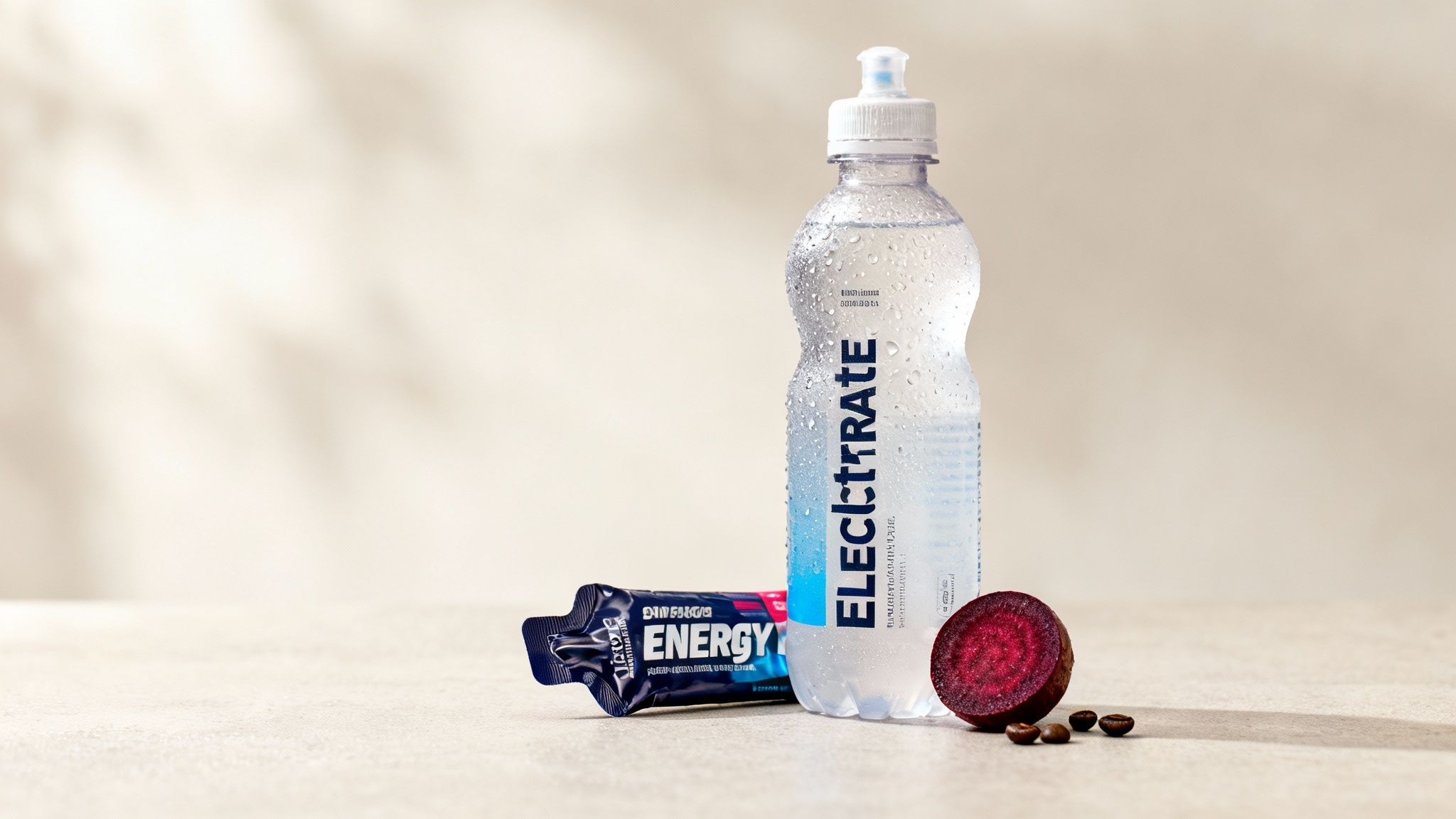
Think of your body like a high-performance engine during a race. To keep from redlining and breaking down, it needs two things above all else: the right fuel to burn and an efficient cooling system. This is where we get into the cornerstone supplements that handle both energy and hydration, keeping you running strong from start to finish.
These aren't exotic, complicated formulas. They are the absolute fundamentals your body screams for when you push it to the limit. By getting strategic with carbohydrates, electrolytes, caffeine, and nitrates, you can take direct control of your performance and sidestep the classic pitfalls like cramping or hitting that dreaded wall.
Carbohydrates: The Primary Fuel Source
Carbohydrates are the high-octane fuel for your muscles, plain and simple. During long, hard efforts, your body torches through its stored carbs, known as glycogen. When those stores get critically low, your energy plummets, your pace grinds to a halt, and you "bonk."
This is precisely where supplemental carbs save the day. They give you a steady stream of fast, easy-to-digest energy that keeps your glycogen levels topped off, letting you hold your intensity for much, much longer.
The goal isn't just to shovel in carbs; it's to get them in a form your gut can actually absorb and use while you're exercising. This is why specialized gels, chews, and drink mixes are often far superior to whole foods mid-race.
For any effort lasting over 90 minutes, a consistent intake is non-negotiable. The general rule of thumb is 30-60 grams of carbohydrates per hour. Highly trained athletes tackling events over three hours might even push that up to 90 grams per hour.
- Energy Gels: These are concentrated shots of simple sugars for a lightning-fast energy spike.
- Carbohydrate Drinks: These pull double duty, delivering both fuel and fluids at the same time—perfect for staying on top of your hydration.
- Energy Chews: A great option for athletes who prefer a more solid, food-like texture but still need that fast-absorbing carbohydrate source.
Electrolytes: Your Body's Electrical System
If carbs are the fuel, then electrolytes are the spark plugs. These critical minerals—sodium, potassium, calcium, and magnesium being the main players—are in charge of maintaining fluid balance and making sure your nerves and muscles fire correctly. And you lose them like crazy through sweat.
When your electrolyte levels dip, the consequences range from nagging muscle cramps to a serious nosedive in performance. Just drinking plain water isn't enough; without electrolytes, your body can't properly absorb the fluids you're chugging down.
This is why a dedicated electrolyte supplement is a must-have for any serious endurance athlete, especially when it's warm out.
Caffeine: The Perceived Effort Reducer
Caffeine is one of the most proven and effective performance enhancers out there. It doesn’t actually give you more energy, but it cleverly tricks your brain into feeling less tired. By blocking specific receptors, it lowers your Rate of Perceived Exertion (RPE), which makes that brutal climb or final push to the finish line feel just a little bit more manageable.
This mental edge lets you push harder for longer before fatigue truly sets in. Effective doses usually fall in the 3-6 mg per kilogram of body weight range, taken about 30-60 minutes before you need that kick. Just be sure to test your personal tolerance in training first. For a new and fast-acting option, many runners are turning to things like energy gum for a quick boost on the go.
Nitrates: The Oxygen Efficiency Booster
Nitrates, famously found in foods like beetroot, are a total game-changer for oxygen efficiency. Once you consume them, your body converts nitrates into nitric oxide. This molecule works to relax and widen your blood vessels.
This process, known as vasodilation, boosts blood flow and allows your working muscles to get more oxygen for the same amount of effort. In essence, it lowers the oxygen cost of exercise. This lets you sustain a higher intensity for longer before you hit your limit—a subtle but incredibly powerful advantage.
How to Support Muscle Repair and Recovery

The toughest miles aren't just logged on the road or trail; they're won in the hours between your workouts. Real progress for any endurance athlete comes from your body's ability to repair, rebuild, and adapt to the stress you throw at it. If you ignore this cycle, you're on a fast track to burnout and injury.
This is where recovery-focused supplements become your greatest ally. Think of them as a specialized construction crew that shows up right after a tough session to clear away the damage and start building a stronger structure. Using protein, BCAAs, and even creatine strategically can dramatically shorten your bounce-back time, letting you hit your next workout feeling refreshed and ready to go.
Branched-Chain Amino Acids (BCAAs) for Muscle Protection
During long, grueling efforts, your body doesn't just burn carbs and fat. When the tank gets low, it can start breaking down your muscle tissue for fuel in a process called catabolism. This is where Branched-Chain Amino Acids (BCAAs) step in as a crucial line of defense.
The three BCAAs—leucine, isoleucine, and valine—are essential amino acids your body can’t make on its own. Supplementing with them, especially during a long workout, helps shield your hard-earned muscle from being cannibalized for energy. The payoff is less overall muscle damage and less soreness later on.
A common dose is 5-10 grams of BCAAs, taken either before or during your training. Our fast-dissolving BCAA powder is a customer favorite for its great taste and its ability to help athletes push through those tough final miles.
Creatine Monohydrate the Endurance Edge
Creatine isn't just for powerlifters anymore. While it’s famous for fueling short, explosive bursts, it offers some seriously overlooked benefits for endurance athletes. Your muscles use creatine to rapidly regenerate ATP, which is the high-octane fuel for all cellular activity.
For endurance athletes, this means creatine can support those repeated, high-intensity efforts within a longer event—like surging up a steep climb or kicking for the finish line. Even more importantly, studies show that creatine helps your muscles restock their glycogen (stored carbohydrate) levels faster after you're done. That means quicker recovery between training sessions.
Creatine helps you refill the tank faster. By boosting post-exercise glycogen synthesis, it ensures your muscles are primed and ready for the next day's demands, which is a massive advantage during heavy training blocks.
A standard daily dose of 3-5 grams of creatine monohydrate is all it takes to keep your muscles topped off. For a pure and effective option, check out our top-rated Creatine Monohydrate supplement to support both your power and your recovery.
High-Quality Protein for Rebuilding Tissue
If BCAAs protect your muscles during a workout, protein is what rebuilds them afterward. Endurance exercise creates microscopic tears in your muscle fibers. Eating enough protein provides the raw materials—amino acids—needed to patch up that damage and build your muscles back stronger and more resilient than before.
Timing is key here. Downing 20-30 grams of high-quality protein within an hour after you finish your workout kickstarts muscle protein synthesis when your body is most ready for it. This "anabolic window" is your prime opportunity to deliver the building blocks needed for optimal adaptation.
Whey protein is a popular go-to because it absorbs quickly and has a complete amino acid profile, making it perfect for a post-workout shake. Plant-based options from sources like pea and rice are also fantastic alternatives. Find your perfect post-workout fuel by exploring our collection of premium protein supplements.
Beyond these supplements, getting a handle on the bigger picture of recovery—like nutrition, sleep, and other therapies—is what separates good athletes from great ones. For a deeper dive, there are some excellent science-backed tips on how to speed up muscle recovery that will complement any supplement plan.
Exploring Plant-Based Performance Fuel
The world of athletic performance is seeing a powerful shift. More and more athletes are fueling their endurance with clean, sustainable, and plant-based nutrition, realizing you don’t need animal products to hit peak performance. This section is your guide to the most effective plant-based supplements for endurance athletes, whether you’re fully vegan or just diversifying your nutritional toolkit.
Plant-based supplements are a potent way to fuel your engine, manage inflammation, and speed up recovery. They’re often easier on the digestive system and the environment, making them a smart choice from every angle. From powerful proteins to unique performance enhancers, these options are changing the game.
Plant Proteins for Muscle Repair
For years, whey was seen as the undisputed champ of muscle repair. But a new class of plant-based proteins has stepped into the ring, proving to be just as effective at delivering the amino acids your body craves after a tough workout.
- Pea Protein: This is a powerhouse, loaded with all three branched-chain amino acids (BCAAs) that are critical for shutting down muscle breakdown and kicking off the recovery process.
- Rice Protein: Often paired with pea protein, it helps create a complete amino acid profile, making sure your muscles get every single building block they need.
- Hemp Protein: More than just protein, hemp also delivers healthy omega fatty acids and fiber, offering a more holistic nutritional boost.
You can grab our top-rated, great-tasting Vegan Protein Blend right now to give your muscles the high-quality fuel they deserve.
Potent Plant-Based Performance Enhancers
Beyond just protein, the plant kingdom offers some incredible compounds that can directly boost your performance on the road, trail, or in the water.
This surge in popularity isn't surprising. The demand for allergen-friendly and environmentally conscious options has driven serious innovation, making proteins from pea, rice, and hemp serious competitors to whey. This growth is backed by ongoing product development, cementing their place in the market. Discover more insights about the sports nutrition market on futuremarketinsights.com.
Think of these supplements as nature's performance hacks. They work with your body's natural systems to improve efficiency, reduce stress, and help you unlock a new level of endurance.
Two of the most impactful plant-derived enhancers are:
- Beet-Derived Nitrates: We’ve touched on nitrates before, and beets are the ultimate source. They boost blood flow and improve oxygen efficiency, which means you can sustain a higher output for longer with less effort.
- Algae-Based Omega-3s: Intense training creates inflammation. Algae-derived omega-3s (DHA and EPA) are a clean, sustainable way to manage this, reducing soreness and supporting long-term joint health without relying on fish oil.
Exploring these options is a smart move for any athlete. And if you're also looking for vegan-friendly ways to boost mental clarity, you might be interested in our guide on gum that is vegan. Our plant-based supplements are designed to give you a clean, powerful edge.
Building Your Personal Supplement Plan
The best supplement strategy isn’t one you find in a magazine or copy from a pro athlete. It's the one you build for yourself. Creating a personal plan is the difference between simply taking supplements and strategically using them to crush your specific goals. Think of it as the difference between a random pile of tools and a perfectly organized toolbox built for the job at hand.
This is about getting methodical: assess your needs, test what works, and tweak your plan as your training changes. A marathoner has completely different fueling demands than a cyclist, and your plan has to reflect that reality. It’s time to stop guessing and start building a smart, repeatable system that delivers when it counts.
Assess Your Demands and Goals
First things first: take an honest look at your sport and training load. The length and intensity of your events are the biggest factors dictating your fueling and supplement needs.
A marathon runner, for instance, needs fuel that’s incredibly easy to digest to avoid GI issues, which is why gels and electrolyte drinks are king. A cyclist on a 100-mile ride, however, can often stomach more solid food and has the storage to carry different options.
Consider these critical factors:
- Event Duration: Is your main event 90 minutes or 9 hours? Longer events require a much bigger focus on sustained carbohydrate intake and careful electrolyte management.
- Primary Limiter: What’s your weak spot? Do you cramp up late in races? That points to an electrolyte issue. Do you hit the wall and run out of gas? That’s a carbohydrate fueling problem.
- Training Volume: A heavy training block demands more aggressive recovery support. This is when protein and BCAAs become far more important than they are in the off-season.
The Art of Testing in Training
The golden rule of endurance sports is simple: nothing new on race day. This goes for your shoes, your gear, and especially your supplements. Your training sessions are the perfect lab to figure out what your body can handle.
When you try something new, introduce only one supplement at a time. This is the only way to accurately know how it affects your energy, digestion, and performance. If you try a new gel, a new drink, and a new BCAA powder all at once, you’ll have no idea what caused that mid-run stomach cramp—or that awesome second wind.
Think of your long training runs and rides as a dress rehearsal. Use them to practice your entire race-day fueling and supplementation strategy, from start to finish. This builds both physical adaptation and mental confidence.
To get a better sense of how different compounds can work together, you might want to check out our comprehensive guide to nootropic stacks to see how synergy can play a huge role in performance.
Sample Race Day Supplement Timeline
To help you visualize how this all comes together, we've put together a practical timeline. This isn't a one-size-fits-all prescription, but rather a solid template you can adapt based on your own testing and race-day needs. It shows when to take key supplements before, during, and after a big event to keep you performing at your peak.
| Timeframe | Recommended Supplement | Purpose |
|---|---|---|
| Night Before | Electrolyte Drink | Pre-hydrate and load up on essential minerals to prevent cramping. |
| 1-2 Hours Pre-Race | Carbohydrate-rich Meal/Snack | Top off your muscle glycogen stores for sustained energy. |
| 30-60 Mins Pre-Race | Caffeine (3-6 mg/kg) | Lower perceived effort and increase alertness. |
| During Race | Energy Gels/Chews (30-60g carbs/hr) | Provide a steady stream of quick fuel to prevent bonking. |
| During Race | Electrolyte Drink | Replace sodium and fluids lost through sweat to maintain hydration. |
| Within 30 Mins Post-Race | Protein Shake (20-30g) with Carbs | Kickstart muscle repair and replenish glycogen stores immediately. |
Remember, the goal of a timeline like this is to create a routine that becomes second nature. On race day, you want to be focused on your performance, not fumbling with your nutrition.
Build Your Plan with Real-World Examples
Let’s put this into practice by comparing two different athletes. A personalized plan accounts for the small but crucial differences in their needs.
Example 1: The Marathon Runner
- Goal: Sub-4-hour marathon.
- Pre-Race (60 mins before): A small, carb-rich meal. 3-5 mg of caffeine per kg of body weight to lower perceived effort.
- During Race: One energy gel every 45 minutes. Sip an electrolyte drink at every aid station.
- Post-Race (within 30 mins): A recovery shake with 25g of protein and a fast-acting carb source.
Example 2: The Century Cyclist
- Goal: Complete a 100-mile ride feeling strong.
- Pre-Ride (90 mins before): A larger carbohydrate-focused breakfast.
- During Ride: Aim for 60-90g of carbs per hour, mixing gels, chews, and small bites of real food. Two bottles on the bike—one with plain water, one with a strong electrolyte mix.
- Post-Ride (within 60 mins): A solid meal with protein and carbs.
This infographic shows key plant-based nutrients that can support an athlete's journey through different phases.

As you can see, a complete nutrition strategy considers the whole cycle. Nutrients like nitrates help with performance, protein is there for immediate repair, and compounds like omega-3s support long-term recovery.
Common Questions on Endurance Supplementation
Let's be honest: navigating the world of supplements can feel like a total minefield. There's conflicting advice everywhere, a million different products to choose from, and even when you think you have a plan, questions always pop up. This section is here to cut through that noise.
We’re tackling the most common questions endurance athletes have, from safety and timing to the endless debate over whole foods vs. supplements. The goal is to give you the practical, real-world knowledge you need to dial in your strategy and get the most out of every product you use.
Are Supplements for Endurance Athletes Safe for Daily Use?
This is the big one, and the short answer is: it really depends on the supplement.
Foundational products like electrolytes, carb mixes, and protein powders are generally designed for consistent use and are very safe within a smart training plan. Think of them less as "supplements" and more as concentrated, targeted food sources meant to fill the gaps your training creates.
But safety always boils down to two things: correct dosage and product quality. Sticking to the recommended serving sizes is non-negotiable. It's also critical to buy from reputable brands that use third-party testing to prove their products are clean and accurately labeled.
Stimulants like caffeine are a different beast. While incredibly effective, hammering them daily can lead to tolerance, mess with your sleep, and leave you feeling jittery. It's much smarter to use them strategically for your toughest workouts and on race day, not as a daily crutch.
The golden rule of safe supplementation is to respect the product's purpose and listen to your body. Always start with the smallest effective dose to see how you react, and never, ever try something new on race day.
How Do I Choose Supplements for My Specific Sport?
A "one-size-fits-all" approach to supplementation just doesn't cut it. The best supplements are the ones that directly solve the biggest challenges of your specific sport. You have to match the tool to the job.
For instance, an ultra-marathoner’s needs are worlds apart from a cyclist in a short, explosive criterium race.
- Ultra-Endurance (Marathons, 100-mile rides): Here, the game is all about sustained energy and staving off cramps. Your focus should be on easily digestible complex carbs and a rock-solid plan for sodium and electrolyte intake.
- High-Intensity Endurance (10k races, Criterium cycling): These events are shorter but way more intense. Fast-acting carbs for instant fuel and nitrates (from beetroot) to boost oxygen efficiency can give you a serious edge.
- Variable-Demand Sports (Triathlons, Obstacle Course Racing): These events require a blended strategy. You need sustained fuel for the long haul, but also quick-hit energy from gels or caffeine for the intense parts of the race.
Can I Get Everything I Need from Food Instead of Supplements?
A "food-first" philosophy is the absolute bedrock of any serious athlete's nutrition plan. Whole foods give you a complex mix of vitamins, minerals, and fiber that no supplement can ever truly replace. But when you’re in the heat of training or competition, supplements play a tactical role that food simply can't.
Just imagine trying to choke down a baked potato and a banana while running a marathon to get your 60-90 grams of carbs per hour. It's not just impractical—it's a recipe for digestive disaster. During intense exercise, your body shunts blood away from your stomach to your working muscles, making it nearly impossible to break down solid food.
Supplements like gels, chews, and drinks are engineered specifically for this high-stress environment. They're designed for fast absorption with minimal effort from your gut.
Think of it like this:
- Food is your long-term, strategic resource for building and maintaining your body.
- Supplements are your tactical, in-the-moment tools for fueling and recovering from specific, high-demand efforts.
They aren't competing with each other; they work together in a complete performance system.
When Should I Test New Supplements Before a Big Race?
The number one rule of racing is simple and absolute: nothing new on race day. This goes for your shoes, your shorts, and especially your nutrition. Your training runs are your laboratory—use them to test everything.
Introduce just one new product at a time. This is the only way to know for sure how your body responds. If you try a new gel and a new drink in the same workout and get stomach cramps, you’ll have no idea which one was the problem.
The perfect testing window is 2-4 weeks before your big event. This gives you plenty of time to do a full dress rehearsal of your race-day nutrition plan during a long workout that mimics race-day intensity.
This trial run confirms your plan works, builds massive confidence, and eliminates any guesswork when you're standing on the start line. For more answers, you can always check out our FAQ page for more detailed information.
Ready to fuel your performance with supplements you can trust? At Dialed In Nootropics, we offer a scientifically formulated range of energy and focus products designed for athletes who demand the best. From our fast-acting nootropic pouches to our clean-energy gum, we provide the tools you need to stay sharp and perform at your peak.
Explore our full collection of performance-enhancing supplements now!