

The Best Way to Quit Dipping Tobacco for Lasting Success
The best way to quit dipping tobacco isn’t about just stopping. It’s about having a solid game plan that focuses on replacing the habit with something better. This means you need to set a hard quit date, get your support system on board, and have a nicotine-free alternative ready to go from day one to handle that oral fixation.
Your Action Plan for Quitting Dip for Good
Look, quitting dipping tobacco is a tough battle, but it's absolutely winnable if you have the right strategy. This isn't just a test of willpower. It's about building a real-world blueprint that actually fits your life.
For a lot of guys in demanding jobs—construction, racing, farming—a dip is part of the workday. It's that quick nicotine hit for focus and stamina. Acknowledging that is the first step. You're not just giving something up; you're taking control of your health and future.
Get Honest About Your Dependency
Before you can build a plan that works, you need a clear picture of your current habit. How many cans are you really going through a week? When do you dip without even thinking about it? Is it that first one in the morning with coffee, after a meal, or during a stressful moment at work?
Nailing down these moments helps you see where the biggest challenges will be.
It also helps to get real about the risks. Understanding things like the warning signs of oral cancer isn't meant to scare you—it’s about giving you powerful, undeniable reasons to stick with your decision when things get tough.
Set the Foundation for Success
Once you’ve got a handle on your habit, it’s time to lay the groundwork for quitting. This is where the real work begins.
- Set a Firm Quit Date: Don't just say "sometime next month." Pick a specific date within the next two weeks. This makes it real and stops you from putting it off.
- Build Your Support System: Tell your family, your partner, or a couple of trusted friends what you're doing. Having people to call when you're struggling makes a huge difference.
- Find a Healthy Replacement: The physical act of having a pouch in your lip is a massive part of the addiction. You need something to satisfy that oral fixation, and for many people, a direct swap is the easiest and most effective way to do it.
To help you get started right away, here’s a simple table outlining your first moves.
Your Quit Dip Starter Plan
This isn't your entire journey, but these are the critical first moves that set you up for success from the very beginning.
| Action Step | Why It Matters | Pro Tip |
|---|---|---|
| Pick a Quit Date (in the next 14 days) | Creates a clear, immediate goal and prevents procrastination. | Circle it on a calendar. Tell someone the date to hold yourself accountable. |
| Identify Your Top 3 Triggers | Knowing when you dip automatically helps you prepare for cravings. | Write them down: "After meals," "Driving," "First 10 mins at work." |
| Line Up Your Support Crew | You'll need backup during tough cravings. Don't go it alone. | Send a text to 1-2 people you trust: "Hey, I'm quitting dip on [Date]. Could use your support." |
| Get a Nicotine-Free Alternative | Fills the void left by dipping and satisfies the oral fixation. | Have your replacement ready before your quit date. Don't wait until you're desperate. |
Getting these initial steps locked in makes the entire process feel more manageable and less like you're just jumping off a cliff.
A landmark 2008 study of U.S. men found something incredible: switching to a lower-risk smokeless product was a wildly effective way to quit. Of the 359,000 men who tried this, an astounding 73% successfully quit cigarettes for good.
This data proves a simple but powerful idea: replacing the habit often works far better than just trying to erase it. Instead of leaving an empty space, you fill it with something better. That's why figuring out how nootropic pouches can aid in your journey to going tobacco-free can be such a game-changer. You get to keep the ritual but swap the nicotine for clean energy and focus.
Finding the Right Quit Method for You
Let's be real: deciding how you're going to quit dipping tobacco is a big deal. What works for one guy might not work for the next. But that doesn't mean you should just throw spaghetti at the wall and see what sticks. Using a proven method can seriously stack the odds in your favor, turning this beast of a challenge into something you can actually conquer.
The first step is simply knowing your options. You've got everything from traditional Nicotine Replacement Therapy (NRT) to prescription meds designed to kill cravings before they start. Each one has its own playbook, and the best fit usually comes down to how heavy your habit is and what your daily life looks like.
Exploring Proven Cessation Methods
For a lot of people, NRT is the first line of defense. The whole idea is to give your body the nicotine it's screaming for, but through a much safer delivery system. This takes the edge off withdrawal while you work on breaking the actual habit of dipping.
- Nicotine Patches: These are the "set it and forget it" option, giving you a steady, low dose of nicotine all day long. They're super simple, but they don't do anything for that hand-to-mouth, oral fixation part of the habit.
- Nicotine Gum & Lozenges: Perfect for ambushing those sudden, intense cravings. They give you a quick nicotine hit and, just as importantly, keep your mouth busy. For a lot of dippers, that's half the battle.
Then there are prescription medications like varenicline or bupropion. These are heavy hitters that work on a neurological level, messing with your brain's nicotine receptors to make tobacco less enjoyable and dial down withdrawal symptoms. This is a conversation to have with your doctor to see if it makes sense for you.
The Power of A Nicotine-Free Oral Substitute
Here's the thing traditional methods often miss, especially for dippers: the ritual.
The whole routine—packing a tin, tucking in a pouch, that familiar feeling—is wired deep into your brain. This is where a good non-nicotine oral substitute becomes a complete game-changer. It directly replaces the physical act you're used to, satisfying the habit without the poison.
But if you're a high-performer who counts on dip for that mental kick, a mint or some sunflower seeds just won't cut it. You need a replacement that does the job dip used to do.
That's precisely why we engineered Focus Pouches. They aren't just designed to mimic the feel of a dip pouch; they're made to upgrade its function entirely. Instead of nicotine, you get a clean, effective shot of nootropics for real, sustained focus and energy. You satisfy the ritual, but you’re fueling your brain for peak performance instead of feeding an addiction.
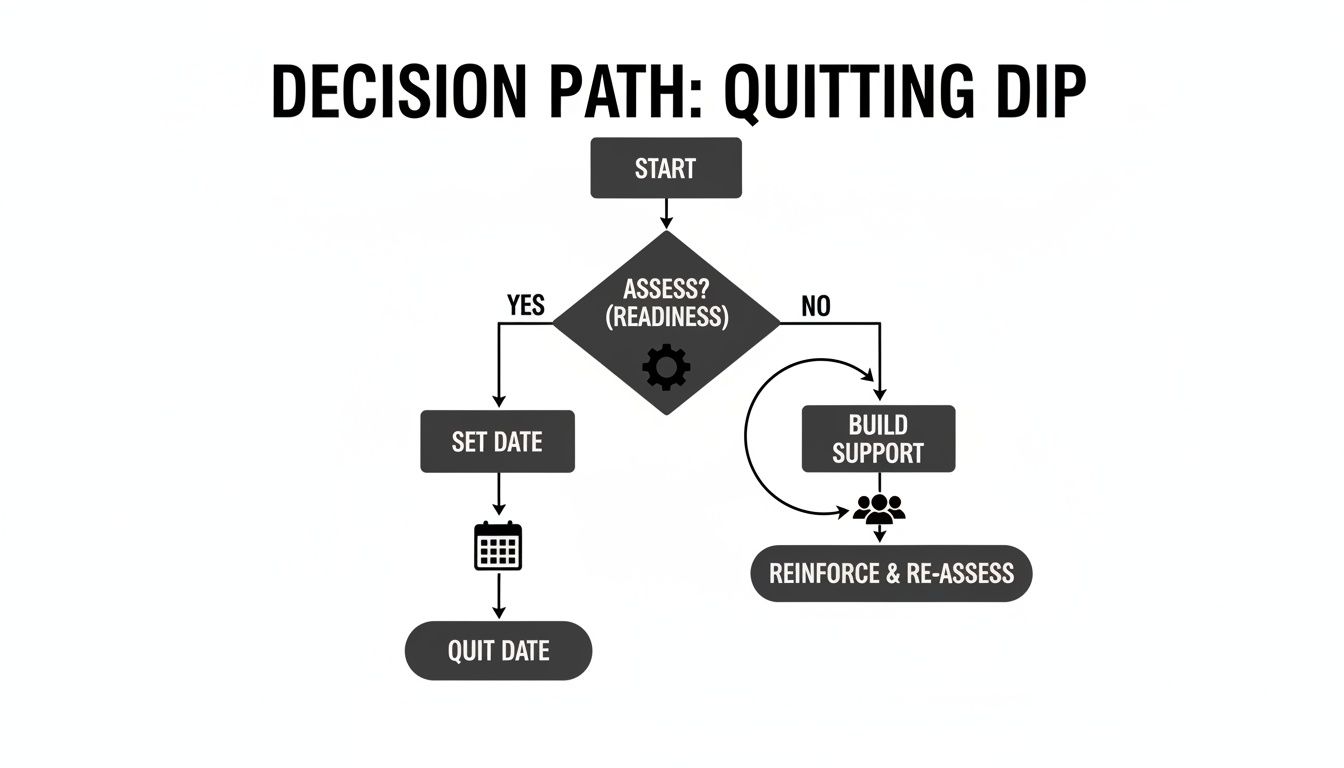
This flowchart breaks down the first few steps of the journey. It really drives home that figuring out where you stand and who's in your corner are the first critical moves you need to make.
Combining Behavioral Support with Smart Replacements
Going cold turkey is brutal. The success rates are abysmal for a reason. But when you pair a smart replacement strategy with some form of structured support, your chances of success go through the roof.
We're not guessing here. Clinic-backed programs show that having a real plan and support can lead to over 45% long-term success rates. Compare that to the dismal 8-9% average for people who try to go it alone.
A study of people in cessation clinics found that those who actually engaged with the program were vastly more likely to stay quit for good. It just proves that having a plan, the right tools, and a support system isn't optional—it's essential.
As you figure out your own path, you might also want to check out the latest innovations in nicotine pouches to see how things are shifting toward cleaner, better alternatives. The end goal is to build a toolkit that makes quitting feel less like a punishment and more like a definitive win.
Building Your Support and Accountability Crew
Trying to quit dipping tobacco on your own is like trying to climb a mountain without a rope. Sure, you might make some progress, but the odds are seriously stacked against you. The smartest way to quit for good is to assemble a crew you can lean on when your own motivation starts to run thin.
This isn't about admitting weakness; it’s about being strategic. Think of your support system as your personal team of coaches, cheerleaders, and accountability partners. They're the ones who will remind you why you started when a brutal craving hits and you're thinking about buying just one more can.
A non-negotiable step in quitting dip for good is to actively build a robust support system for your recovery that provides both accountability and genuine encouragement. You need people who get it and are willing to have your back, no judgment.
How to Talk to Your Inner Circle
Bringing people into your quit journey can feel a little awkward, but trust me, it’s a game-changer. You don’t need to make some formal announcement—a simple, straightforward conversation is all it takes.
Start with your partner, a close family member, or your most trusted friend. Be direct about what you're doing and, more importantly, be specific about how they can actually help you.
- Be Specific With Your Ask: Instead of a vague "I need your support," try something more concrete. "I'm quitting dip on Friday. If you see me getting stressed, could you suggest we go for a walk or just ask how I'm holding up?"
- Explain Your Triggers: Let them know which situations are the toughest for you. "That first cup of coffee in the morning is a huge trigger. Could we maybe switch up our routine for the next couple of weeks?"
- Set Clear Boundaries: It’s just as important to be clear about what isn't helpful. "I really appreciate you checking in, but please don't ask 'Are you still quit?' every single day. It just adds a ton of pressure."
This simple approach turns them from passive observers into active allies in your mission.
The Power of Quitting with a Partner
If your partner or a close friend also uses tobacco, quitting together can be one of the most powerful strategies there is. That shared goal creates an incredible bond and a built-in accountability system that’s running 24/7. When one person is having a rough day, the other is right there to provide immediate, firsthand encouragement.
The data on this is staggering. Teaming up with a partner who also quits can skyrocket your success rate to 76%. That's a massive leap compared to the typical success rates seen when people try to go it alone.
One study found that people whose partners quit with them had a 4.5-fold higher chance of successfully quitting compared to those whose partners kept using tobacco. This incredible boost held true across different backgrounds and situations. For anyone in a relationship where both people dip, this is hands-down the single best way to quit.
Finding Support in Demanding Jobs
For those in high-stress, demanding professions—like first responders, software developers, or construction workers—your coworkers might be your biggest triggers and your best potential allies. The pressure of a long shift or an intense project deadline often normalizes dipping as a way to cope.
Find a coworker who has either successfully quit or also wants to. Having someone who understands the specific, job-related stress you're facing is invaluable. They get why you might crave a dip after a tough call or right before a major code deployment.
This shared understanding allows for a unique kind of support. You can help each other find healthier ways to manage that on-the-job stress, like swapping out a dip for a piece of nootropic gum before a focus-intensive task. For more ideas on effective substitutes, check out our guide on how Dialed-In Nootropic Gum can help you quit nicotine. Your crew doesn't have to be big, but it does need to be strong.
How to Navigate Cravings and Withdrawal
Let's be real: withdrawal is the biggest roadblock for most guys trying to quit dipping. But you can absolutely get past it if you have the right game plan. This is where your prep work ends and the real battle begins. It's a fight against physical and mental cravings, and winning is all about outsmarting your own brain.
The first couple of days are usually the toughest. Your body is detoxing from nicotine, which means you might feel irritable, on edge, and have a gnawing urge for a dip. The good news? Those intense physical symptoms don't last. The long game is learning to manage the psychological cravings that are baked into your daily routine.

Identify and Defuse Your Triggers
Triggers are the specific times, places, or feelings that your brain connects to dipping. Think of them like tripwires. If you know exactly where they are, you can step right over them.
For most dippers, the usual suspects are:
- Morning Routines: That first dip of the day with your coffee.
- Post-Meal Habits: The automatic reach for a can after eating.
- High-Stress Moments: A tough project at work or getting stuck in traffic.
- Boredom or Downtime: Long drives, waiting around, or kicking back to watch TV.
Once you’ve nailed down your top 3-4 triggers, you need to create a specific counter-move for each one. This isn't about willpower or "toughing it out"—it's about having a pre-planned, practical response ready to deploy at a moment's notice.
An urge for tobacco can feel like it's going to last forever, but here's a secret: most cravings are surprisingly short. They usually peak for about 3 to 5 minutes and then start to fade, whether you give in or not.
Having a plan to get through that short window makes all the difference. The goal is to break the trigger-craving-dip cycle before it ever gets a chance to start.
Build Your Craving-Busting Toolkit
Having a go-to list of strategies is the best way to quit dipping tobacco without letting a bad craving throw you off course. Your toolkit should have a mix of physical, mental, and replacement tactics.
- Change Your Scenery: If a craving hits you at your desk, get up. Walk to the other side of the room. If it happens in your truck, pull over and stretch your legs. Just changing your environment can short-circuit the craving.
- Get Physical: Even a few minutes of movement can work wonders. Drop and do 10 pushups. Take a quick walk. Do some stretches. Physical activity releases endorphins and shifts your entire focus.
- Hydrate Strategically: Keep a bottle of ice-cold water on hand constantly. When an urge hits, take a long, slow sip. The cold sensation and the act of swallowing can satisfy that oral fixation.
- Practice Mindfulness: Take 60 seconds and just breathe. Inhale slowly for four counts, hold for four, and exhale for six. This simple exercise calms your nervous system down and gives you the mental space to ride out the craving.
Knowing exactly what to expect is half the battle. For a much deeper look into handling the toughest parts of this process, check out our guide on how to quit dipping without withdrawal holding you back.
Master the Art of Direct Replacement
This is probably the single most powerful tool you have. The physical habit—the ritual of having a pouch in your lip—is a huge part of the addiction. If you try to quit without replacing that action, you leave a gaping hole that your brain will desperately try to fill, usually with another dip.
A direct replacement is the ultimate craving-killer. It satisfies that oral fixation and gives your brain the stimulation it's screaming for, but without any nicotine.
You have to be strategic here. When a peak craving hits—like that 3 PM slump when you'd normally pack a lip to refocus—that's the perfect time to use your substitute. Pop in a Dialed In Nootropic Pouch and get that familiar feeling in your lip.
Instead of nicotine, you get a rush of clean energy and sharp focus from scientifically backed nootropics. This move accomplishes two critical things at once:
- It immediately satisfies the physical, ritualistic part of the craving.
- It delivers a real benefit (focus and energy) that directly replaces what you thought you were getting from tobacco.
You’re not just fighting the craving; you're upgrading the entire habit. By consistently using a high-performance replacement during your trigger moments, you actively rewire your brain to associate those situations with a new, healthier way to get dialed in. This is how you beat cravings for good.
Creating a Lifestyle That Prevents Relapse
Let's be real: quitting dip isn't just about getting through the first week. The real win is building a life where going back doesn't even feel like an option. This is about more than just willpower; it's about fundamentally changing your routines, your environment, and how you see yourself.
True, long-term success comes from rewriting the script for those moments where dipping felt automatic. Think about it—the job site, a long drive, cracking a cold beer after work. These are the high-risk situations where the old habit screams the loudest. The goal isn’t to hide from these moments but to walk into them with a better plan.

Navigating Social Triggers and High-Risk Situations
The social pressure can be intense, especially when you’re the only one not packing a lip. You might feel like you're on the outside looking in, or worse, have to explain your choice over and over. This is where a little preparation makes all the difference.
Your new rule is simple: always have your healthy alternative on you. Before you head to that party or start your shift, make sure your replacement is already in your pocket. When your buddy reaches for his can, you reach for your Dialed In Nootropic Pouch.
This one move accomplishes two huge things: it crushes your own oral fixation and sends a clear, unspoken message that you’ve upgraded. You're not depriving yourself; you’re just using a smarter tool for the job. You still get the ritual, but now you're fueling your brain with performance-enhancing ingredients instead of nicotine.
Integrating Healthier Habits Into Your Daily Routine
The most effective way to make quitting stick is to fill the void with positive, rewarding actions. This helps your brain forge new neural pathways, connecting satisfaction with healthy habits instead of a nicotine fix.
This doesn't mean you need to sign up for a marathon tomorrow. It's all about small, sustainable swaps that actually feel good.
- Morning Kickstart: Instead of coffee and a dip, try a 10-minute walk outside. The fresh air and movement provide a clean energy boost that recalibrates your entire morning.
- Post-Meal Reset: The moment you finish eating, get up and do something. Wash the dishes, walk around the block, or pop in a piece of Dialed In Nootropic Gum. This keeps your mouth busy and your mind sharp, breaking that old post-meal craving.
- Stress Management: When work gets overwhelming, don't reach for a dip to "focus." Instead, try a five-minute breathing exercise. It's a simple act that lowers cortisol and brings genuine clarity—something nicotine only fakes.
These tiny shifts build on each other, creating a rock-solid, dip-free lifestyle from the ground up.
To make this even more practical, let's look at how to directly swap out old habits in common trigger scenarios. The key is to have an immediate, actionable alternative ready to go, so you're not left scrambling when a craving hits.
Healthy Habit Swaps for Common Dip Triggers
| Common Trigger | Old Habit (Dip) | New Habit (Healthy Swap) | Why It Works |
|---|---|---|---|
| Morning Coffee | Pack a lip for the nicotine/caffeine combo. | 10-minute walk or a few quick stretches. | Boosts natural energy and dopamine, breaking the chemical dependency link. |
| Driving | Dip to stay alert or pass the time. | Chew Dialed In Nootropic Gum or listen to an engaging podcast. | Provides oral fixation, sustained focus, and mental stimulation without nicotine. |
| After a Meal | Dip for the "dessert" feeling. | Brush your teeth or have a mint-flavored Dialed In Pouch. | The clean, minty flavor signals the end of the meal and satisfies the craving for a taste change. |
| Stressful Work Moment | Dip to "calm down" or "focus." | Step away for a 5-minute breathing exercise or a quick walk. | Genuinely lowers stress hormones and improves cognitive function, unlike nicotine's temporary fix. |
| Social Drinking | Dip because "everyone else is." | Have your Dialed In Pouch ready. Sip water between alcoholic drinks. | Keeps your hands and mouth busy, satisfies the social ritual, and prevents dehydration from worsening cravings. |
By consciously choosing these new habits, you're actively rewiring your brain's response to old triggers. You're not just resisting an urge; you're building a new, better routine.
Celebrating Milestones and Handling Slip-Ups
You have to acknowledge your progress. Seriously. Mark your milestones on a calendar—one day, one week, one month, six months. Celebrate them. Take the money you've saved on dip (which for a can-a-day user can be over $2,500 a year) and buy yourself something awesome.
A slip-up is not a failure; it's a data point.
If you have a moment of weakness and use dip, the absolute worst thing you can do is let it spiral. Don't throw away all your progress. Instead, analyze what happened. What was the trigger? What could you do differently next time?
Get right back on track with your very next choice. Forgive yourself, learn the lesson, and recommit to your goal immediately.
A huge part of this journey is rewiring your brain’s reward system. Dipping gives you a fast, artificial spike of dopamine, which is why it's so addictive. As you quit, you need to find healthy ways to get that feeling of satisfaction. To dive deeper into this, check out our guide on how to increase dopamine naturally. Building these new reward loops is the key to making your new lifestyle permanent.
Common Questions About Quitting Dip
Even with a great plan, you're going to have questions. That's totally normal. Getting clear on the common hurdles can make you feel more confident and keep you from getting sidelined. Let's tackle some of the biggest questions guys have when they're figuring out how to quit dipping for good.
Is It Better to Quit Cold Turkey or Gradually?
This is the big one, and honestly, both paths can lead to success. But a lot of the evidence—and my own experience helping people quit—points to setting a hard quit date and just stopping. Going "cold turkey" tends to be more effective in the long run, especially when you have a solid replacement ready to go from day one.
A gradual taper sounds less intense, but it often just drags out the misery. You're basically keeping yourself in a constant state of low-level withdrawal and leaving the door open for "just one more." The best method is the one you can stick to, period.
Using a nicotine-free alternative makes the cold turkey approach so much more doable. You're immediately handling the oral fixation and the ritual of packing a lip, which for many guys, is the toughest part of the habit to break.
Quick tip: Most tobacco cravings are surprisingly brief. They usually peak for about 3 to 5 minutes and then start to back off. Your entire game plan should revolve around getting through that short window.
This is where a direct replacement becomes your MVP. You're not just white-knuckling it; you're actively swapping out the old, destructive habit for a new, productive one.
How Long Does Nicotine Withdrawal from Dipping Last?
Everyone's timeline is a little different, but it follows a pretty predictable pattern. The physical stuff—the irritability, anxiety, and those intense, can't-think-about-anything-else cravings—will peak within the first 3 to 5 days after your last dip. From there, it gets noticeably easier over the next couple of weeks.
What sticks around longer are the psychological triggers. It's the craving you get when you start your truck, right after a big meal, or when you're stressed out. This is exactly why a long-term strategy with a reliable, healthy substitute is a non-negotiable. The physical fight is a sprint; the mental game is a marathon.
What Are the Best Nicotine-Free Alternatives to Dip?
The best alternatives nail two things: they satisfy that oral habit and they actually give you a positive benefit. Sure, you can chew on sunflower seeds or gum, and that'll keep your mouth busy for a bit. But they don't do anything to address the focus or energy boost that so many dippers rely on to get through the day.
This is where nootropic pouches really shine. They're specifically built to replace the "upside" of nicotine without any of the garbage that comes with it. By delivering ingredients that support mental clarity and smooth energy, they make the transition feel like a genuine upgrade. You keep the ritual but get a better outcome. It stops feeling like a sacrifice and starts feeling like a smart move.
Will I Gain Weight If I Quit Dipping Tobacco?
This is a huge fear for a lot of guys, and it's not totally unfounded. When you cut out nicotine, your metabolism can slow down a bit, and you might feel hungrier. But it is absolutely not a guarantee, and you're 100% in control.
You can easily sidestep weight gain by staying active, being a little more mindful of what you're eating, and using a zero-calorie oral substitute to crush cravings. Honestly, the performance benefits you get from quitting—like better cardio and way more consistent energy—will make it easier than ever to live a healthy, active life.
At Dialed In Nootropics, we're all about helping you make the switch for good. Our Focus Pouches and Nootropic Gum are engineered to deliver the clean energy and mental clarity you need to perform at your peak, minus the nicotine. Make your quit a success by upgrading your habit today. Explore our products at focuspouches.com.