

How to Pull All Nighter: how to pull all nighter safely and effectively
Knowing how to pull an all nighter isn't about raw endurance; it's about smart planning. The goal is to manage your energy, focus, and tasks so you can actually be productive through the night without hitting a wall.
Your Strategic All Nighter Blueprint
Let's get one thing straight: a successful all nighter is a game of strategy, not just a test of how long you can stay awake. This is your blueprint for getting real work done, not just staring at a screen until sunrise.
The reality is, most of us are already running on a sleep deficit. This isn't just a feeling—it's a crisis. Data shows that up to 97% of middle schoolers and 92% of high school students get six hours of sleep or less per night, a level considered clinically harmful. When you're starting from a place of sleep deprivation, diving into an all-nighter without a plan is a recipe for failure.
Assess and Prioritize Your Tasks
First things first, you need a realistic game plan. Trying to do everything at once is a surefire way to accomplish nothing. Take a hard look at your to-do list and decide what actually needs to get done tonight.
- Triage Your List: Sort your tasks into three columns: 'Critical,' 'Important,' and 'Can Wait.' For tonight, you're only focused on the 'Critical' column. Everything else is a distraction.
- Estimate Your Time: Be honest about how long each critical task will take. If you're too optimistic here, you'll derail your entire schedule before you even start.
- Be Ruthless: If something isn't absolutely essential for the immediate deadline, push it to tomorrow. The objective is to complete the mission-critical items, not achieve perfection across the board.
This kind of triage is exactly what professionals do when facing long hours and tight deadlines. It's a skill we touch on in our guide on how to stay awake during the night shift.
This simple timeline breaks down the core steps: assess what needs doing, plan your attack, and then fuel your body and mind for the long haul.
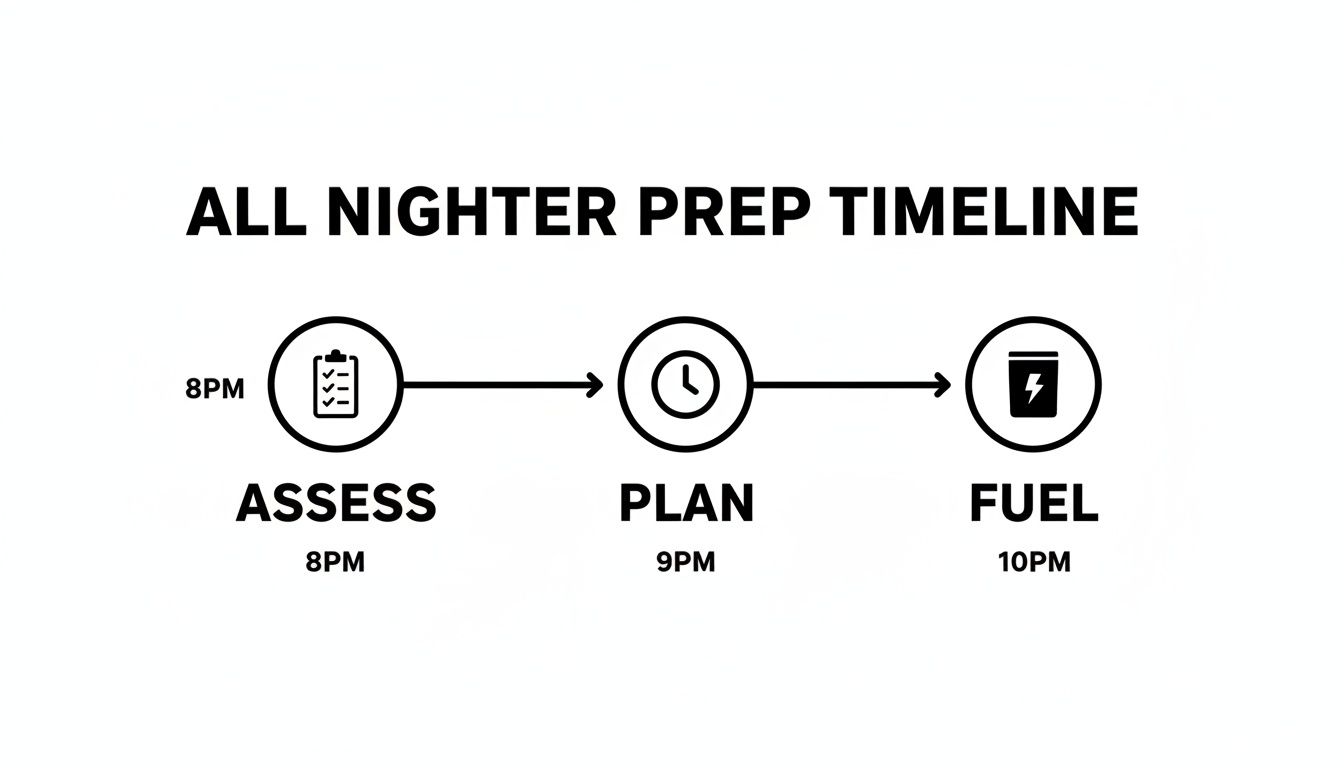
This visual just drives the point home: a productive night starts hours before midnight with smart, intentional preparation.
To make this even more concrete, here's a quick checklist you can use to frame your prep work.
Your All Nighter Strategic Checklist
This table isn't just a to-do list; it's a strategic framework to ensure you're setting yourself up for success from the very beginning.
| Phase | Action Item | Why It Matters |
|---|---|---|
| Assessment | Triage tasks into 'Critical' and 'Non-Critical' | Prevents wasting energy on low-impact work. |
| Planning | Assign realistic time blocks to each task | Creates a clear roadmap and prevents getting bogged down. |
| Scheduling | Build in strategic breaks (e.g., Pomodoro) | Preserves mental stamina and avoids cognitive burnout. |
| Fueling | Prepare smart snacks and hydration in advance | Stops you from reaching for sugary junk food that leads to a crash. |
Following these steps transforms an all-nighter from a desperate scramble into a controlled, productive session.
Structure Your Night for Success
Once your priorities are locked in, it's time to structure your night like a project manager. The Pomodoro Technique is perfect for this. The idea is simple: work in focused 25-minute sprints, then take a 5-minute break. After four of these cycles, you earn a longer 15-30 minute break.
Think of your all-nighter not as one long, grueling marathon, but as a series of short, intense sprints. This is how you preserve mental energy and dodge that dreaded midnight crash.
This is where you can be strategic with your tools. Forget the sugary energy drinks that send you on a rollercoaster of jarring spikes and crashes. Instead, think about smart supplementation.
Using something like Dialed In’s Focus Pouches during one of your longer breaks can give you a smooth, sustained cognitive boost. You stay sharp and in the zone without the jitters or the inevitable crash. The whole point is to work smarter, not just longer.
Fueling Your Mind and Body for the Long Haul
What you eat and drink during an all-nighter is the difference between sharp productivity and a sluggish, unfocused haze. The classic image of pizza boxes and sugary energy drinks is a surefire recipe for a massive energy crash. To pull an all-nighter without burning out, a much smarter approach is non-negotiable.
Start your evening with a solid nutritional foundation. A balanced meal rich in complex carbs, lean protein, and healthy fats—think grilled chicken with quinoa and avocado—gives you a slow, steady release of energy. This helps you dodge the sharp glucose spikes and subsequent crashes that completely derail focus.
As the night wears on, your snack choices become your secret weapon. Instead of reaching for candy or chips, you need brain-boosting foods that actively support cognitive function.
Smart Snacking for Sustained Focus
Your brain needs a constant supply of high-quality fuel. Keep these options on hand to maintain mental clarity and energy levels straight through the night:
- Almonds and Walnuts: These are packed with healthy fats, antioxidants, and vitamin E, all known to support brain health and protect against oxidative stress.
- Blueberries: Often called "brain berries" for a reason. They're loaded with antioxidants that can improve memory and cognitive function.
- Dark Chocolate (70% or higher): A great choice because it contains flavonoids, a little caffeine, and antioxidants that can increase blood flow to the brain and sharpen your focus.
Hydration is just as critical. Dehydration is one of the fastest ways to bring on fatigue and headaches, so keep a large water bottle at your desk and sip from it consistently. Forget the sugary sodas and juices entirely.
The goal isn't just to stay awake; it's to stay cognitively sharp. Your fuel choices directly determine your mental horsepower, hour after hour.
A Cleaner Approach to Energy
When you feel your energy dipping, the temptation to grab a conventional energy drink is strong. We’ve all been there. But this almost always leads to jitters, anxiety, and an inevitable crash that leaves you worse off than before.
When using stimulants like caffeine to stay alert, it's important to be responsible. For a broader context, you can check out a guide to safe pre-workout caffeine dosing and timing.
For a much more controlled and crash-free experience, a targeted nootropic supplement is a superior choice. Our Energy Pouches were designed specifically for this purpose, delivering a clean source of energy using ingredients like Guarana and N-Acetyl L-Tyrosine.
This combination provides a smooth, sustained lift in alertness and focus without the sugar-induced brain fog or caffeine overload. You can explore more about alternatives to caffeine for energy to see exactly how these ingredients work. By fueling your body and mind intelligently, you set yourself up for a genuinely productive night.
Creating Your Peak Performance Environment
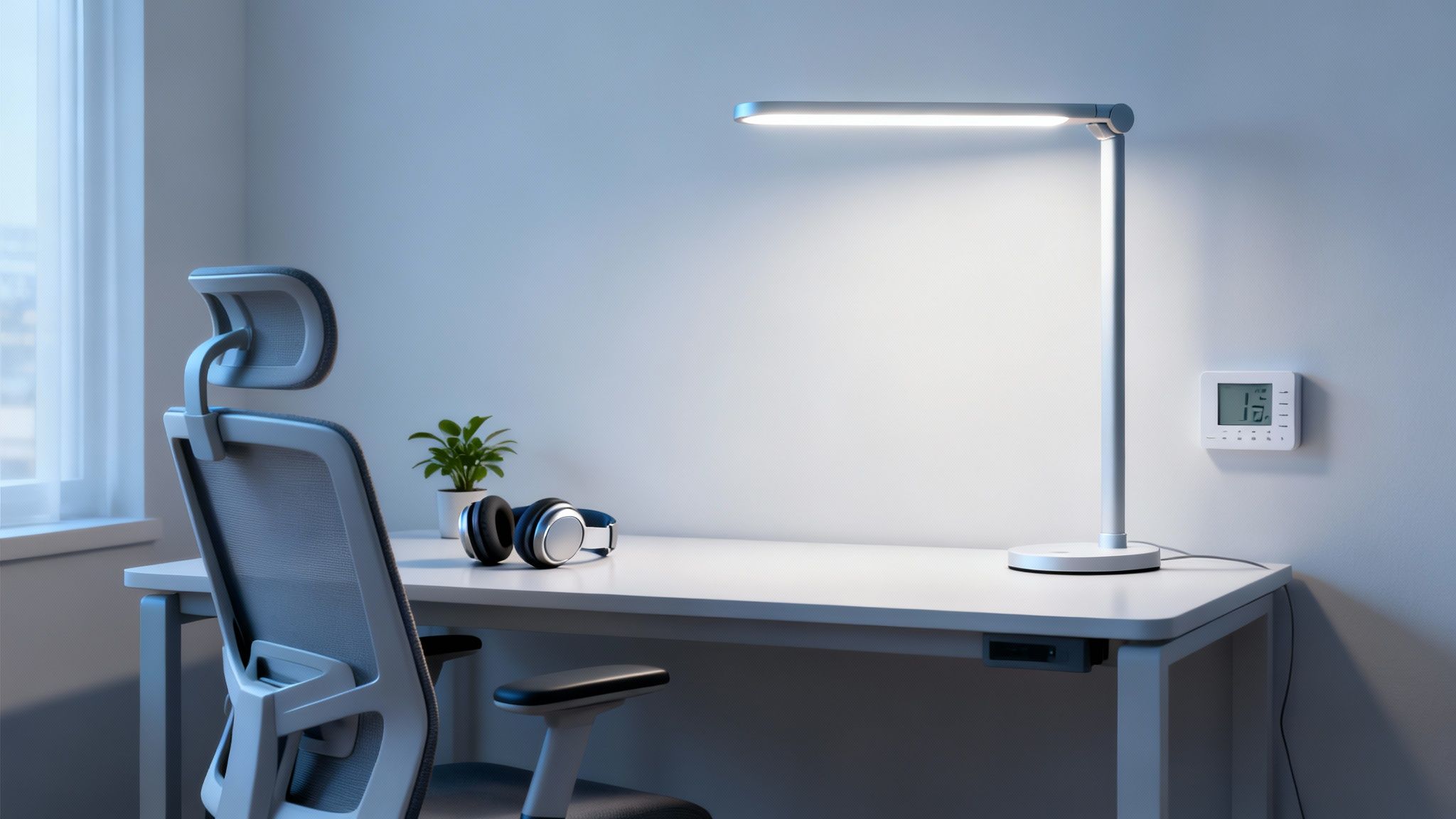
Your physical space is either your biggest ally or your worst enemy in the fight against sleep. A dim, cluttered, or stuffy room is practically begging you to give up. We need to do the opposite: engineer an environment that tells your brain it's time for peak performance, not bedtime.
It all starts with light. Your body’s internal clock is hardwired to respond to light, and you can absolutely use that to your advantage. Ditch the warm, cozy lamps—they signal your brain to wind down. Instead, flood your workspace with bright, cool-toned lighting that mimics daylight. A powerful desk lamp isn’t just a nice-to-have; it's essential gear for an all-nighter.
Control Your Climate and Sound
Next up: temperature. A warm room is a recipe for drowsiness. You want to keep your space slightly cool to help you stay sharp and prevent that comfortable, sleepy feeling from creeping in. If you feel yourself starting to fade, crack a window. A quick blast of cool, fresh air works like a system reboot.
Sound is another critical layer. Some people thrive with a curated instrumental playlist that keeps their momentum going. Others need absolute silence to lock in. If you're in the second camp and can't escape household noise, a solid pair of noise-canceling headphones will be your best friend.
Eliminate All Distractions
Let's be real: your biggest enemy isn't just fatigue. It's distraction. Every notification ping and stray thought shatters your focus, and it costs precious mental energy to get back on track. You have to be ruthless here.
- Go on Digital Lockdown: Turn off every single non-essential notification on your computer and phone. Even better, just put your phone in another room. Out of sight, out of mind.
- Declutter Your Desk: A messy desk is a messy mind. Take five minutes to clear away anything that isn’t directly related to the task at hand.
- Set Your Boundaries: Give your family or roommates a heads-up that you need zero interruptions. This quick conversation can save you from having your concentration broken at a critical moment.
Your workspace isn't just a place to sit; it's a fortress you build against fatigue and distraction. Every single element—from the lightbulb you use to the temperature on the thermostat—should be optimized to keep you sharp.
Ultimately, setting up your environment is about making it as easy as possible to slip into a state of deep work. An optimized space removes the friction that gets in the way of achieving that productive "flow state." For a deeper dive, check out our guide on how to achieve flow. And don't forget the basics—make sure your chair and desk are set up ergonomically to keep physical pain and fatigue from derailing your night.
How to Manage Energy and Avoid Burnout
Let’s be real: an all-nighter is a marathon, not a sprint. The secret to crossing the finish line without collapsing is all about pacing. If you just try to brute-force it with sheer willpower, you’re setting yourself up to hit that dreaded 3 AM wall where your focus vanishes and the exhaustion is overwhelming.
It's far smarter to treat the night like a series of controlled bursts. Your brain simply isn’t designed for eight straight hours of intense concentration—it needs regular resets. That's why strategic breaks are non-negotiable for maintaining mental stamina. A quick five to ten-minute break every hour to get up, stretch, or walk around is essential. It boosts blood flow, gets oxygen to your brain, and gives you a much-needed mental refresh.

The Strategic Power Nap
Sometimes, a simple stretch just won't cut it. When you feel a serious dip in alertness and your thoughts start getting fuzzy, it’s time to deploy the strategic power nap. This isn't about giving in to sleep; it's a calculated move to recharge your brain's batteries.
Aim for a short nap of 20-25 minutes. This is the sweet spot. It lets your mind dip into the lighter, restorative stages of sleep without plunging you into the deep sleep that causes sleep inertia—that groggy, confused feeling you hate. Set a loud alarm and stick to the time limit.
Thoughtful Integration of Nootropics
This is where you can combine your breaks with smart supplementation for a serious edge. The moments right after a power nap or during a natural energy dip are when your brain is most ready for a cognitive boost. It's the perfect time to use a Dialed In Focus Pouch.
Instead of blasting your system with jarring stimulants, the goal is to provide a smooth, sustained wave of alertness that carries you through the most challenging parts of the night.
Our Focus Pouches are specifically formulated with clean ingredients like Citicoline and L-Theanine. This combination is designed to sharpen focus, enhance mental clarity, and provide a clean, crash-free stream of alertness. You can buy your Dialed In Nootropics Focus Pouches directly from our website.
This approach is all about sustained release, giving you steady support instead of a chaotic spike and crash. You can dive deeper into the science behind this in our article on understanding caffeine sustained release.
Let's be clear about the stakes here. Pulling an all-nighter pushes you into a state of sleep deprivation that’s becoming scarily common. Data shows a staggering 60% of youth and adults are clinically sleep-deprived, getting six hours or less per night. With over 35% of Americans getting less than seven hours, the consequences are severe, contributing to thousands of injuries from drowsy driving every year. You can discover more insights on this sleep-deprivation epidemic. Managing your energy smartly isn't just about productivity; it's about staying safe.
Your Post-All-Nighter Recovery Protocol
You survived. The project is in, the deadline is met, and the only thing on your mind is collapsing into bed for a 12-hour coma.
Don’t do it.
Seriously, that’s one of the biggest recovery mistakes you can make. The mission now isn't just to sleep—it’s to gently reset your body’s internal clock without wrecking it for the rest of the week. How you handle the day after is just as critical as how you powered through the night.
The Strategic Recovery Nap
Instead of a marathon sleep session that will leave you in a fog, aim for a strategic 90-minute recovery nap. This isn't a random number. 90 minutes is roughly the length of one full sleep cycle, allowing your brain to move from light sleep into deep, restorative sleep and even get some REM.
This process is crucial for clearing out the adenosine that built up in your brain—that’s the chemical responsible for the intense sleep pressure you’re feeling. Set a loud alarm and force yourself up when it goes off. This controlled nap delivers a significant cognitive boost without the sleep inertia that follows a multi-hour crash.
Your recovery day is all about damage control. The priority is to reset your sleep-wake cycle gently, not to shock it further with an erratic, day-long sleep binge.
Fueling Your Recovery
Just like you needed the right fuel to get through the night, your recovery depends on smart nutrition. Your body is fried. The last thing it needs is a greasy, sugary gut bomb that will make you feel even more sluggish.
Focus on light, nutrient-dense meals that support brain and body repair.
- Protein-Rich Foods: Think eggs, Greek yogurt, or a simple chicken salad. Protein helps stabilize your blood sugar and gives your brain the amino acids it needs to rebuild.
- Complex Carbohydrates: A bowl of oats or some whole-wheat toast provides a steady stream of energy, unlike a sugary cereal that guarantees another crash.
- Hydration Is Key: You’re almost certainly dehydrated. Keep a water bottle handy and sip throughout the day to fight off fatigue and headaches.
Light Exposure and Gentle Cognitive Support
One of the most powerful tools for resetting your circadian rhythm is natural sunlight. As soon as you can, get outside for at least 15-20 minutes. Bright, natural light is a direct signal to your brain that it’s daytime, which is essential for getting your sleep pattern back on track.
You’re also going to be dealing with some serious brain fog. To handle essential tasks without slamming more stimulants, a gentle cognitive lift can make all the difference. Popping a piece of our Nootropic Gum, available here for purchase, provides a subtle boost to focus and mental clarity, helping you navigate the day without feeling wired.
This is a much smarter move than another coffee, which will only interfere with your sleep later tonight. If you’ve been leaning hard on caffeine, our guide on how to avoid caffeine withdrawal symptoms might be a lifesaver.
To minimize the long-term fallout, it's crucial to follow a smart recovery plan, which includes implementing effective strategies to bounce back after an all-nighter. By combining a strategic nap, clean nutrition, and a little sunlight, you can guide your body back to its natural rhythm much more effectively.
The True Cost of Sleep Deprivation
Let's be real: knowing how to pull an all-nighter is a useful tool to have in your back pocket for emergencies. But treating it like a regular strategy comes with a steep price.
The occasional all-nighter is one thing. Chronic sleep deprivation is another—it creates a massive debt that your mind and body will eventually collect on. This isn't just about feeling tired; it's a direct hit to your performance, mood, and long-term health.
In the short term, the damage is immediate. Your reaction time tanks, your decision-making gets fuzzy, and your ability to remember anything new plummets. It also wrecks your mood, leaving you irritable, stressed, and unpleasant to be around.
This isn't just a personal problem, either. It’s a global one. According to ResMed's Fifth Annual Global Sleep Survey, people are losing nearly three full nights of good sleep every single week. The report found that 22% of people just try to power through it without help, leading to burnout that hammers their work performance and mental health.
The economic fallout is staggering, costing the US economy up to $411 billion a year. You can read the full research on this global sleep crisis if you want to see just how deep the problem goes.
The Long-Term Health Consequences
When skipping sleep becomes a habit, the consequences get a lot more serious than just brain fog and a bad mood. The long-term costs are physical, and they can be severe.
Your immune system is one of the first things to go. While you sleep, your body produces protective proteins called cytokines. Skimp on sleep, and you produce fewer of them, leaving you wide open to every bug going around.
Prioritizing sleep is the ultimate long-term strategy. Using smarter tools for the occasional all-nighter is a far more sustainable approach than a constant reliance on harsh stimulants.
Consistently missing out on quality sleep also significantly increases your risk for a whole host of chronic health problems, including:
- Heart disease
- High blood pressure
- Diabetes
- Obesity
This reality check is why we wrote this guide. An all-nighter should be a rare exception, not your go-to move. And when you absolutely must push through the night, a smarter approach is non-negotiable.
Using a clean, nootropic-based product like our Focus Pouches offers a more sustainable way to maintain performance without the jitters and harsh crash that comes from sugar and excessive caffeine. But remember, the end goal is always to get back to a healthy sleep schedule.
Questions You're Probably Asking About All-Nighters
Even with the perfect game plan, a few questions always pop up. Let's clear the air on the most common ones so you can go into this with total confidence.
Better to Stay Up All Night or Wake Up Super Early?
This is the classic debate. Waking up at 3 or 4 AM after just a couple of hours of sleep sounds like a decent compromise, but it's usually a trap. You're slammed with brutal sleep inertia, and getting your brain back online can feel nearly impossible.
For most people, pushing straight through the night is the smarter move. You keep your momentum going and avoid that jarring, middle-of-the-night alarm that just wrecks your focus.
What's the Best Time for a Power Nap?
A nap can be a total game-changer, but you have to time it right. The sweet spot is almost always between 1 AM and 3 AM. That’s when your body’s natural energy levels hit their lowest point.
A quick 20-25 minute nap during this window can reset your focus without making you feel groggy. If you go any longer, you risk falling into deep sleep, and trying to wake up from that is a nightmare in itself.
How Do I Use Focus Supplements the Right Way?
The key is to use them strategically, not as a crutch to keep you going all night. Forget chugging sugary energy drinks that just lead to a crash.
Instead, reach for a clean, nootropic-based product like our Focus Pouches, available on our website, when you feel your energy naturally starting to fade, maybe after a break or when you hit a wall. Always start with the recommended dose to see how it feels. This approach gives you a smooth, clean cognitive lift—no jitters, no crash.
For a clean, crash-free way to maintain focus during those crucial hours, explore the nootropic blends from Dialed In Nootropics. Shop our Focus Pouches and Nootropic Gum now.