

How to Quit Chewing Tobacco for Good
Deciding to quit chewing tobacco is a huge step, and it all starts with a rock-solid personal commitment. It’s about nailing down your reasons, picking a date, and getting your crew on board. This turns the idea of quitting into an actual plan for a better, healthier life.
Making the Commitment to a Nicotine-Free Life
The real journey to quit chewing tobacco doesn’t begin when you toss your last can. It starts with a mental switch. You’ve probably heard all the health warnings a million times, but the motivation that actually sticks comes from locking in your personal "why."
This is the reason you’ll cling to when a craving feels overwhelming. It’s time to move past the scare tactics and focus on the real, tangible rewards waiting for you.
Think about the immediate wins. Imagine not needing that first dip just to feel normal in the morning. Consider the mental fog lifting without the constant up-and-down of nicotine. Your focus, your mood, your patience—it all gets a serious upgrade.
Find Your Personal Motivation
Your reasons for quitting are yours alone. Generic stats are one thing, but they don't give you the grit you need to break a habit this powerful. So, take a minute and figure out what a tobacco-free life really means to you.
Is it about the money? Do the math on what you spend each week, month, and year. The total might be a gut punch. That cash could be a family vacation, a new truck, or just a lot less financial stress.
Or maybe it's for the people in your life. A lot of guys quit for their partner or their kids. They want to be more present without being distracted by needing a fix. And let’s be real—the freedom from having to hide it or find a place to spit is a huge relief.
The strongest motivation is deeply personal. Write down your top three reasons for quitting. Stick them on your bathroom mirror, the dash of your truck, or make it your phone's lock screen. Keep it front and center.
Set a Firm Quit Date
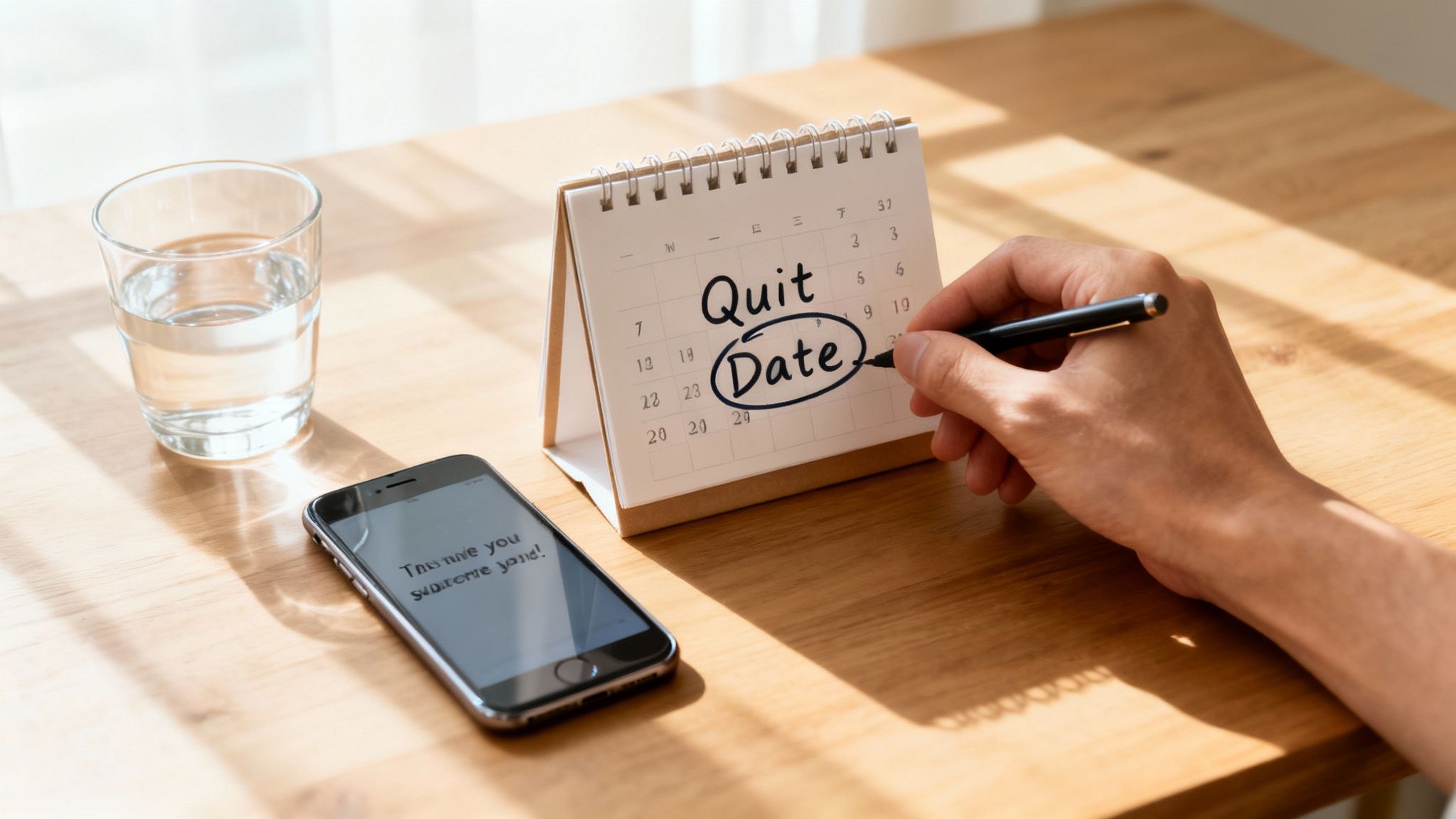
Once you've got your "why," it's time to set your quit date. Don't just say "sometime soon." Pick a real date on the calendar, maybe two to four weeks from now. This gives you enough time to get your head right without letting yourself procrastinate.
Circle it. Mark it down. Treat it like the most important appointment you have. Then, tell your family and close friends. Saying it out loud makes it real and adds a layer of accountability you'll be grateful for. For more tips, checking out the best way to quit dipping tobacco can give you extra strategies to get ready.
Build Your Support System
You absolutely do not have to go through this alone. Your support system is your first line of defense when things get tough.
- Tell Your Inner Circle: Let your trusted friends, family, or partner know your quit date and exactly how they can help you out.
- Set Clear Boundaries: Ask people who use tobacco not to do it around you, especially in those first few weeks. Be direct.
- Talk to a Pro: There's no shame in talking to a doctor or therapist. They have resources and game plans that can make a huge difference.
Remember, you're not just kicking a personal habit; you're joining a massive movement. With an estimated 356 million smokeless tobacco users worldwide, people are successfully quitting every single day. The fact that the numbers are dropping in many countries proves it can be done.
Understanding the real damage tobacco does can also fuel your fire. Learning about bad habits that could harm your teeth is a powerful reminder of why you’re committing to a healthier, nicotine-free future.
Building Your Personalized Quit Plan
Let's be real: quitting chewing tobacco isn't something you can just wing. A solid plan is your best defense against the curveballs life will inevitably throw at you once you decide you're done for good. Hope isn't a strategy.
Success comes from creating a personalized game plan that accounts for your daily routines, your biggest challenges, and the tools you'll need to power through. This is less about raw willpower and more about smart preparation. By mapping out your approach before your quit day, you're building the confidence to handle any craving or trigger that comes your way.
Identify Your Personal Triggers
First things first, you need to become a detective of your own habits. For weeks, months, or even years, chewing tobacco has been woven into the fabric of your day. Pinpointing exactly when and why you reach for a dip is the key to breaking that cycle.
Your triggers are the specific situations, feelings, or routines that spark that automatic craving. They can be subtle but incredibly powerful. Grab a notepad or open a note on your phone and start listing every single time you typically use smokeless tobacco.
- Routine Triggers: Do you pack a lip first thing in the morning with your coffee? After every single meal? During your commute home from work? These are the deeply ingrained habits tied to specific times of day.
- Emotional Triggers: Stress is a massive one for almost everyone. Do you reach for a can when you're feeling anxious, angry, or just plain bored? Getting honest about these emotional connections is critical.
- Social Triggers: Maybe you only dip when you're with certain buddies, at a ballgame, or out on the boat fishing. These social cues create powerful associations that can be tough to break.
Once you have your list, you can start building proactive strategies. If that morning coffee is a trigger, try switching to tea for a while or drinking your coffee while you take a walk. If stress is the culprit, have a plan ready to go—like a five-minute breathing exercise or a quick set of pushups.
Find Your Ideal Tobacco-Free Alternative
A huge piece of the addiction puzzle is the physical act itself—that oral fixation of having something in your lip. For many guys, this ritual is just as hard to break as the chemical dependency on nicotine. Your quit plan absolutely must include a replacement for this.
Sure, traditional options like sunflower seeds, regular gum, or mints can help in a pinch, but they often fall short. They don't do anything to address the mental side effects of quitting, like that infamous "brain fog" or the crushing fatigue that comes with nicotine withdrawal.
This is where a modern solution can make all the difference. Dialed In Nootropics Focus Pouches are specifically designed to be the ultimate tobacco-free alternative. They satisfy that oral fixation perfectly while delivering a blend of nootropics for clean energy and sharp mental clarity—directly tackling the toughest withdrawal symptoms head-on.
Having a powerful substitute ready on day one is a total game-changer. It gives you something to physically reach for when a craving hits, satisfying the old habit while also providing a functional benefit that helps you feel better, not worse. To dig deeper into this, you can learn more about how nootropic pouches can aid in your journey to going tobacco-free in our detailed guide.
Create a Supportive Environment
Finally, you have to set yourself up for success by clearing your environment of every last temptation. This step is completely non-negotiable. It sends a powerful message to your brain that you are serious about this commitment and makes the right choice the easy choice.
Go through every corner of your life and get rid of any trace of your old habit.
- Your Home: Check the nightstand, that junk drawer, and any secret stashes you might have.
- Your Vehicle: Clean out the truck’s center console, glove box, and door pockets. Toss the spittoons.
- Your Workplace: Clear out your toolbox, your locker, or your desk. No exceptions.
Once everything is cleared out, it's time to stock up on your chosen substitutes. Have your Dialed In Nootropics Focus Pouches within arm's reach everywhere you used to keep a can of dip. Fill those spots with other healthy options, too, like bottles of water, sugar-free gum, or healthy snacks. This level of preparation minimizes surprises and ensures that when a craving strikes, you're already armed and ready to win that battle.
Navigating Nicotine Withdrawal and Cravings
Once you’ve tossed that last can, the real work begins. Your body starts healing almost immediately, but this is also when you'll face your biggest challenge: nicotine withdrawal. Knowing what’s coming—and reminding yourself it’s temporary—is the key to staying on track.
The first few days are almost always the toughest. You're going to feel a mix of physical and mental symptoms as your brain rewires itself to function without a constant hit of nicotine. This isn't just a mental game; it's a very real physiological process.
You might feel irritable, anxious, or find it impossible to concentrate. The cravings can feel like a tidal wave, but remember, these intense moments will pass. The trick is to have a toolbox of proven strategies ready to go so you're not caught off guard.
Understanding the Withdrawal Timeline
Knowing what to expect takes a lot of the fear out of quitting. The nicotine withdrawal timeline follows a fairly predictable pattern, though it can feel a little different for everyone. For most people, symptoms will peak within the first 72 hours and then start to fade over the next few weeks.
This timeline shows you how to prep for those first crucial days, from identifying your personal triggers to creating a new, healthier environment for yourself.
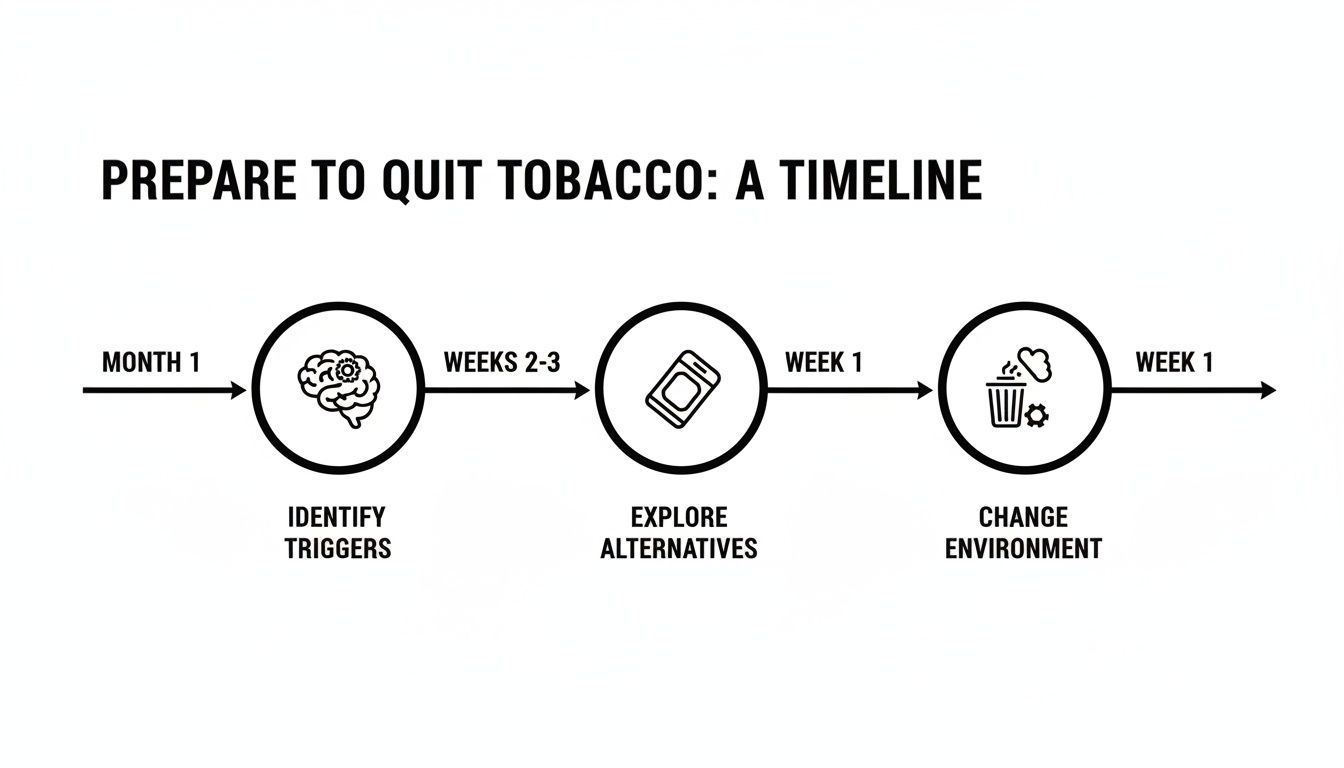
As you can see, a successful quit starts before your quit day. It’s about proactively dealing with your triggers, finding solid alternatives, and cleaning out any temptations.
Proven Strategies for Managing Symptoms
Having a game plan to manage withdrawal symptoms is your best defense. Instead of just gritting your teeth and toughing it out, you can actively fight back against the discomfort with a few simple, effective techniques.
- Practice Deep Breathing: When a craving hits, it can feel like a panic attack. Just stop. Take five deep, slow breaths. Inhale through your nose, hold it for a count of three, and then exhale slowly through your mouth. This one simple act calms your nervous system right down and puts you back in control.
- Stay Physically Active: Exercise is one of the most powerful tools you have. Seriously. Even a quick 10-minute walk can release endorphins, crush stress, and knock a craving on its head. If you’re feeling angry or wound up, a more intense workout is a fantastic outlet.
- Keep Hydrated: Sipping on cold water all day helps flush out remaining toxins and keeps cravings at bay. Sometimes the urge to dip is just your body looking for that familiar oral fixation, and a swig of cold water can satisfy it.
These physical actions give you something immediate to do, pulling your focus away from the craving and onto a positive, healthy choice.
What to Expect From Withdrawal
Here’s a rough timeline of what you might experience as your body adjusts. Don't worry if your experience is slightly different—this is just a general guide to help you prepare.
| Time Since Last Dip | Common Physical Symptoms | Common Psychological Symptoms |
|---|---|---|
| First 24 Hours | Tingling in hands/feet, sweating, intense cravings. | Irritability, anxiety, difficulty concentrating. |
| Days 2-4 | Headaches, fatigue, increased appetite. Cravings peak. | Brain fog, mood swings, feeling restless or depressed. |
| Week 1-2 | Cravings become less frequent but can still be strong. | Mental clarity begins to return. Mood starts to stabilize. |
| Weeks 2-4 | Lingering cough (as lungs clear), appetite returning to normal. | Psychological cravings tied to triggers (e.g., after a meal). |
| 1+ Month | Most physical symptoms are gone. Energy levels increase. | Continued need for coping strategies for triggers. |
Remember, every symptom you feel is a sign that your body is healing. Stick with it, and these feelings will pass.
Combatting Brain Fog and Irritability
One of the most frustrating parts of withdrawal is what it does to your head. The "brain fog" is absolutely real, making it hard to focus, and the short fuse you suddenly have can put a strain on your relationships.
This is where having the right gear makes a huge difference.
The scientifically-backed ingredients in our Dialed In Nootropics Focus Pouches were specifically chosen to tackle these exact symptoms. They aren't just a placeholder—they actively support your brain. Ingredients like Citicoline sharpen mental clarity while L-Theanine promotes a sense of calm focus without making you drowsy.
This combination cuts right through the fog and smooths out the rough edges of irritability, letting you stay on your game at work and at home. It provides the clean mental energy you need to power through the toughest moments. For a deeper dive, check out our guide on how to quit dipping without withdrawal holding you back.
You can stock your quit kit by grabbing a supply of Dialed In Nootropics Focus Pouches and Nootropic Gum. Having them on hand from day one means you’re ready to fight back against withdrawal with confidence.
Replacing the Habit with Healthier Routines
Quitting chewing tobacco for good is about more than just beating a chemical addiction. You’re also dismantling a deep-seated ritual that’s woven itself into the fabric of your daily life. This is the behavioral side of the battle, and winning here means systematically replacing that old, destructive habit with new, healthier routines.
For most guys, the physical act—the hand-to-mouth motion, the oral fixation, the familiar feeling of a pouch in your lip—is just as powerful as the nicotine itself. Your brain has spent years building strong connections between certain activities and the reward of a dip. To break free, you have to deliberately sever those connections and forge new, positive ones.

This is all about being proactive, not just reactive. Instead of waiting for a craving to sucker-punch you, you start building a new lifestyle where tobacco simply doesn’t fit. The goal is to make the healthy choice the easy, automatic choice.
Deconstructing the Oral Fixation Habit
That powerful urge to have something in your mouth is a real psychological drive known as oral fixation. Chewing tobacco scratches this itch perfectly, creating a habit loop that can feel impossible to escape. Your mind craves the sensation, the pressure on your gum, and the simple act of having something to do.
Just recognizing this is a huge first step. You're not just fighting nicotine; you're fighting a deeply ingrained physical pattern. This is why substitutes like sunflower seeds or regular gum often fall short—they might keep your mouth busy for a minute, but they don't replicate the specific feeling or offer any real benefit to help you through withdrawal.
This is where a modern, targeted alternative comes into play.
- Mimic the Sensation: You need something that feels right in your lip, satisfying the placement and pressure your brain has come to expect.
- Provide a Functional Boost: Instead of a nicotine hit that just keeps the cycle going, a good alternative should give you something positive, like sharper focus or clean energy, to help you feel better while you quit.
- Be Nicotine-Free: The whole point is to break the addiction completely, not just trade one nicotine product for another.
Our Dialed In Nootropics Focus Pouches were designed specifically for this. They deliver that same satisfying sensation without a drop of nicotine, directly tackling the oral fixation while giving you a nootropic boost to keep you sharp.
Building New Routines for Real-World Scenarios
The real trick is to seamlessly swap in a healthy alternative during those exact moments you used to reach for a can. It’s about replacing the ritual, not just trying to ignore it. Let's look at how this plays out in a few common situations where cravings hit the hardest.
The Construction Worker on Break
For years, that 10 a.m. break meant a coffee and a lip. It’s a moment to rest and regroup. The craving isn't just for nicotine; it's for the ritual itself.
- Old Routine: Sit on the tailgate, pop in a dip, and zone out for 15 minutes.
- New Routine: Grab a cold water and a Focus Pouch. You get the same satisfying oral sensation and a clean mental boost to power through the rest of the morning—without the head rush and inevitable crash from nicotine.
The Truck Driver on a Long Haul
Hours of staring at the highway lead to boredom and fatigue, two massive triggers for dipping. The dip becomes a tool to stay awake and kill time.
- Old Routine: Chain-dip to fight off highway hypnosis, all while dealing with spit bottles and a fuzzy head.
- New Routine: Keep a can of Energy Pouches in the center console. When you feel that fatigue creeping in, a pouch delivers smooth, sustained energy and sharpens your focus, keeping you alert and safe without the addictive chemicals.
The Athlete Prepping for a Game
A lot of athletes use chew as part of their pre-game ritual to "get in the zone." That mental association is incredibly powerful and tough to break.
- Old Routine: Dip in the locker room to calm nerves and get focused.
- New Routine: Swap the tobacco for a piece of Nootropic Gum. The chewing action helps relieve tension, while the nootropics provide genuine mental clarity and focus, giving you a competitive edge without wrecking your health.
By actively replacing the old habit with a new, beneficial one, you are literally rewriting your brain's reward system. Each time you choose a healthy alternative, you weaken the old neural pathway and strengthen a new one.
This strategy works for any trigger. If you always dip after a meal, get up and take a brisk five-minute walk instead. If you dip while fishing, have your nootropic pouches ready to go in your tackle box. For a closer look at this approach, see how Dialed In Nootropic Gum can help you quit nicotine and finally break the cycle. The key is to have a plan for every single trigger, turning moments of weakness into opportunities to build a stronger you.
Staying Tobacco-Free for the Long Haul
Quitting chewing tobacco is a huge win, but let's be real—the work isn't over after the first few weeks. The real journey is making "tobacco-free" your new normal, and that means having a game plan for the long run.
Your goal is to build resilience and learn how to navigate life without your old crutch. It’s all about turning those new, healthier habits into a lifestyle that sticks for good.
Identifying Your Long-Term Pitfalls
As time goes on, the fight changes. It becomes less about the raw physical withdrawal and more about the psychological jabs that can catch you off guard. These are the old habits and situations where your brain might try to trick you into thinking a dip is the solution.
Be on the lookout for these common high-risk scenarios:
- Social Events: Hanging out with buddies who still dip is tough. Barbecues, hunting trips, or just watching the game can be major minefields.
- Intense Stress: A brutal deadline at work, a fight with your partner, or any unexpected bad news can send a powerful signal to your brain to grab what it thinks is a stress reliever.
- Plain Old Boredom: Honestly, sometimes the biggest trigger is just having nothing to do. Those quiet moments you used to fill with a pouch now need a new, better purpose.
Knowing your personal triggers is half the battle. If you can see them coming, you can prepare a defense instead of getting blindsided.
Creating Your Emergency Relapse Plan
Think of this as your "break glass in case of emergency" kit for your brain. When a killer craving hits out of nowhere, you won't have time to second-guess yourself—you need a simple, immediate action plan.
Your plan needs two things. First, have a go-to person you can call or text the second you feel that urge. This needs to be someone who knows your story and can talk you off the ledge. Just a five-minute conversation can often be enough for the craving to pass.
Second, you absolutely must have a healthy alternative on hand at all times. This is non-negotiable.
A slip-up isn't a failure. It's just data. It’s a chance to see what went wrong, tweak your strategy, and come back stronger and smarter than before.
Keeping a can of our Dialed In Energy Pouches in your pocket, truck, or gym bag is the perfect defense. The moment a craving hits, you can pop one in, satisfy that oral fixation, and get a clean energy boost to power right through it.
Celebrating Your Victories and Milestones
Staying motivated for the long haul means you have to acknowledge your wins. Your brain loves rewards, so don't let your big milestones slide by unnoticed.
Put these dates on your calendar and plan something specific to celebrate:
- One Week Free: You did it. Treat yourself to a steak dinner or buy that thing you’ve been eyeing with the money you saved.
- One Month Free: This is huge. You’re through the worst of it. Plan a weekend activity or a fun outing.
- Six Months Free: You’re officially a non-user. Time for a weekend trip or a bigger purchase you’ve earned.
- One Year Free: You've navigated every season, holiday, and event without tobacco. This deserves a serious celebration.
These aren't just feel-good rewards; they're powerful psychological anchors. They reinforce your new identity and remind you just how far you've come.
Remember, every single day you stay off tobacco, your health is improving. Understanding the importance of preventive dental care really drives this home, as quitting is one of the single best things you can do for your oral health and your future.
Common Questions About Quitting Chewing Tobacco
When you decide to quit dipping, a ton of questions pop up. Getting straight answers is key—it kills the uncertainty and gives you the confidence to see this through. Here are the most common concerns I hear, broken down with practical, no-fluff answers.
How Long Does Nicotine Withdrawal Last?
Let's be real: the first 72 hours are the toughest. That's when the physical withdrawal symptoms are at their peak. After that initial hump, most of the intense stuff starts to fade over the next two to four weeks.
But everyone's timeline is a bit different. It depends on how long you've been dipping and how much you used. While the physical battle gets easier, the psychological cravings—the ones tied to your morning coffee or that after-work drive—can stick around. That's exactly why you need a game plan and the right tools in your corner.
What Is the Best Alternative to Chewing Tobacco?
The best alternative has to solve two problems at once: the physical habit and the chemical dependency. You can chew on sunflower seeds or regular gum all day, and while it keeps your mouth busy, it does absolutely nothing for the brain fog and fatigue that make so many people give up.
A genuinely effective alternative needs to do three things:
- Satisfy that familiar oral fixation of having something tucked in your lip.
- Deliver a real, functional benefit—like focus or energy—to fight back against withdrawal.
- Be 100% free of nicotine.
This is where Dialed In Nootropics Focus Pouches are a total game-changer. They nail the physical sensation of a pouch, crush the oral habit, and deliver a clean blend of nootropics for sharp mental clarity. You're directly tackling the hardest parts of quitting from day one.
By replacing the behavioral ritual and the mental side effects with a positive, functional tool, you give yourself something reliable to lean on when a craving hits. It’s about swapping a destructive habit for a constructive one.
Is It Better to Quit Cold Turkey or Gradually?
Honestly, this one's up to you. Both methods work, but the "best" way depends entirely on your personality and how deep the habit runs.
Quitting cold turkey is the rip-the-band-aid-off approach. You stop completely, right on your quit day. The withdrawal might feel more intense at first, but it's usually over faster. A lot of guys prefer this method for a clean, decisive break.
Tapering down means you slowly cut back on your dipping over a few weeks before stopping for good. This can soften the physical blow, but it also drags out the process, which can be a mental drain. A popular hybrid strategy is to quit nicotine cold turkey but immediately switch to a non-nicotine alternative like our Focus Pouches to manage the oral fixation from the get-go.
How Can I Deal with Weight Gain After Quitting?
It's a valid concern. Gaining a few pounds after quitting often happens for two reasons: your metabolism temporarily slows down as it adjusts, and you start reaching for snacks to fill the void.
The key is to get ahead of it. Stock your kitchen with healthy, easy-to-grab snacks like raw vegetables, fruit, or sugar-free gum. Staying hydrated is also huge; drinking plenty of water helps manage hunger pangs.
Even better, make physical activity a non-negotiable part of your new routine. A quick walk or workout doesn't just burn calories—it's an incredible tool for crushing stress and boosting your mood. Think of it as a core part of your long-term success plan.
Finally, there's a lot of bad information out there about nicotine alternatives. To help you sort fact from fiction, we put together a guide debunking popular nicotine pouch myths so you can make smart, informed choices.
Ready to arm yourself with the ultimate tobacco-free alternative? Dialed In Nootropics offers a powerful, scientifically formulated solution to satisfy cravings and keep you sharp. Explore our full range of Focus Pouches, Energy Pouches, and Nootropic Gum to find the perfect tool for your journey. Visit https://focuspouches.com and take control today.