

how to improve attention span: Science-Backed Ways to Focus
Getting your focus back isn't a simple hack. It’s a mix of smart digital habits, key lifestyle changes, and some targeted brain training. Think of it as a deliberate process of cutting out the noise, sharpening your cognitive control with tools like mindfulness, and fueling your brain with the right nutrition and sleep. It takes work, but you can absolutely reclaim your ability to concentrate.
Why Your Attention Span Feels Shorter Than Ever
Feel like you can’t finish an article, sit through a meeting, or even watch a movie without reaching for your phone? You’re not imagining it, and you're definitely not alone. It’s a collective feeling for a reason—our ability to concentrate is under attack in a world practically engineered for distraction.
This isn’t about a lack of willpower. It's about the environment we're all swimming in.

The never-ending flood of notifications, pings, and social media updates has literally rewired our brains. We've been trained to expect and crave novelty, getting a tiny thrill from short, constant bursts of information. This leaves us in a state of what experts call "continuous partial attention," where we're aware of everything at once but deeply focused on absolutely nothing.
The Science of Modern Distraction
The data backs this up, and it's pretty startling. The average human attention span plummeted from 12 seconds in 2000 to just 8 seconds by 2013—a drop that coincides perfectly with the rise of the smartphone.
This trend is even more pronounced in younger generations. A staggering 78% report feeling "phantom notifications," where they think their phone is buzzing even when it’s not. It's a clear sign of how our focus is constantly being fragmented throughout the day.
All this back-and-forth between tasks comes with a heavy cognitive price. Every single time you switch from your work to check a notification and then try to get back on track, your brain burns through mental energy. Doing this hundreds of times a day leads directly to:
- Mental Fatigue: Your brain’s resources get drained fast, making any kind of sustained focus feel exhausting.
- More Mistakes: When you're juggling too many things, you're far more likely to mess up.
- Shallow Thinking: Deep, critical thought requires uninterrupted time, which has become almost impossible to find.
The real killer isn't just the distraction itself. It's the anticipation of the next one. Our brains are stuck on high alert, waiting for the next ping, which keeps us from ever sinking into a true state of deep focus.
Your Brain on Multitasking
Here's a hard truth: the human brain can't actually multitask. What it does instead is switch between tasks at incredible speed. This process burns through glucose, depleting the very fuel you need for concentration.
This constant switching also feeds a powerful dopamine feedback loop. Each little notification or fresh piece of information delivers a tiny, rewarding hit of this "feel-good" chemical, training your brain to seek out more and more of it. If you're looking to get a handle on this cycle, understanding how to increase dopamine naturally is a great place to start.
Once you understand the forces working against your focus, you can finally start building a solid defense and learn how to improve your attention span for good.
Building a Distraction-Proof Digital Environment

Let's be real: you can't just ditch technology. The trick isn't to go offline, but to redesign your digital world so it serves you—not the other way around. Forget vague advice like "use your phone less." Real control comes from building smart systems that protect your attention by default.
Your devices and apps were engineered to grab and hold your focus. To win this battle, you have to be just as intentional about creating an environment for concentration. This is less about raw willpower and more about strategic design.
Implement a Digital Sunset
This is one of the most powerful habits you can build. A digital sunset is simple: you power down all screens at least an hour before you plan to sleep. The blue light blasting from your phone and laptop messes with melatonin, the hormone your brain needs to wind down for quality rest.
A bad night of sleep absolutely tanks your ability to concentrate the next day. By creating this screen-free buffer, you give your brain the signal to switch off, leading to deeper sleep and sharper focus when you wake up. It’s a small change with a massive payoff.
Master Your Notifications
Every buzz, ping, and banner is a tiny tear in your attention span. That quick glance at a notification isn't harmless—studies show it can take over 20 minutes to get back into a state of deep concentration after just one interruption. The solution is to go on a notification diet.
It's time for a ruthless audit. Go into your phone’s settings and shut off alerts for every single non-essential app. For each one, ask yourself: do I truly need to know this right now, or is it just noise?
- Social Media: Turn it all off. Banners, sounds, badge icons—everything. You can check these apps on your own terms.
- Email: Kill push notifications. Instead, schedule a few specific times a day to check your inbox.
- News & Shopping Apps: These are almost never urgent. Shut them down completely.
By taking control of your notifications, you change your phone from a constant source of distraction into a tool you use with purpose. This shift is non-negotiable for anyone serious about reclaiming their focus.
Your Personal Digital Distraction Audit
Use this checklist to identify and create actionable solutions for your biggest digital focus thieves.
| Distraction Source | Frequency (Hourly/Daily) | Actionable Solution | Difficulty to Implement (Low/Med/High) |
|---|---|---|---|
| Instagram Notifications | Hourly | Turn off all notifications except DMs from close friends. | Low |
| Slack Pings | Constantly | Set status to "Focusing" and turn off banner alerts. | Low |
| Breaking News Alerts | Daily | Disable all notifications from news apps. | Low |
| Personal Email | 5-10 times/day | Turn off push notifications; check only at 12 PM and 4 PM. | Medium |
| Work Email on Phone | Constantly | Remove the work email account from my phone entirely. | High |
This audit forces you to confront exactly where your attention is leaking and build a plan to plug the holes.
Create Digital Focus Zones
Go beyond just managing notifications and start using your device’s built-in tools to create dedicated focus zones. Most smartphones have a "Focus Mode" or "Do Not Disturb" feature that you can customize for specific activities like work, reading, or hitting the gym.
Set up a "Deep Work" mode that blocks everything except calls from a few key contacts and alerts from your most critical work apps. This creates a powerful boundary that tells your brain it's time to lock in. When you combine these digital guardrails with other productivity strategies, you’ll find your mental edge sharpens dramatically. For more tips on this, check out our guide on how to increase productivity at work.
And don't forget the physical side of digital work. Staring at a screen for hours can cause serious eye strain, which is a huge, under-the-radar focus killer. If you find your eyes getting tired, this helpful guide to glasses for computer eye strain is worth a read.
The Lifestyle Habits of Highly Focused People
Your ability to concentrate isn’t just about willpower; it’s deeply connected to your physical well-being. Think of your attention span like a high-performance engine—it needs premium fuel and regular maintenance to run smoothly. The most powerful tools you have for fueling your cognitive performance are foundational lifestyle habits.
Building a life that supports deep focus means being intentional about how you eat, move, and rest. These aren't just trendy wellness tips; they're non-negotiable habits for anyone serious about reclaiming their attention span.
Prioritize Deep, Restorative Sleep
You simply cannot out-focus poor sleep. It's during those deep sleep cycles that your brain gets to work clearing out metabolic junk that builds up during the day. This cleanup process is absolutely essential for sharp cognitive function.
When you skimp on sleep, you directly impair your prefrontal cortex—the part of your brain handling attention, planning, and keeping your impulses in check. A simple way to improve your "sleep hygiene" is to create a wind-down routine that signals to your brain it’s time to power down. This could be reading a physical book, some gentle stretching, or taking a warm bath. Consistency is everything here. Aim to go to bed and wake up around the same time daily, even on weekends.
Fuel Your Brain With the Right Foods
What you eat has an immediate and direct impact on your mental clarity. Sugary snacks and processed carbs will send your energy levels on a rollercoaster, completely wrecking your focus. On the other hand, certain foods actively support your brain's neural functions.
People are catching on. A global survey found that 56% of people know that a lack of essential nutrients hurts their ability to focus. Even more telling, over 60% are now actively looking for foods and supplements to boost their cognitive performance.
Building your diet around these "brain foods" gives your mind the raw materials it needs to stay sharp.
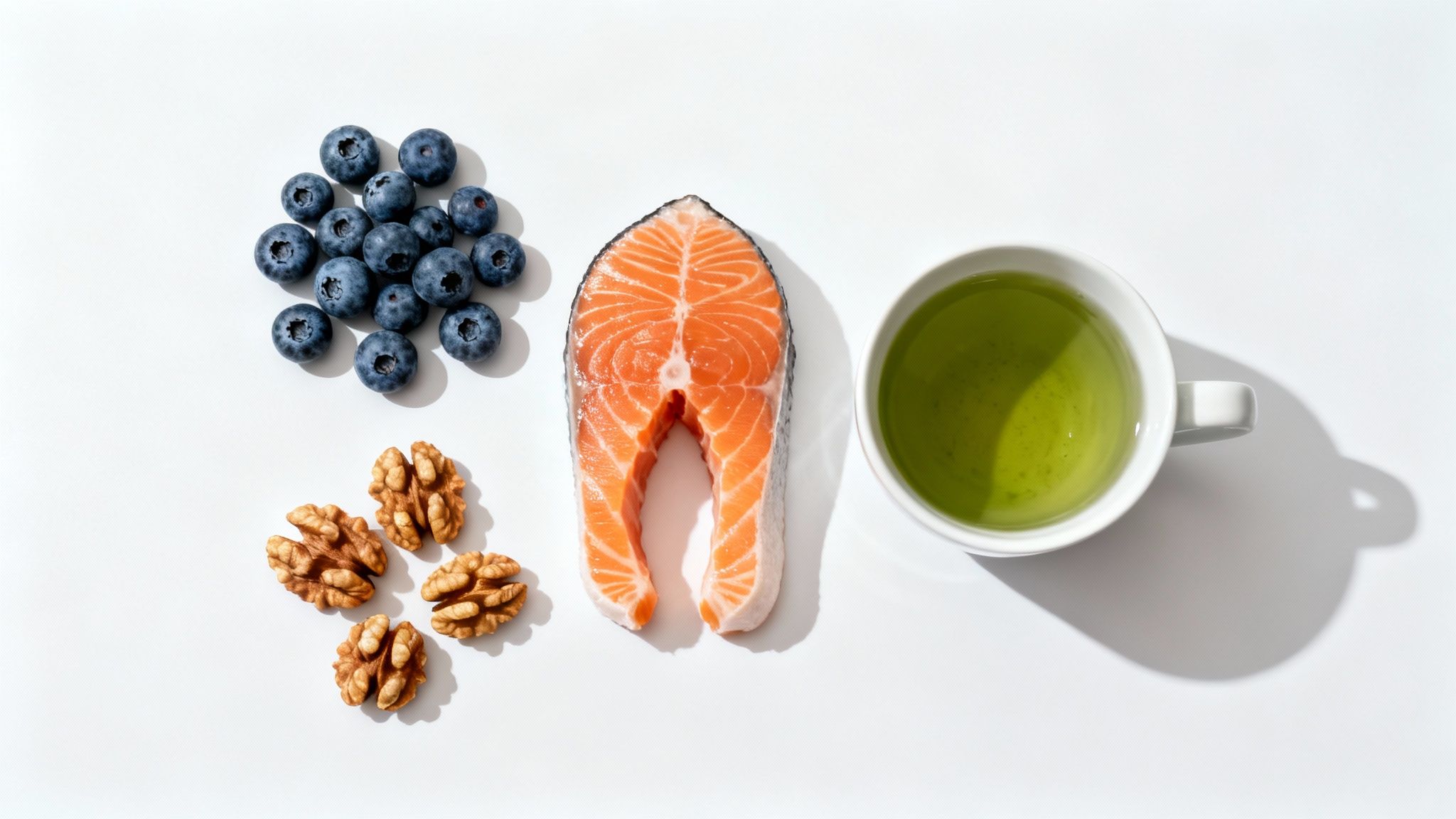
- Omega-3 Fatty Acids: Find these in fatty fish like salmon, walnuts, and flaxseeds. They are critical for building and maintaining healthy brain cell membranes.
- Antioxidants: Berries, dark chocolate, and leafy greens are packed with these. They fight oxidative stress, protecting your brain from cellular damage.
- Complex Carbohydrates: Foods like oats and quinoa deliver a steady supply of glucose, which is your brain’s main energy source.
Key Takeaway: Your diet isn't just for your body; it's the first line of defense for your brain. Consistently choosing nutrient-dense foods is one of the most effective ways to build a resilient attention span from the inside out.
Move Your Body to Clear Your Mind
Regular physical exercise is one of the best things you can do for your focus. When you get your body moving, your brain releases a powerful cocktail of neurotransmitters, including dopamine and norepinephrine. These chemicals are directly tied to attention, motivation, and getting things done.
This doesn't mean you need to spend hours in the gym. Even a brisk 20-minute walk can boost blood flow to the brain, improving your mental clarity for hours afterward. The goal is to make movement a consistent, non-negotiable part of your routine.
Interestingly, many of these habits are also found in guides detailing practical strategies to manage ADHD without medication, which just goes to show how powerful these lifestyle shifts are for everyone. If you want to go deeper on this, check out our guide on how to improve mental clarity.
Mental Training Exercises to Sharpen Your Focus
Think of your attention span as a muscle. Just like any other muscle in your body, it gets stronger with consistent training and weaker if you let it slide. If you really want to learn how to improve your attention span, you need to go beyond passive changes and actively engage in exercises designed to rebuild your concentration.
These aren't complicated, time-consuming drills. They are simple, powerful practices you can weave into any busy schedule to start strengthening your focus from the very first session.

Embrace Intentional Single-Tasking
The modern habit of multitasking is one of the biggest drains on our cognitive resources. The antidote is surprisingly simple: intentionally do one thing at a time. This isn't just about work, either; it’s a practice you can apply anywhere.
For example, when you drink your morning coffee, just drink your coffee. Don’t scroll through your phone or check emails. Pay attention to the warmth of the mug, the aroma, and the taste. This small act trains your brain to stay with a single experience, building the foundation for deeper focus on more complex tasks.
This practice directly combats the mental fragmentation caused by constant context-switching. For those interested in how focus is tied to cognitive performance, we have a helpful guide exploring ways to improve working memory that you might find useful.
Master the Pomodoro Technique
The Pomodoro Technique is a classic time management method that uses a timer to break work into focused intervals—traditionally 25 minutes long—separated by short breaks. The framework is brilliant because it makes a large, intimidating task feel totally manageable.
Here’s how to put it into practice:
- Choose Your Task: Decide on the one thing you'll work on.
- Set a Timer for 25 Minutes: Commit to working only on that task, without interruption. No checking your phone, no opening a new tab.
- Work Until the Timer Rings: Once it goes off, put a checkmark on a piece of paper.
- Take a Short Break: Enjoy a 5-minute break. Stretch, get a glass of water, or just look out the window.
- Repeat: After four "Pomodoros," take a longer break of 15-30 minutes.
This technique trains your brain to sustain focus for set periods and respects its need for rest, preventing burnout and keeping you sharp.
Practice Daily Mindfulness Meditation
Mindfulness is the practice of paying attention to the present moment without judgment. It is arguably the most direct way to train your focus. An international study found that while 68% of youth struggle with focus due to digital media, structured attention training offers a powerful solution. The research showed that 10–15 minutes of daily mindfulness can reduce mind-wandering by 20–30% in just a few weeks, proving that deliberate habits can rebuild attention. You can read more about these findings on Phys.org.
The core of meditation isn't about emptying your mind; it's about noticing when your mind has wandered and gently bringing it back. Every time you do this, you complete one "rep" of a mental push-up, strengthening your attentional control.
To start, just find a quiet place, set a timer for five or ten minutes, and focus on the sensation of your breath. When your mind wanders—and it will—simply notice it and guide your focus back to your breathing. This simple, repeated action is the key to building a resilient and powerful attention span.
You can further support your journey to mental sharpness with Dialed In Nootropics from FocusPouches.com, designed to provide the clean mental clarity and alertness you need. You can purchase them directly here.
Targeted Supplements to Support Cognitive Function
While lifestyle adjustments and mental training are the absolute cornerstones of a stronger attention span, targeted nutritional support can give you a serious biological advantage.
This is where certain supplements, often called nootropics, come in. They contain ingredients studied for their ability to support focus, memory, and overall brain health. This isn't about finding a magic pill, but about giving your brain the precise fuel it needs to perform at its peak.
The interest in cognitive enhancers is exploding. A recent consumer survey found that 45% of adults aged 18-34 now use supplements for mental perks like focus and memory. That’s a massive jump from just 28% in 2020.
This trend is clearly driven by a need to keep up with workplace demands and fight back against the endless digital noise. If you want to dive deeper, the Council for Responsible Nutrition has more on this.
Key Ingredients for Cognitive Support
To understand how these supplements work, you have to look at what's inside. Three compounds, in particular, stand out for their well-documented effects on attention and mental clarity.
- L-Theanine: You'll find this amino acid in green tea, and it's prized for promoting a state of "calm alertness." It works by increasing alpha brain waves—the ones associated with relaxed focus—without making you drowsy. It’s perfect for cutting through mental chatter and locking in on a task.
- Bacopa Monnieri: This traditional herb has been used for centuries to boost cognitive function. Modern science suggests it can improve how you form and recall memories by supporting communication between brain cells. Think of it as a long-term player; its benefits often become more noticeable after a few weeks of consistent use.
- Omega-3 Fatty Acids: These essential fats, especially DHA, are the literal building blocks of your brain. They are critical for keeping your neural pathways healthy and fluid, making sure signals between brain cells are transmitted smoothly and efficiently.
By combining these targeted ingredients, you can create a synergistic effect that supports both immediate focus and long-term brain health, helping you stay sharp and resilient against distractions.
Choosing the Right Nootropic Solution
When you're looking for how to improve attention span with supplements, the quality and formulation matter. A lot. You want a product designed for clean, crash-free alertness that complements all your other efforts.
Many of our customers are high-performers—professionals, athletes, creators—who need to stay sharp without the jitters or sugar spikes you get from typical energy drinks.
To give your brain the support it needs, our Dialed In Nootropics are expertly formulated to deliver clean mental clarity and sustained energy. We also offer a detailed breakdown of the best supplements for mental clarity in our guide, which can help you make an informed decision on your journey to superior focus. You can buy Dialed In Nootropics here.
Common Questions About Rebuilding Your Focus
When you decide to reclaim your attention, a lot of questions pop up. Getting straight answers is key to setting the right expectations and staying motivated when things get tough. Here are a few of the most common things people ask.
How Long Does It Realistically Take To See Improvements?
This is the big one, and the answer isn't a simple number. You can feel a difference almost immediately just by changing your environment. Turning off your phone notifications or closing extra browser tabs gives you instant breathing room to concentrate.
But for the deep, lasting neurological changes? That takes consistency. If you commit to daily practices like mindfulness or cleaning up your diet for brain health, most people start to feel a real, undeniable shift in their ability to stay on task after about 4 to 8 weeks.
Can I Permanently Improve My Attention Span?
Absolutely. Think of it like getting in shape. When you first start working out, everything feels hard and you get winded easily. But with consistent training, your strength and stamina build to a completely new level.
Your brain works the same way. Once you’ve built up that cognitive “muscle” with better habits and the right nutrition, maintaining focus gets a lot easier. It still requires upkeep—just like physical fitness—but your brain's new normal will be one of clarity, not chaos. You won't have to fight so hard for every moment of concentration.
Are There Specific Foods or Supplements For an Immediate Boost?
For a quick lift, some food pairings work wonders. A snack that combines complex carbs and protein, like an apple with a spoonful of almond butter, gives your brain a steady stream of fuel without the sugar crash. And of course, a cup of coffee or green tea can temporarily sharpen your mental edge.
On the supplement front, people are catching on to how much nutrition impacts our minds. In fact, 58% of global consumers now believe certain vitamins and minerals can seriously boost mental performance. This has created a huge demand for clean, effective products, with 75% of consumers saying they'll gladly pay more for supplements with proven science behind them. You can dive deeper into this trend over at benessere.com.
While these are great for a short-term fix, remember that a rock-solid attention span is built on a long-term diet full of things like antioxidants and omega-3s.
At FocusPouches.com, we designed our products for those moments when you need that immediate edge. Our Dialed In Nootropics deliver a scientifically formulated hit of clean mental clarity and crash-free alertness, giving you the power of a smart supplement with the grab-and-go convenience of a pouch or gum. Ready to experience the difference? Shop now.