
How to Stay Focused at Work and Reclaim Your Productivity
Learning how to stay focused at work isn’t about brute force or willpower. It’s about being smart with your environment and honest about your engagement. The real key is to get ahead of distractions before they start and connect your daily tasks to a bigger purpose.
When you do that, focus stops being a constant fight and starts becoming a natural habit.
Why Staying Focused Feels Impossible Today
If you feel like your attention is constantly under attack, you're not imagining it. The modern workplace is practically engineered to shatter concentration.
Think about it: every Slack ping, every email notification, every last-minute meeting invite is a micro-interruption. Each one yanks you out of deep work and forces your brain to switch gears, which absolutely torches your mental energy.
This culture of constant connectivity creates an unspoken rule: you must be available right now. The pressure to be hyper-responsive steamrolls our need for quiet, uninterrupted time, leaving most of us feeling like we're just reacting to our day instead of running it.
The Disengagement Dilemma
Beyond the digital chaos, there's a much deeper reason why focus feels so slippery: a massive chunk of the workforce is simply checked out. When you don't feel a real connection to what you’re doing, your motivation hits rock bottom. Tasks become chores, not contributions, and your mind will naturally look for any escape it can find.
This isn't just a hunch; the data backs it up. Gallup's 2024 State of the Global Workplace report found that a staggering 62% of the global workforce is not engaged. Only a mere 23% feel genuinely connected to their jobs. This emotional disconnect is a primary driver of poor focus—it’s nearly impossible to concentrate on something you just don’t care about.
The struggle to concentrate isn't a personal failing. It's often a direct symptom of a work culture that prioritizes constant communication over deep, meaningful work. Addressing the root causes is the only way to reclaim your focus.
Often, this battle for focus isn't just about what's happening around you, but what's happening inside your own head. Self-doubt and internal chatter can be just as distracting. Getting a handle on these inner challenges is critical, and finding practical ways of overcoming imposter syndrome at work and building confidence can be a huge support.
And since focus is a skill, it needs to be rebuilt from the ground up. Our guide on how to improve your attention span offers foundational strategies to get you started.
Designing a Distraction-Proof Workspace
Your environment isn't just a backdrop for your workday; it's an active player in your ability to concentrate. If you’re serious about learning how to stay focused at work, it starts with taking deliberate control over your physical and digital surroundings.
This isn’t about creating some sterile, minimalist office. It’s about making small, intentional tweaks that send a clear signal to your brain: this is where focus happens. By turning your space from a source of random interruptions into a command center for deep work, you build a powerful foundation for real productivity.
The reality is, distractions are everywhere, and most of us feel their impact daily. This slide breaks down some of the core challenges modern workers face when trying to lock in.
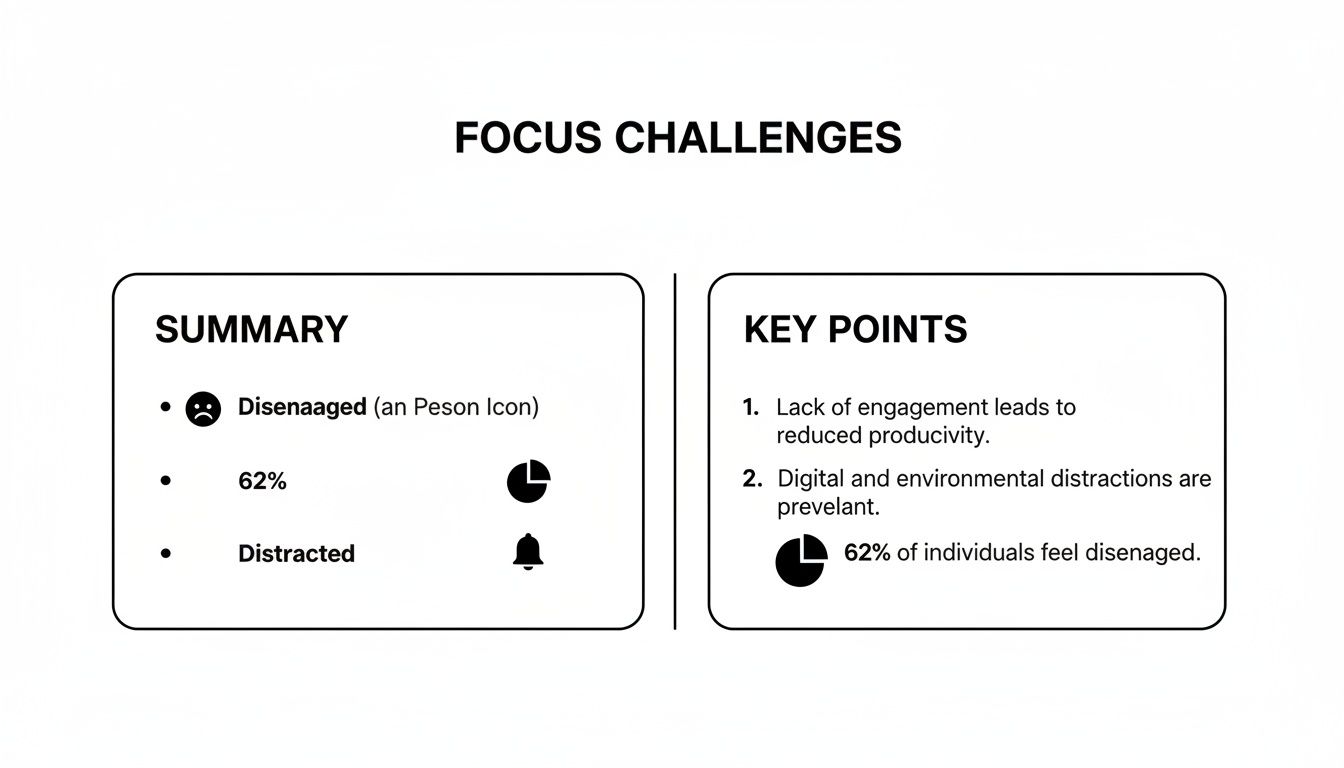
The data really drives home the critical link between engagement and focus. Widespread disengagement paired with a constant barrage of digital pings creates a massive barrier to getting anything meaningful done.
Curate Your Digital Environment
Let's be honest: your digital workspace is probably the number one source of focus-shattering interruptions. Uncontrolled notifications and a disorganized desktop create a constant state of low-grade mental chaos, making it nearly impossible to sink into deep work. The first step is to reclaim that digital territory.
Start by putting your notifications on a strict diet. Most alerts are not urgent. Go into the settings on your computer and phone and kill notifications for email, Slack, and social media. Instead of letting them dictate your attention, schedule specific times to check in on your own terms.
Next, get your digital house in order. A cluttered desktop full of random files is the digital equivalent of a desk buried under piles of paper.
- Create a Simple Folder Structure: Build a logical system for projects, reference materials, and archived work. Maybe it’s a main "Projects" folder with subfolders for each client. Find what works for you and stick to it.
- Practice Daily Digital Tidying: At the end of each day, take five minutes. File new downloads, close out your 50 browser tabs, and organize any new documents. This tiny habit prevents a digital avalanche later.
- Use App Blockers Strategically: Tools like Freedom or Cold Turkey are your best friends here. Use them during your most important work blocks to completely wall off your biggest time-wasting sites. No willpower required.
Think of your digital workspace like a kitchen. You can't cook efficiently if ingredients are scattered everywhere and the smoke alarm is constantly going off. A clean, organized digital space lets you find what you need and work without constant alarms.
Optimize Your Physical Space
Your physical environment has a massive psychological effect on your ability to concentrate. Carving out a dedicated and optimized work zone is crucial, especially if you work from home where the lines between personal and professional life get blurry.
A well-designed space minimizes physical distractions and primes your brain for focus.
Tackling both digital pings and physical interruptions is key to building a truly focused work environment. Here’s a quick guide to managing the most common culprits.
Digital vs. Physical Distraction Management
A comparative guide to tackling the most common sources of distraction in your workspace.
| Distraction Source | Digital Solution | Physical Solution |
|---|---|---|
| Notifications | Turn off all non-essential alerts on your phone and computer. Use "Do Not Disturb" mode. | Keep your phone in another room or face down and out of sight. |
| Noise | Use an app for white noise or focus music (e.g., Brain.fm) to drown out inconsistent sounds. | Invest in high-quality noise-canceling headphones. It's a total game-changer. |
| Clutter | Organize your desktop with a clear folder system. Close unnecessary tabs and apps. | Dedicate 5 minutes at the end of each day to clear your desk of papers, mugs, and clutter. |
| Interruptions | Set your status to "Focusing" on chat apps. Block out time on your shared calendar. | Use a sign on your door or desk to signal you're in a deep work session. |
By addressing distractions on both fronts, you create a powerful, multi-layered defense for your attention.
Lighting also plays a surprisingly big role. Poor lighting can cause eye strain and fatigue, draining your mental energy faster than you realize. If you can, position your desk to get plenty of natural light. If not, a good desk lamp that mimics daylight will keep you feeling alert.
Finally, define your workspace. Even if you don't have a separate office, create a dedicated "work zone." This could be a specific corner of a room or even just one side of the dining table. This helps build a powerful mental link: when you enter that zone, it's time to work. When you leave, you can more easily switch off. That boundary is essential.
Taking Control of Your Time and Attention
A productive day doesn't just happen; it's built with intention. If you constantly feel like you're playing defense—reacting to emails, pings, and last-minute requests—it's time to go on offense. Taking control means building a framework that protects your attention and aims it where it will make the biggest impact.
This isn't about hoping for a good day. It's about creating a deliberate structure for your work, one that stops your calendar from running you and puts you back in the driver's seat. The real goal is to build a system that aligns with your natural energy rhythms, making focus a sustainable habit instead of a constant fight.
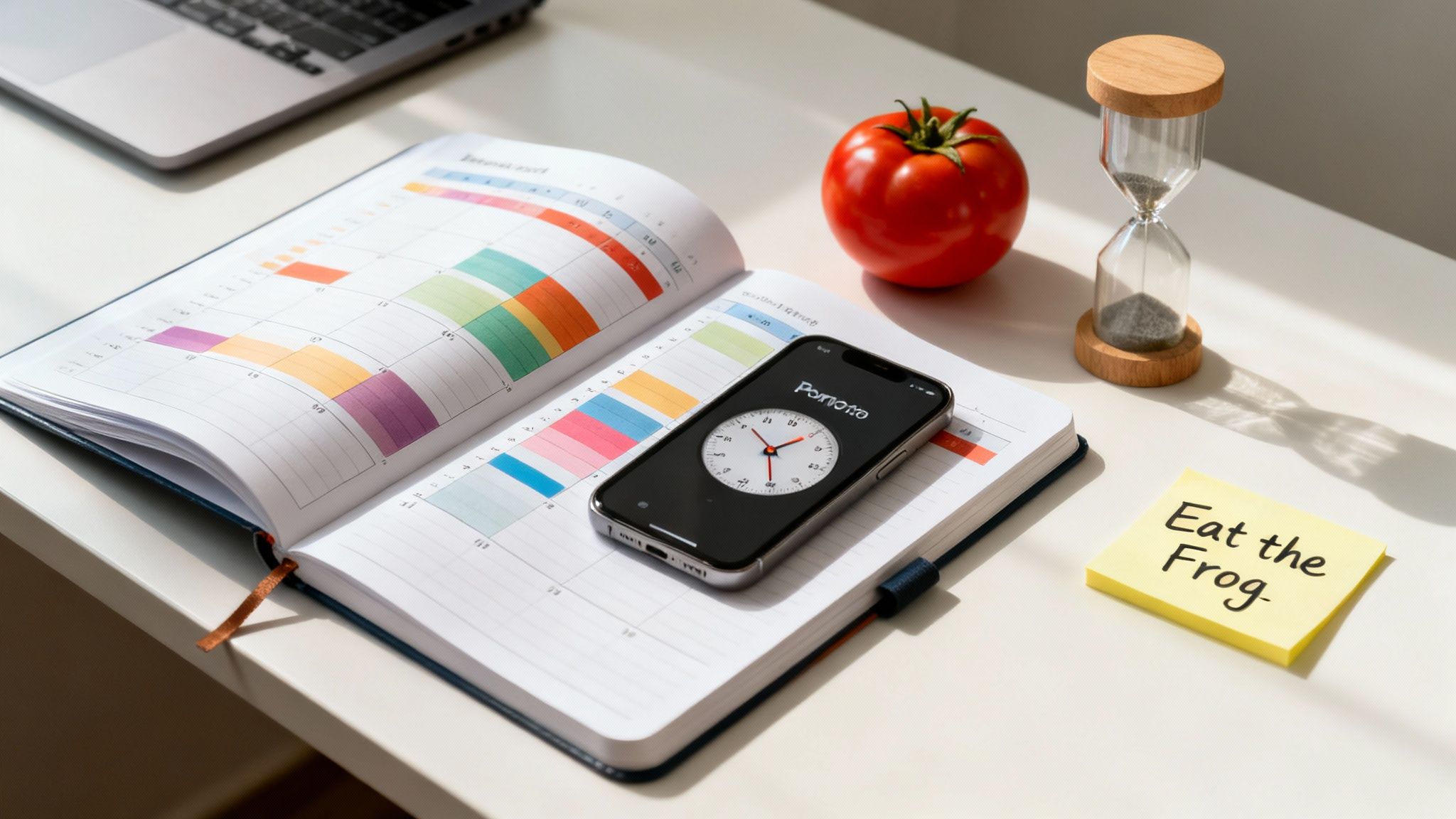
Master Prioritization with the Eat the Frog Rule
The "Eat the Frog" rule is brutally effective and brilliantly simple: tackle your single most important, most dreaded task first thing in the morning. That task is your "frog." It's the one you're most likely to procrastinate on, yet it's also the one that will move the needle the most.
Knocking it out before anything else does two incredible things. First, you guarantee you make progress on what actually matters. Second, you generate powerful momentum that makes the rest of the day feel lighter—the worst is already behind you.
Let's say you're a developer who has been putting off a nasty, complex debugging task. Instead of letting it hang over your head all day, you make it your frog. You block off the first 90 minutes of your morning and go all-in, distraction-free. Even if you don't completely solve it, you've made a huge dent, and the rest of your to-do list suddenly seems way less intimidating.
Implement the Pomodoro Technique for Intense Focus
The Pomodoro Technique is a game-changer for anyone who struggles with long, unstructured work periods. It's a time management system that breaks your work into focused sprints, traditionally 25 minutes long, separated by short breaks.
Why does it work so well? It respects your brain's natural limits. Committing to intense, single-minded focus for just 25 minutes is far easier than trying to stare down an entire afternoon of work. It almost gamifies the process and makes it ridiculously easy to just start.
Here’s the simple playbook:
- Pick one task. Just one.
- Set a 25-minute timer. Work on that task and only that task until the timer rings. No email, no phone, no multitasking.
- Take a 5-minute break. When the timer goes off, you've completed one "Pomodoro." Get up, stretch, grab some water—just step away from the screen.
- Take a longer break after four. Once you’ve done four Pomodoros, give yourself a real rest of 15-30 minutes to properly recharge.
The Pomodoro Technique isn't just about managing time; it's about managing your mental energy. The built-in breaks prevent burnout and help you maintain a high level of concentration all day, turning massive projects into a series of manageable sprints.
Protect Your Time with Time Blocking
Time blocking is the practice of living out of your calendar, not your to-do list. You schedule your entire day into specific blocks of time, assigning a concrete task or activity to each one. This method forces you to get realistic about what you can actually accomplish and builds a fortress around your focus time.
For example, a marketing manager’s calendar might look like this:
- 9:00 AM - 9:30 AM: Email & Slack Triage
- 9:30 AM - 11:30 AM: Deep Work: Draft Q3 Content Strategy
- 11:30 AM - 12:00 PM: Prep for Team Sync
- 12:00 PM - 1:00 PM: Lunch Break (Away from the Desk)
This simple shift turns your day from a series of frantic reactions into a set of planned actions. When a coworker asks if you "have a minute," you can look at your calendar and confidently say, "I'm in a focus block until 11:30, but I can connect then." You're not being difficult; you're being disciplined. This is a critical skill when learning how to stay focused at work.
These time management strategies are a powerful start. For a deeper look, check out our guide on how to increase productivity at work for more practical tips.
By combining sharp prioritization with structured work intervals and a protected calendar, you create an unstoppable system for deep work. You’re no longer a victim of your inbox or random requests. You're in control, directing your attention with purpose and building a workflow that truly gets things done.
The Biology of Peak Concentration
Time management hacks and a clean desk are great, but they're only half the battle. If you really want to lock in and do deep work, you have to look at your biology.
Your brain is a physical organ. Its ability to stay sharp, creative, and focused depends entirely on the fuel you give it and the rest you allow it. Think of it like a high-performance engine: even the best driver can't win a race if the engine is sputtering on bad fuel or hasn't been maintained. The same goes for your focus at work.
Let’s get into the biological pillars that support true, sustained concentration.

Fuel Your Brain with the Right Nutrition
What you eat directly impacts cognitive functions like memory, alertness, and focus. If you load up on sugary, processed junk, you’re setting yourself up for an energy crash and brain fog. It’s nearly impossible to maintain deep focus that way.
On the flip side, a diet packed with brain-boosting nutrients provides the steady, clean energy your mind needs to perform. For those moments when you need an extra edge, our Focus Pouches deliver a targeted blend of nootropics for clean, sustained concentration.
Certain foods are rockstars for cognitive health. Omega-3 fatty acids, found in fatty fish like salmon and walnuts, are literally the building blocks for brain cells. Antioxidants in blueberries help improve communication between those cells.
To keep your mind firing on all cylinders, try adding these to your routine:
- Fatty Fish: Salmon, trout, and sardines are loaded with omega-3s, which are critical for learning and memory.
- Blueberries: People call them "brainberries" for a reason. Their compounds can help delay brain aging and sharpen your memory.
- Nuts and Seeds: Almonds, walnuts, and pumpkin seeds deliver antioxidants, vitamin E, and healthy fats that your brain loves.
- Dark Chocolate: The good stuff (70% cocoa or higher) contains flavonoids and a little caffeine that can sharpen focus and lift your mood without the sugar crash.
These foods help keep your blood sugar stable, giving your brain a consistent stream of fuel. They also support neurotransmitters like dopamine, which is essential for motivation. If you want to dive deeper, learning how to increase dopamine naturally can give you an extra edge.
The Critical Role of Hydration and Sleep
It’s easy to forget the basics, but water and sleep are non-negotiable for focus. Even mild dehydration can wreck your attention span and memory. Your brain tissue can literally shrink when you're dehydrated, making every mental task feel harder. The easiest fix? Keep a water bottle on your desk and sip on it all day.
Sleep, though, is the ultimate reset button. While you sleep, your brain clears out toxins, consolidates memories, and recharges its energy. Skimping on sleep tanks your performance—it’s that simple. Research shows cognitive function drops off a cliff after just one bad night.
Building a consistent sleep routine isn't a luxury; it's a core productivity strategy. Aiming for 7-9 hours of quality sleep is one of the most powerful things you can do to show up sharp, creative, and ready to concentrate.
Integrate Movement into Your Workday
Humans were not built to sit still for eight hours straight. Sitting for too long leads to physical aches and mental burnout, both of which kill concentration. Short bursts of movement are a game-changer for re-energizing your brain.
Moving gets blood flowing to the brain, delivering the oxygen it needs to stay alert. Even a quick five-minute walk can make a huge difference, giving you a mental break so you can come back to your work with a fresh perspective.
Here are a few easy ways to work more movement into your day:
- Take Micro-Breaks: After a focus session or at the top of the hour, just stand up. Stretch. Walk around for a couple of minutes.
- Walking Meetings: If you have a call that doesn't require a screen, take it while you walk.
- Desk Exercises: A few simple stretches, squats, or lunges right at your desk can get the blood moving again.
When you treat nutrition, hydration, sleep, and movement as essential parts of your professional toolkit, you’re laying the biological foundation for peak concentration. These habits aren't just chores; they are strategic investments in your ability to do meaningful work every single day.
Use Modern Tools and Flexibility to Your Advantage
Staying focused today isn't just about willpower; it's about working smarter. The best approach is to embrace the tools and work structures that are completely changing the game for productivity. When you intentionally bring in the right solutions, you can offload tons of mental clutter and build a workday that actually supports concentration instead of constantly fighting it.
This means ditching the old-school idea of what a productive day should look like. Forget chaining yourself to a desk for eight hours straight. The real goal is to use technology and flexible work to create an environment where focus feels natural.
Reclaim Your Cognitive Energy with AI Tools
One of the biggest focus killers is the endless stream of low-value, repetitive tasks—think mind-numbing data entry, summarizing long email chains, or scheduling yet another meeting. They might seem small, but they force you to constantly switch contexts, draining the mental energy you need for real problem-solving.
This is where AI-powered tools become your secret weapon.
AI assistants can act as a cognitive filter, handling the grunt work so your brain can stay locked on what actually matters. An AI can transcribe your meetings and pull out the action items, letting you stay present in the conversation. It can draft routine emails or sort your inbox by priority, freeing up huge chunks of your day for uninterrupted deep work.
The real power of AI isn't just automation; it's attention liberation. When you delegate the mundane, you free up your mind for high-impact work.
And the results speak for themselves. Around 75% of knowledge workers say AI helps them save time, concentrate better, and even feel more creative. When you’re not bogged down by tedious work, you have more mental space for innovation and projects that drive real results.
Leverage Flexibility for Deeper Focus
The traditional nine-to-five workday was built for a different era. For most of us, a rigid schedule and a fixed location just don't work anymore. In fact, they often lead to burnout and fractured attention. Flexible work arrangements, like hybrid or fully remote models, give you the autonomy to design a workday that syncs up with your natural productivity rhythms.
That autonomy is a game-changer for focus.
If you know your creative energy peaks in the morning, you can protect that time at home, free from the constant chatter of an open office. If you need a mid-afternoon break to recharge with a walk, a flexible schedule makes that possible. For a quick mental lift during those key focus blocks, even something simple like our Nootropic Gum can make a big difference. You can learn more about the benefits of energy gum as a convenient way to stay sharp without the jitters.
Many modern productivity apps also give you the tools to structure your day effectively. Being able to meticulously map out your tasks and time is crucial, and resources like Obsibrain's daily planning features provide a great framework for managing your attention. Embracing these new tools and work models is a powerful strategy for anyone trying to master how to stay focused at work for the long haul.
Common Questions About Staying Focused at Work
Even with a solid plan, you're going to hit roadblocks.That’s just part of the process of rewiring your brain for deep work. Here are some of the most common focus problems I see and quick ways to get back on track.
How Do I Stay Focused in a Loud Open Office?
The open office is practically designed to kill concentration. The secret is to build your own personal "focus bubble."
First up, get yourself a pair of high-quality noise-canceling headphones. Seriously, this is non-negotiable. They are an absolute game-changer for tuning out the constant hum of conversation and movement.
Next, you need a subtle "do not disturb" sign. This could be a small physical sign on your desk, but honestly, just having your headphones on is usually the universal signal for "I'm in the zone." This simple visual cue politely tells people you aren’t available for a casual chat right now.
If you can, try to schedule your most demanding work for times when the office is naturally quieter, like first thing in the morning or later in the afternoon when people start to trickle out.
What Is the Best Way to Handle Interruptions from Coworkers or Slack?
You have to be proactive here, not reactive. For digital distractions like Slack or Teams, make the status feature your best friend. Set it to "Focusing" or "Deep Work" and add a timeframe, like "Heads down until 2 PM." This sets clear expectations so colleagues don't assume you're ignoring them.
For the in-person "got a minute?" interruptions, have a go-to script ready. Something like, "I'm right in the middle of something, but can I swing by your desk in an hour?" works perfectly. It’s respectful but firm, and it protects your most valuable asset: a block of uninterrupted time.
I Have ADHD. Will These Focus Strategies Work for Me?
Absolutely. In fact, many of these strategies—especially the Pomodoro Technique and time blocking—are highly recommended for managing ADHD. They provide the external structure that can be incredibly helpful for breaking down massive projects into small, non-intimidating steps. The built-in breaks in the Pomodoro method are fantastic for preventing mental burnout.
That said, the key is to experiment and build a system that works for you. You might find that layering these techniques with other ADHD-friendly tools makes a huge difference.
- Body Doubling: Just having someone else working quietly nearby, even on a video call, can provide a subtle sense of accountability that keeps you on task.
- Fidget Tools: A discreet fidget tool can be a great way to channel restless energy, freeing up your mind to concentrate on your work.
- Gamification: Turn your to-do list into a game. Set small challenges, time-based sprints, or rewards for finishing a focus block.
The goal isn't perfection; it's finding the unique combination that supports how your brain works. For more answers on how our products can fit into your focus toolkit, check out our comprehensive FAQs page, which digs into a ton of questions about ingredients and benefits.
The best focus plan is one you actually stick with because it’s tailored to you. Don't be afraid to tweak the rules, mix and match methods, and build a system that feels genuinely supportive.
Mastering your focus is a continuous practice, not a one-and-done fix. It's all about self-awareness and making small adjustments along the way.
Ready to give your concentration a real edge? The Dialed In Nootropics collection is designed for high-performers who need clean, sustained focus without the crash. Our Focus Pouches and Nootropic Gum deliver scientifically backed ingredients to help you lock in and get the job done. Find your perfect formula and feel the difference.